News on Medial

Related News

Razorpay, CRED, Swiggy among 30 startups in Startup Policy Forum

EntrackrEntrackr · 1y ago
Razorpay, CRED, Swiggy among 30 startups in Startup Policy Forum
Medial

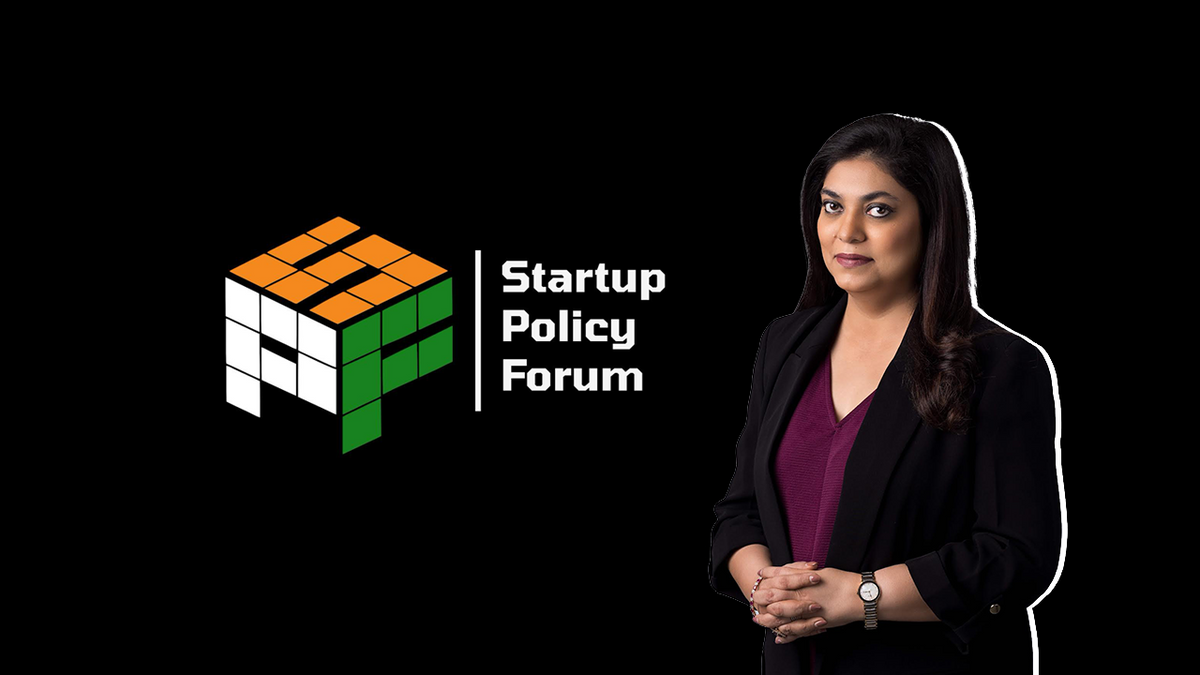
India’s startup ecosystem has gained a unified platform with the launch of the Startup Policy Forum (SPF), an industry alliance designed to promote collaboration between policymakers and leading ventures. SPF brings together 30 of India’s leading startups across varied sectors, including Razorpay, CRED, Pine Labs, Groww, OYO, Swiggy, Practo, Dream11, MPL, Cars24, CarDekho, Acko, Ixigo, Livspace and Jupiter. "Our startups are driving transformative change by democratizing business and converting job seekers into job creators. We are glad to see many founders joining the Startup Policy Forum (SPF), which should reinforce India’s global leadership in the new-age economy. The forum should play a pivotal role in India’s journey to become Viksit Bharat by 2047 under the visionary leadership of Prime Minister Shri Narendra Modi," said Piyush Goyal, Minister of Commerce and Industry. Founded by former Peak XV executive and public policy expert Shweta Rajpal Kohli, the Forum will do initiatives to promote India’s startup ecosystem on a global stage. The Forum will limit its members to 100 select startups in its initial phase. Over 30 rapidly growing startups have already signed up as members. These include companies like Razorpay, CRED, Pine Labs, Groww, Acko, OYO, Swiggy, Practo, Dream11 and MPL, Cars24 and Cardekho, CureFoods, Livspace, Ixigo, Ultrahuman, Digantara, Invideo, Jupiter, OneCard, Mobikwik, Yubi, platform Progcap, Bluestone among others. The Forum aims to foster constructive collaboration between founders, policymakers, and regulators. SPF will use the government’s initiatives to position Indian startups on a global platform. SPF has also established four specialized councils: the Fintech Policy Council (FPC), Consumer and Commerce Council (CACC), Emerging Tech & AI Council (ETAC), and New-Age Public Companies Council (NPCC). These councils will focus on critical areas within the startup ecosystem, collaborating closely with relevant regulators and stakeholders to address unique challenges and opportunities in each sector.

Shilpa Shetty-backed WickedGud raises Rs 20 Cr

EntrackrEntrackr · 1m ago
Shilpa Shetty-backed WickedGud raises Rs 20 Cr
Medial

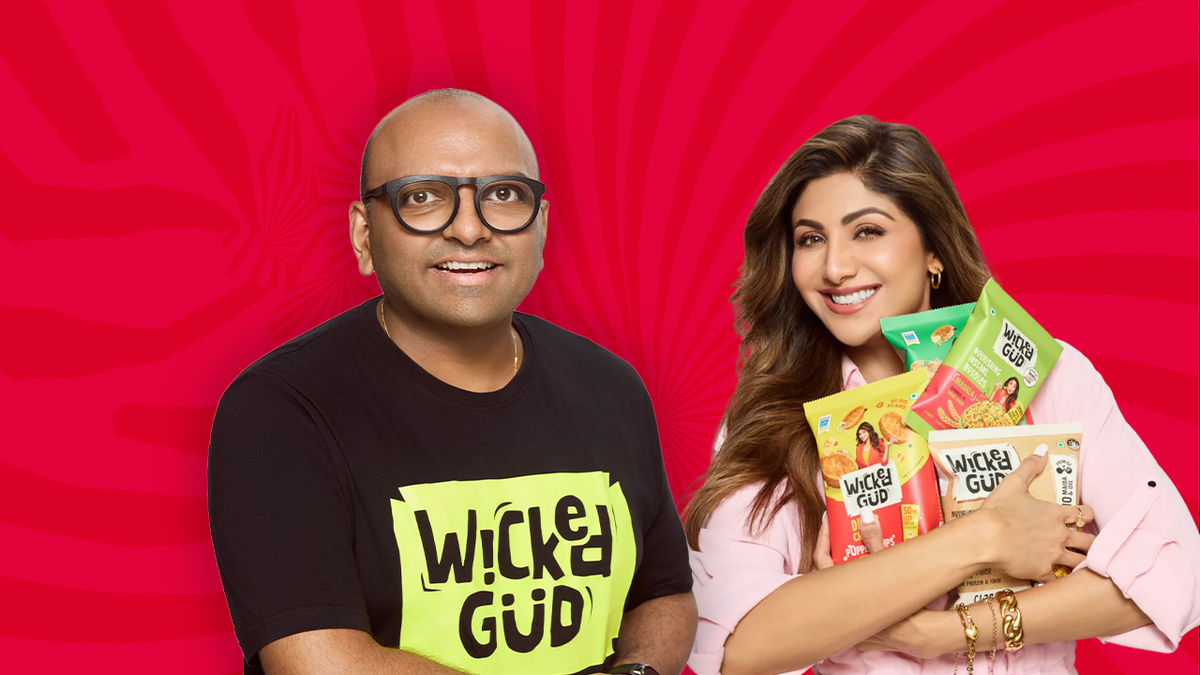
Shilpa Shetty-backed WickedGud raises Rs 20 Cr Shilpa Shetty-backed WickedGud, a direct-to-consumer (D2C) food products brand, has raised Rs 20 crore in its latest funding round from existing investors, including Orios Venture Partners, Asiana Fund, Shilpa Shetty, and others. The round also saw participation from Shajikumar Devakar, Ajay Mehta, Sonika Ravula, and Rahul Colaco. The Mumbai-based startup had previously raised Rs 20 crore from the same investors in December last year and $250,000 in June 2023. The proceeds will be deployed to expand its presence across modern trade, general trade, and digital platforms, strengthen supply chain and backend capabilities, and accelerate innovation in high-velocity categories such as cup noodles and Korean-style spicy noodles, WickedGud said in a press release. Co-founded in 2021 by Bhuman Dani, WickedGud is a D2C startup focused on “unjunking” India, one kitchen at a time, with a range of healthy yet indulgent food products. Its offerings are made using wholesome ingredients and manufactured using innovative steaming and convection air drying (SCAD) technology. According to WickedGud, it operates in the large and highly competitive instant noodles and pasta segment, where taste, accessibility, and price sensitivity are key drivers of scale. The company’s focus on improving everyday staples through a better-for-you lens has helped it appeal to a broad consumer base without positioning itself as a niche or premium-only brand. The brand is currently available across leading online and quick-commerce platforms, including Amazon, Blinkit, Instamart, Zepto, BigBasket, and Flipkart. In addition to its digital presence, WickedGud has an offline footprint across more than 5,000 retail outlets nationwide, including over 1,500 Reliance Smart Bazaar stores and 50 DMart stores. Recently, the company launched a Rs 20 value pack of Masala Noodles for general trade, aimed at improving affordability and driving higher volumes in price-sensitive markets. It is also expanding its Korean-style noodles portfolio with new flavours, including Korean Fiery 2x Spicy, Korean Chilli Cheese, and Korean Chilli Chicken.

Goldman Sachs trims stake in BlackBuck, Nomura steps in with Rs 247 Cr buy

EntrackrEntrackr · 4m ago
Goldman Sachs trims stake in BlackBuck, Nomura steps in with Rs 247 Cr buy
Medial

Logistics marketplace BlackBuck witnessed a large block trade on Monday as Goldman Sachs pared a portion of its holding in the recently listed company. According to stock exchange data, Goldman Sachs offloaded nearly 49.1 lakh shares, representing a 2.74% stake, for about Rs 295 crore. The shares were sold at an average price of Rs 600.32 per share. On the other side, Nomura India Investment Fund Mother Fund picked up around 41.16 lakh shares or 2.29% stake in the company, spending close to Rs 247 crore at an average price of Rs 599.77 per share. Earlier this month, US-based investment firm Sands Capital also reduced its stake in logistics unicorn BlackBuck through three open market transactions, pocketing Rs 191 crore. Before that, Ellington Management’s offshore investment fund Ithan Creek Master Investors also offloaded over Rs 53 crore worth of stake in the B2B logistics firm. Founded in 2015 by Rajesh Yabaji, Chanakya Hridaya, and Subbu Allamaraju, BlackBuck runs a trucking marketplace that connects shippers with truck owners across India. The Bengaluru-based startup entered the unicorn club in 2021 after raising $67 million from Tribe Capital, IFC Emerging Asia Fund, and VEF, among others. Sands Capital invested in earlier rounds. During the first quarter of the ongoing fiscal year (Q1 FY26), the company reported a 56% year-on-year increase in its revenue to Rs 144 crore, from Rs 92 crore in Q1FY26. At the same time, profits for the firm grew 17.2% to Rs 34 crore. The company is currently trading at Rs 642 with the total market capitalization of Rs 11,530 crore ($1.3 billion).

Toy marketplace Snooplay raises pre- Series A1 round led by Pravek Family Office

EntrackrEntrackr · 5m ago
Toy marketplace Snooplay raises pre- Series A1 round led by Pravek Family Office
Medial

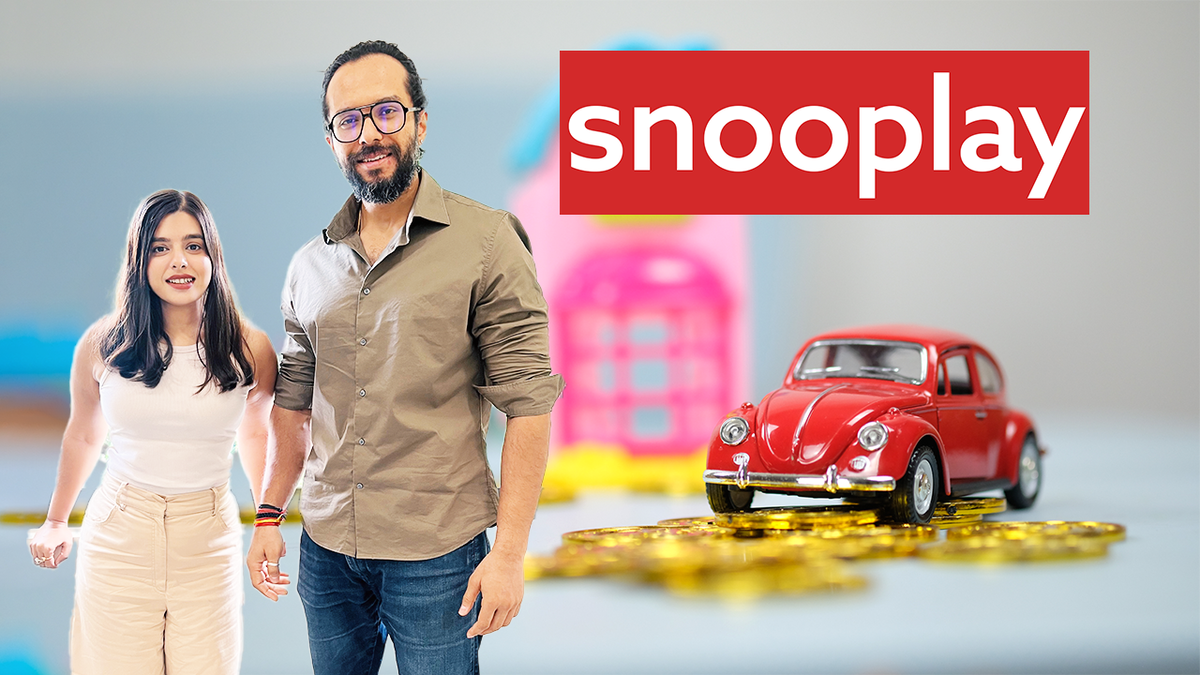
Toy marketplace Snooplay raises pre-Series A1 round led by Pravek Family Office Toy marketplace Snooplay has raised Rs 8 crore in a pre-Series A1 funding round led by Pravek Family Office along with participation from other strategic angel investors. Prior to this, the Noida-based company had raised $535K in a seed funding round from Ajay Kumar Gupta and others. The proceeds will be utilized to launch its two proprietary innovative tech products that aim to transform how India discovers, buys, and recirculates toys - through AI, data, and empathy, Snooplay said in a press release. Co-founded in 2019 by Aanchal Mahajan and Brij Raj Singh, Snooplay builds a full-stack, AI-powered toy platform that integrates discovery, purchase, and guilt-free disposal into one seamless ecosystem. The company’s proprietary Toy Intelligence Database—an industry-first effort to map toys to developmental skills, moods, play types, and learning goals. “We are building India’s only toy app that’s serious about play. An app that helps you discover and buy the right toy when your child needs it and lets you trade it in for store credits once they’ve outgrown it. No clutter, no guilt. Just a smarter way to play,” said Aanchal Mahajan, co-founder, Snooplay. Snooplay claims that it houses over 35,000 toys from more than 600 brands, and serves a growing community of Indian parents, collectors and gift-givers. The platform aims to create a single, intelligent loop of smarter discovery and guilt-free exit - making Snooplay the first App in India to build infrastructure around play. Snooplay intends to expand its buyback program in collaboration with NGOs, enabling sustainable toy donations and encouraging conscious consumption. The brand will strengthen its private label offerings across modern retail outlets, e-commerce marketplaces, and curated gifting verticals, while also enhancing its technology, logistics, and operational backbone. The other prominent companies in the toy industry include Funskool, Mattel Toys (India), Simba Toys India, Hamleys (India), Hasbro India, and Lego India.

How profitable InCred stands out among bleeding fintech lenders: Interview with Bhupinder Singh

EntrackrEntrackr · 1y ago
How profitable InCred stands out among bleeding fintech lenders: Interview with Bhupinder Singh
Medial

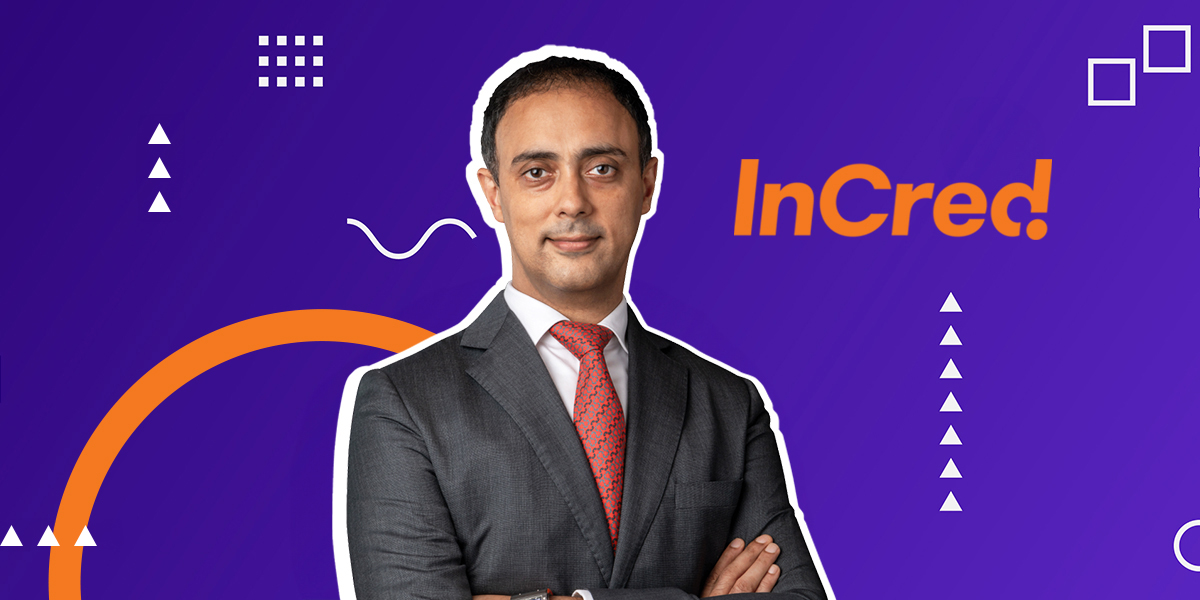
Lending has turned out to be the most obvious money making channel for fintech startups in India. Right from large to small fintech companies are resorting to distributing loans through own and third party lenders such as banks and NBFCs. Most growth stage fintech startups have been lending aggressively, but they still bear huge losses on a consolidated basis. However, the eight-year-old InCred is an exception as the firm’s operating revenue spiked 48% to Rs 1,267 crore in FY24. At the same time, its profit grew 160% to Rs 316 crore in FY24. InCred claims to have offered credit to 3,50,000 borrowers since its inception in 2016. InCred group operates three companies – InCred Finance, InCred Capital, and InCred Money. To understand InCred’s growth across segments, startup investments including Oyo and collection (recovery) among others, Entrackr spoke to the company’s founder and chief executive Bhupinder Singh. Here are the edited excerpts. How has the size of asset under management (AUM) across personal, education and business loans grown? Our asset under management or AUM grew 49% in FY24 and we closed FY24 with over Rs 9,000 crore in AUM, spread across personal loans which accounts for 44% of our AUM while micro, small and medium enterprises (MSMEs) contributed 35% of the total disbursal. Educational loans formed 21% of the entire loan book including third-parties capital. Can you talk about growth numbers across three segments: personal, business and educational in the last fiscal year? We have had strong growth across all three segments in FY24: Personal loans grew at 57% whereas educational loans spiked at 86%. Business (MSMEs) borrowing increased 32% during the last fiscal. Which factors led to the upsurge in educational loans? Strong preference to study abroad for superior exposure and growth prospects, along with growing awareness in terms of universities and courses through social media and internet are some of the key driving factors, which have accentuated further over the last few years. InCred has started equity investment across startups. Why has it entered into what’s widely dubbed as risky equity investment? We invest in startups through InCred Capital where we focus on identifying attractive investment opportunities in private companies. However, we only put money in startups which are available at reasonable valuations and have long-term structural growth potential. Besides InCred Capital, we also have a private equity fund providing growth capital to startups and other businesses. You said that InCred Capital looks for reasonable valuation while investing into startups. InCred capital recently invested in Oyo at a $2.38 Bn valuation. Do you think this is the right valuation of Oyo? Any investment opportunity we identify for our clients is based on our fundamental thesis of providing an attractive risk-return profile for our wealth clients. We believe that Oyo falls in that category and provides an opportunity for long term value creation. Collection is the hardest part of any form of lending be it traditional or digital. How did InCred solve this and what’s the size of NPA? Agreed. I think it starts right from our strong, proactive focus on risk and analytics, and then collections, which is more reactive. We have over 150 pan-India collections teams across products that track repayments and employ multiple modes, depending upon the product-specific requirement and level of customer delinquency. For early defaulters, we use techniques like tele-calling to educate them about default implications such as credit score deterioration. For late-stage defaulters, focus is more on limiting losses through field visits, vendor engagement among others. We also use mechanisms like setting up escrow accounts for superior collections. InCred efficiency has been consistently tracking at 98%. Our March 2024 NNPA stood at 0.8% and was among the best in the industry. InCred merged with KKR Financial services in 2022. How has the merger panned out in terms of business? Let me start by giving you some context. While technically it was a reverse merger of InCred with KKR India’s credit arm, substance over form, InCred acquired KKR’s corporate loan book. It was a win-win for both InCred and KKR. What KKR got was a profitable exit from its corporate book, which they were looking for, and the opportunity to be part of a successful and long-term lending growth story with InCred in the driver’s seat. For InCred, the deal was purely an equity raising exercise with KKR joining our cap table and our net worth swelling 3X to over Rs 3,200 crore as of December 2023. At the same time, we were able to quickly wind down the corporate loan book and focus on building a granular retail franchise, which is our broad vision for InCred Finance.

Download the medial app to read full posts, comements and news.