News on Medial

Related News

Exotel turns profitable in FY25; total income crosses Rs 500 Cr

EntrackrEntrackr · 11d ago
Exotel turns profitable in FY25; total income crosses Rs 500 Cr
Medial

Exotel turns profitable in FY25; total income crosses Rs 500 Cr The last fiscal year proved to be a milestone for Exotel as the cloud communication platform crossed the Rs 500 crore revenue mark in FY25 and also turned profitable, supported with controlled expenses and steady growth in its operating revenue. Exotel’s operating revenue increased by 10% to Rs 490.5 crore in FY25 from Rs 444.5 crore in FY24, according to its consolidated financial statements sourced from the Registrar of Companies (RoC). Exotel provides cloud-based voice and SMS contact center solutions, enabling businesses to manage customer engagement efficiently. Its primary revenue stream comes from offering internet-enabled cloud communication services. The bulk of the company’s revenue came from domestic services, which grew 9.5% to Rs 416 crore in FY25, while export services revenue rose 16% to Rs 74 crore. Including other income of Rs 16.5 crore, the company’s total income rose to Rs 507 crore in FY25 from Rs 460 crore a year earlier. On the cost side, Telephone and postage costs remained the largest expense, accounting for 44% of total costs. To the tune of scale, this expense increased 9% to Rs 212 crore in FY25 from Rs 195 crore in FY24. Employee benefit expenses, the second-largest cost head, declined by 21% to Rs 147 crore. Advertising and legal costs rose to Rs 12.5 crore and Rs 10 crore, respectively. Other expenses added the rest of Rs 77.5 crore. Overall, Exotel managed to bring down its total expenses by 4% to Rs 481 crore in FY25 from Rs 499 crore in FY24. The moderation in expenses and the steady revenue helped Exotel achieve profitability in the last fiscal year. The company posted a profit of Rs 20 crore in FY25, as compared to a loss of Rs 37 crore in FY24. Its ROCE and EBITDA margin improved to 2.46% and 6.83%, respectively. On a unit basis, Exotel spent Rs 0.98 to earn a rupee during the fiscal year, an improvement from Rs 1.12 in the previous year. As of March 2025, Exotel reported cash and bank balances of Rs 131 crore, while its current assets stood at Rs 290 crore. According to TheKredible, Exotel has raised $100 million of funding to date across multiple funding rounds, and counts Blume Ventures, A91 Partners, and Sistema Asia among its backers. According to the startup data intelligence platform TheKredible, A91 Partners is the largest external stakeholder with a 25.7% stake, followed by Blume Ventures. However, despite turning profitable in FY25, Exotel has witnessed notable leadership churn. Since late 2024, the company has seen the exit of several senior executives, including co-founder and COO Ishwar Sridharan.

Exclusive: BigHaat crosses Rs 1,100 Cr revenue in FY25; turns EBITDA profitable

EntrackrEntrackr · 5m ago
Exclusive: BigHaat crosses Rs 1,100 Cr revenue in FY25; turns EBITDA profitable
Medial

Exclusive All Stories Exclusive: BigHaat crosses Rs 1,100 Cr revenue in FY25; turns EBITDA profitable Full-stack agritech platform BigHaat Agro posted a flat scale with single-digit year-on-year growth in the fiscal year ending March 2025. However, the Bengaluru-based company managed to narrow its losses by over 25% during the last fiscal year. According to its co-founder Sateesh Nukala, BigHaat has crossed the Rs 1,100 crore revenue threshold in FY25 from Rs 1,050 crore in FY24. BigHaat’s revenue split consists of 85% of revenue coming from farm produce sales, with agri-inputs, which is direct to farmers, and digital only contributing 15%. The platform now counts 3 million monthly active farmers and reported 15% gross margins in FY25, said Nukala in an interaction with Entrackr. Nukala highlighted that exports and advanced processing, a high-margin vertical launched in FY25, now contribute 20% to its monthly revenue. “We have reduced our net loss to Rs 25 crore in FY25 from Rs 35 crore in FY24 and turned EBITDA positive for the last three quarters,” said Nukala. He also added that BigHaat is among the few agritech startups to achieve profitability at scale with 6x revenue-to-capital efficiency. As per Nukala, the company is targeting Rs 1,400 crore in FY26, with spices emerging as a key growth driver. “We are also open to acquisitions of new brands to strengthen our portfolio,” he emphasized. BigHaat has raised around $25 million to date. In January 2022, it raised Rs 100 crore led by JM Financial. Beyond Next Ventures, Ashish Kacholia, Ankur Capital, and others are some notable investors for the firm. This contrasts with larger peers. DeHaat, India’s most valued agritech startup, clocked Rs 2,675 crore revenue in FY24 but with losses of over Rs 240 crore. Ninjacart, backed by Walmart and Flipkart, crossed Rs 2,000 crore revenue in the same fiscal but recorded a Rs 259.6 crore loss. By combining steady topline growth, improving margins, and sustained EBITDA profitability, BigHaat is positioning itself as one of the few agritech ventures balancing scale with financial discipline, while many peers continue to burn capital at larger scales.

Traya posts 236 Cr revenue in FY24; turns profitable

EntrackrEntrackr · 1y ago
Traya posts 236 Cr revenue in FY24; turns profitable
Medial

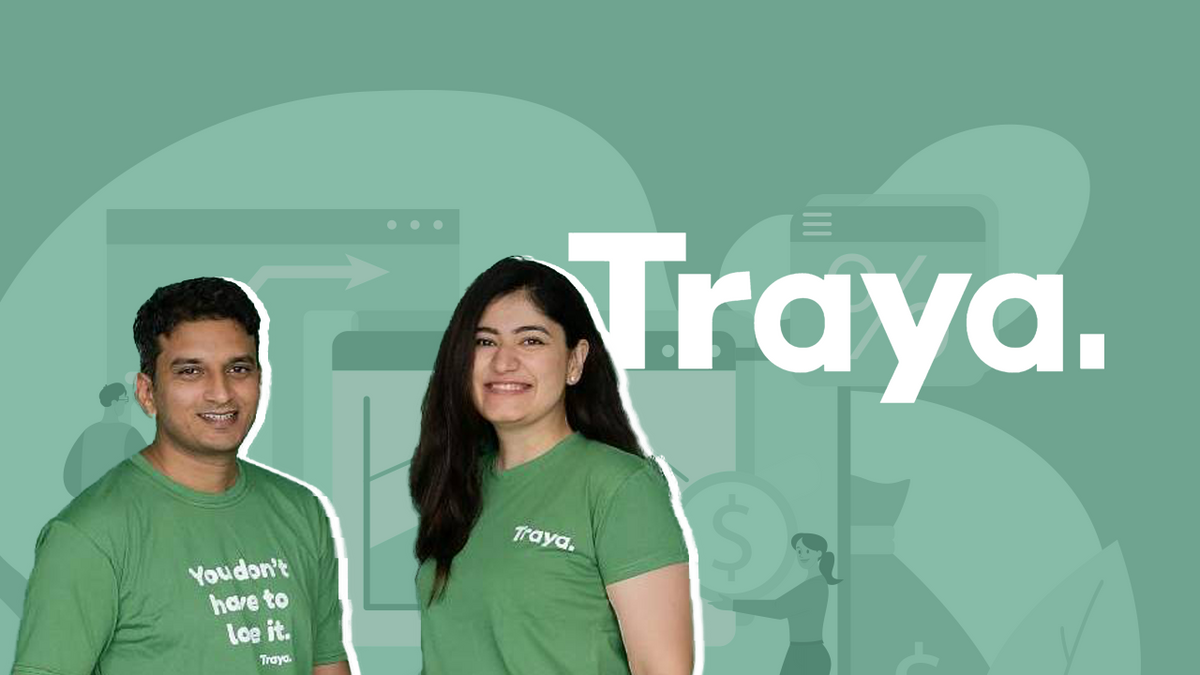
Traya recorded over threefold year-on-year growth, with its revenue crossing Rs 230 crore during the previous fiscal year ending March 2024. Moreover, with this pace, the Mumbai-based company became profitable in the same period. Traya’s revenue from operations surged 3.8X to Rs 236 crore in FY24 from Rs 61 crore in FY23, its annual financial statements sourced from the Registrar of Companies show. Established in 2019, Traya focuses on addressing hair loss at its core by identifying the underlying causes. It provides personalized hair solutions and guidance from a team of experienced hair coaches and physicians. Income from product sales accounted for 99.36% of Traya's total operating revenue, which rose to Rs 234.5 crore in FY24, up from Rs 61 crore in FY23. The rest income came from courier services and doctor consultation fees. Moving on to the expense part, marketing and sales accounted for 43% of the overall expenditure. This cost grew twofold to Rs 98 crore in FY24 from Rs 51 crore in FY23. To the tune of scale, the cost of procurement of materials surged 3.6X to Rs 54 crore in FY24. Traya’s employee benefits also saw a 4X surge to Rs 36 crore in FY23. Other overheads including freight, legal, and travelling increased the overall cost by 154% to Rs 229 crore in FY23 from Rs 90 crore in FY23. The 3.8X growth in scale enabled Traya to achieve a notable profit of Rs 9 crore in FY24, a stark contrast to the Rs 28 crore loss in FY23. Its ROCE and EBITDA margin improved to 8.7% and 5.04%, respectively. On a unit basis, the company spent Rs 0.97 to earn a rupee in FY24. Traya's total current assets recorded at Rs 159 crore, with a cash balance of Rs 85 crore at the end of the previous fiscal year. According to startup-data intelligence platform TheKredible, Traya has raised approximately Rs 96 crore to date, including Rs 75 crore in funding from Xponentia Capital in April this year. The company counts notable investors such as Fireside Ventures, Kae Capital, Xponentia Capital, and Whiteboard Capital.

Advantage Club crosses Rs 300 Cr revenue in FY23; profitability in sight

EntrackrEntrackr · 1y ago
Advantage Club crosses Rs 300 Cr revenue in FY23; profitability in sight
Medial

Employee engagement platform Advantage Club has maintained its growth streak in FY23 with the firm’s operating revenue skyrocketing by 93.4%. Simultaneously, the firm also managed to control its losses in the fiscal year ending March 2023 and is likely to turn profitable in FY24. Advantage Club’s revenue from operations grew to Rs 323 crore in FY23 from Rs 167 crore in FY22, its annual financial statements filed with the Registrar of Companies show. The company provides employee engagement and experience solutions, which includes rewards, recognition, flexible benefits, wellness, onboarding, and more. It claims to work with 1,000 clients with a presence across 100 countries. The company has doubled its user base to 4 million in less than 15 months. Voucher sale was the primary source of revenue for Advantage Club forming 91.5% of the total operating earning which surged 92% to Rs 297 crore in FY23. The rest of the income came from the sale of services, discount income without product margin, and brand breakage. For the reward and recognition provider firm, the procurement of vouchers naturally became the largest cost center accounting for 92% of the overall expenditure. In line with the scale, this cost grew 92.3% to Rs 299 crore in FY23. The firm’s burn on employee benefits, advertising cum promotional, information technology, legal, and other overheads took its overall expenditure to Rs 324 crore in FY23 from Rs 171 crore in FY22. See TheKredible for the detailed expense breakup. The high procurement cost (vouchers) overshadowed the revenue growth, making it challenging for the company to achieve profitability in the last fiscal year. As a result, the company has been flirting around breakeven for the last three fiscal years. Its ROCE and EBITDA margin recorded at -20% and -0.3% respectively. On a unit level, it spent Re 1 to earn a rupee in FY23.

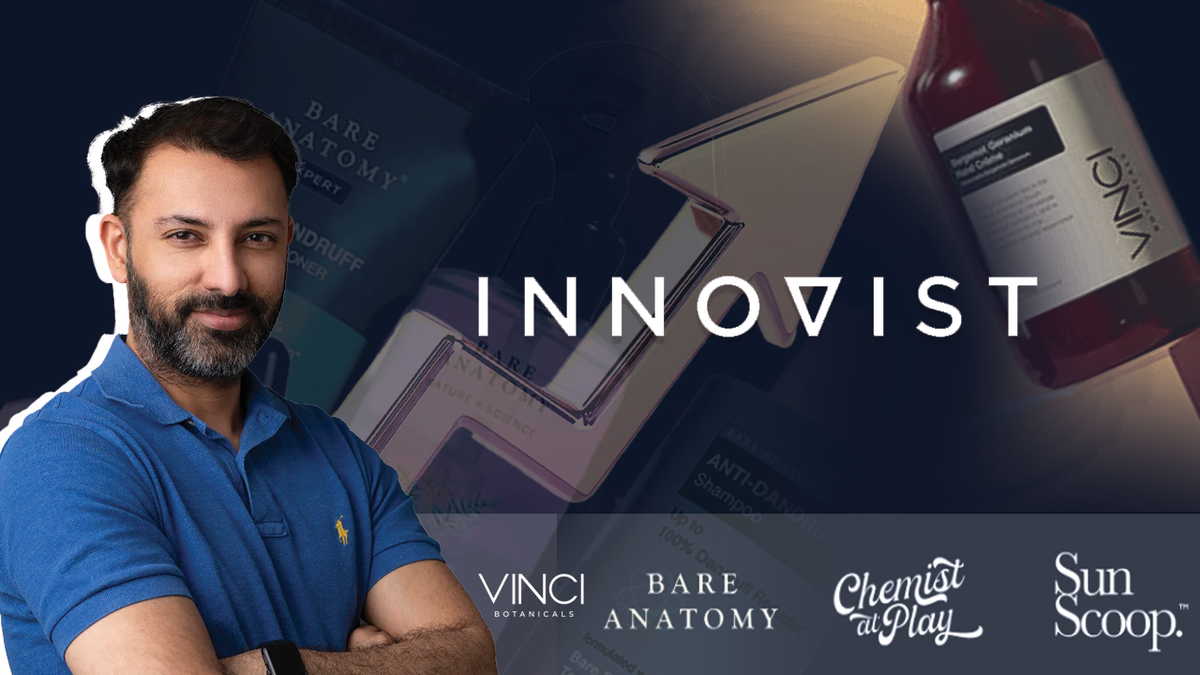
Bare Anatomy parent Innovist crosses Rs 300 Cr revenue in FY25, turns profitable

EntrackrEntrackr · 1m ago
Bare Anatomy parent Innovist crosses Rs 300 Cr revenue in FY25, turns profitable
Medial

Innovist, the parent company of Bare Anatomy, Chemist at Play, Sunscoop, and Vinci, reported strong financial performance in the fiscal year ended March 2025, with total revenue surpassing Rs 300 crore while turning profitable during the year. Innovist has posted over 2.8X year-on-year growth in its operating revenue to Rs 299 crore in FY25 from Rs 105.8 crore in FY24, according to its consolidated financial statements filed with the Registrar of Companies (RoC). Founded in 2018 by Rohit Chawla, Sifat Khurana, and Vimal Bhola, Innovist, formerly known as Onesto Labs, offers hair and skin products and currently operates four brands: Bare Anatomy, Chemist at Play, Sunscoop, and Vinci Botanicals. The sale of these products was the primary source of revenue for the company, accounting for 97.5% of total revenue or Rs 291.5 crore, while the remaining Rs 7.6 crore came from the shipping receipts. Innovist also earned Rs 2.34 crore from interest on current investments and other non-operating sources, taking its total income to Rs 301.4 crore. On the expense side, advertising remained the company’s largest cost head, rising 2.5X year-on-year to Rs 136.5 crore and accounting for over 45% of the total expenditure. The cost of materials, another key expense component, also surged 2.6X to Rs 78.5 crore during the year. Warehousing-related expenses nearly tripled during the fiscal year to Rs 24 crore, while employee benefit expenses stood at Rs 15 crore, accounting for just 5% of the total cost. Meanwhile, commission paid to sole buying agents for procuring raw materials surged over 19X to Rs 15.5 crore. Other overheads, including transportation, rent, IT expenses, and legal and professional fees, took total expenses to Rs 301 crore in FY25. The D2C house of brands recorded nearly threefold revenue growth in the previous fiscal. It also booked Rs 11.8 crore in deferred tax income. Together, these helped the company turn profitable, posting a Rs 12 crore profit compared to a Rs 12.5 crore loss in FY24. Its ROCE improved to -1.46%, while the EBITDA margin turned positive at 0.42% in FY25 with an EBITDA of Rs 1 crore. On a unit level, Innovist improved its expense-to-earning ratio to Rs 1.01 during the period. The Gurugram-based company reported current assets of Rs 116 crore, including cash and bank balances of Rs 46 crore, as of March 2025. According to startup data intelligence platform TheKredible, the Gurugram-based company has raised $30 million in funding to date, including a $16 million round in April this year through a mix of primary and secondary transactions led by ICICI Venture, which also provided an exit to its existing backer Accel. After a difficult 2024 for the D2C category, some of which is still unfolding for some, many others who survived seem to have learned some important lessons. While the high advertising expenses don’t indicate a drop in competitive intensity yet, the topline growth does point to a business with a more than foothold in the market now. A funding revival of sorts is also underway with some recent news in the category, but for Innovist, bigger prizes await if it can sustain the growth and keep improving margins steadily.

Download the medial app to read full posts, comements and news.