News on Medial

Related News

Storia Foods revenue spikes 51% to Rs 169 Cr in FY24

EntrackrEntrackr · 11m ago
Storia Foods revenue spikes 51% to Rs 169 Cr in FY24
Medial

Storia Foods, a beverage and dairy alternative brand, reported 51% year-on-year growth in FY24. However, the company’s losses widened during the same period due to rising expenses across key cost centers. Storia Foods’ revenue from operations rose to Rs 169 crore during the last fiscal year, up from Rs 112 crore in FY23, according to its financial statement filed with the Registrar of Companies (RoC). Founded by Vishal Shah, Storia Foods offers sugar-free shakes, lattes, smoothies, coconut water, juices, and booster drinks, among other products. The sale of these items was the sole source of operational revenue for the company. The firm also earned Rs 2 crore from interest on deposits, which took its total revenue to Rs 171 crore in FY24. Storia Foods’ total expenses rose 44% to Rs 203 crore in FY24, up from Rs 141 crore in the previous year. The largest cost component, material costs, increased 40% to Rs 98 crore. Employee benefit expenses grew 17% to Rs 27 crore, while other expenses jumped 63% to Rs 78 crore. Despite strong revenue growth, the rising cost structure resulted in a net loss of Rs 33 crore in FY24 from Rs 27 crore in FY23. The firm’s EBITDA margin improved to -19.18% in FY24, compared to -24.69% in FY23. On a unit level, Storia Foods spent Rs 1.20 to earn a rupee during the fiscal year. The Mumbai-based company reported current assets worth Rs 24 crore in FY24, which includes Rs 5 crore in cash and bank balance. According to startup data intelligence platform TheKredible, Storia Foods has raised a total of $6 million in funding to date. Sixth Sense Ventures is the lead investor, holding a 23.86% stake, while founder Vishal Shah owns 20.30% of the company. Storia Foods is a very interesting effort in a category that has been notoriously difficult to crack. If it’s not the proposition of “pure juice” that gets you, it is the issue with the value-seeking Indian buyer, who simply does not sip often enough if the price is too ‘high’ for the privilege of getting pure juice. Storia has tried an interesting tack around the challenge by trying to push many of its offerings in packs of 6, while promising quality. It will be really interesting to see if the pitch has worked in terms of orders for full packs of six or more. Otherwise, despite a good show on growth and cost controls, the firm knows the next big challenge looms, besides the obvious one of distribution, in that it might get closer to breakeven, but within the next 2 years, it will need to confront a market that has usually stagnated for predecessors, forcing many to compromise on their original premise to keep growing with lower value, diluted offerings.

ShareChat posts Rs 723 Cr revenue in FY25; cuts adjusted EBITDA losses by 72%

EntrackrEntrackr · 4m ago
ShareChat posts Rs 723 Cr revenue in FY25; cuts adjusted EBITDA losses by 72%
Medial

Homegrown social media company ShareChat reported moderate revenue growth in FY25, along with an improvement in its bottom line supported by cost controls and operational efficiency. ShareChat’s revenue stood at Rs 723 crore, registering a marginal year-on-year increase as compared to Rs 718 crore in FY24. However, its adjusted EBITDA losses shrank 72% to Rs 219 crore. During the fiscal year, ShareChat’s core business turned cashflow positive, representing a key turnaround after several years of restructuring and cost optimization. The improvement came from stronger ad monetization, leaner operations, and a sharper focus on high-yield content distribution. “Our disciplined approach to cost optimization and strategic diversification is now delivering results. We have built a strong core business with a large and sticky user base that allows us to invest confidently in the next phase of growth,” said Ankush Sachdeva, co-founder and CEO of ShareChat and Moj. According to the company, it has already crossed Rs 1,000 crore in annual recurring revenue (ARR) by the end of H1 FY26 and expects to grow its topline by around 30% in FY26. The company also continues to expand into new verticals like micro dramas through its new platform QuickTV, which crossed 15 million downloads within four months of launch. With a monetizable user base of over 200 million, ShareChat is now focused on maintaining profitability in its core business while scaling new revenue streams in FY26. Last year, ShareChat raised $65 million in debt across two tranches. The firm has raised around $1.3 billion from investors including Twitter (now X), Alkeon Capital, Moore Strategic Ventures, and Tencent, among others.

Mave Health raises Rs 6 Cr led by All In Capital and iSeed Fund

EntrackrEntrackr · 1y ago
Mave Health raises Rs 6 Cr led by All In Capital and iSeed Fund
Medial

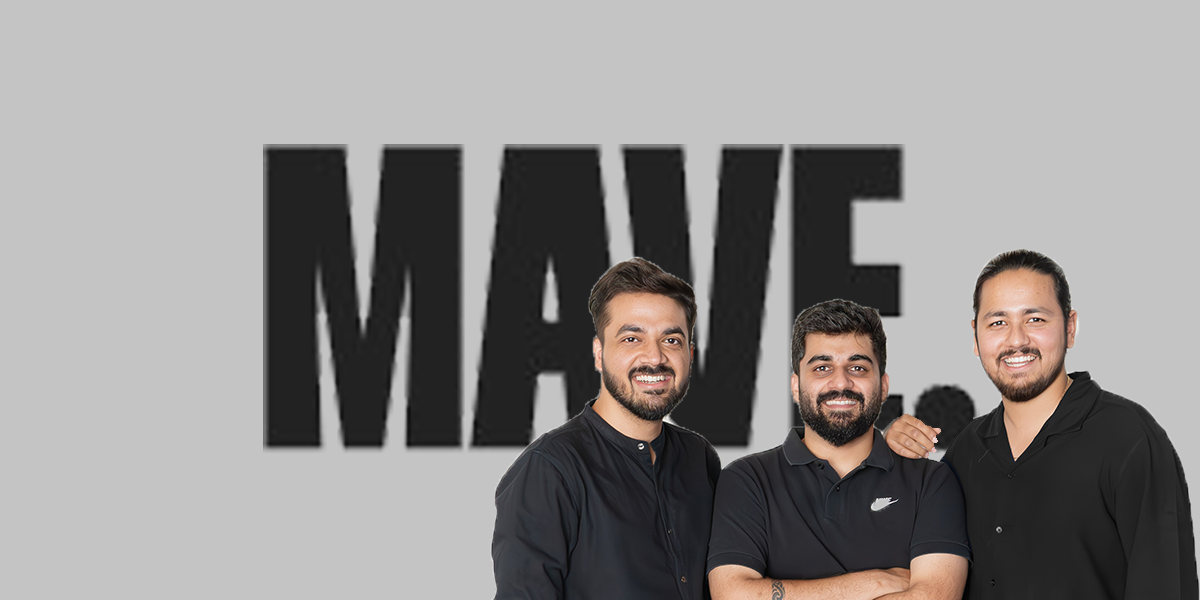
Mave Health, a mental health-tech startup, has raised Rs 6 crore in a pre-seed funding round led by All-In Capital and Utsav Somani’s iSeed Fund with participation from Bharat Founders Fund, Deepinder Goyal (Zomato), Kunal Shah (CRED), Mohit Kumar and Vatsal Singhal (Ultrahuman). The round also saw angel investors like Gaurav Agarwal (TATA 1mg), Nandan Reddy (Swiggy), Rohan Verma (BreatheWellBeing), Nikhil Kant (Even), Harsh Shah (Fynd), Neel Mehta (Studio Carbon), Nitin Mehrotra (Dressfolk), Himanshu Aggarwal (SHL), along with several family offices and digital creators. The funding will support Mave Health in launching Arc, a non-invasive brain stimulation wearable that treats depression, the company said in a press release. Founded in 2023 by Dhawal Jain, Jai Sharma and Aman Kumar, Mave Health aims to build human-centric evidence based programs for mental well-being. The startup’s flagship product Arc improves brain health and treat depression. According to the company, the device is developed in collaboration with a team of top experts, including neuroscientists, psychiatrists, and psychologists from Harvard Medical School, Maastricht University and other leading research institutes. Over the past few months, during the beta phase, more than 1,000 individuals have used Arc and have seen substantial improvements in their depression symptoms. Currently, Mave Health’s flagship wearable, Arc, can be accessed by enrolling in Mave Health’s 12-week long program which also offers unlimited sessions with their experts, including doctors, psychologists, nutritionists, and fitness coaches. Mave Health has also partnered with psychologists, hospitals and private clinics across India to make Arc more accessible.

Cosmix by the numbers: What Marico gets in its latest D2C acquisition

EntrackrEntrackr · 20d ago
Cosmix by the numbers: What Marico gets in its latest D2C acquisition
Medial

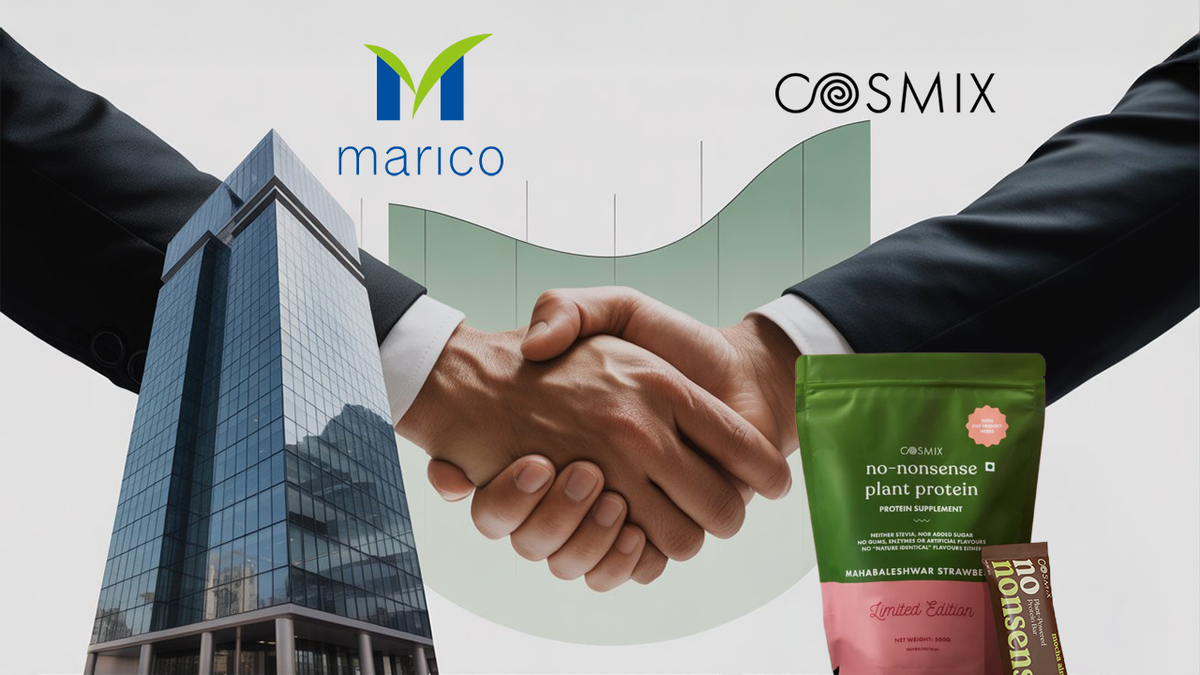
Continuing its acquisition spree, Mumbai-based multinational consumer goods company Marico has announced the purchase of a 60% majority stake in plant-based protein supplements brand Cosmix, shortly after acquiring snacking brand 4700BC. Cosmix more than doubled its operating scale in the fiscal year ended March 2025 while its profit nearly tripled and has remained profitable since its inception. With this acquisition, Marico has added another brand to its growing D2C portfolio, which includes plant-based nutrition brand Plix, True Elements, Just Herbs, and men’s grooming brand Beardo. To understand the financial drivers behind the acquisition, Entrackr analysed Cosmix’s numbers based on its regulatory filings, along with market signals that appear to have reinforced Marico’s conviction. Cosmix’s revenue from operations more than doubled to Rs 50.93 crore in FY25 from Rs 24.2 crore in FY24. Founded in 2019, Cosmix operates as a digital-first nutrition brand focused on plant-based protein and wellness products, including protein bars, protein pancakes, multivitamins, and immunity boosters. The startup sells its products through its own website and third-party online marketplaces. Sales of these products were the sole source of Cosmix’s operating revenue in FY25. In addition, the company earned Rs 25 lakh as interest on deposits in the last fiscal, which pushed its total income to Rs 51.18 crore. Cosmix is a bootstrapped company and claims to have scaled to an ARR (Annual Recurring Revenue) of Rs 100 crore. Advertising was the largest expense for the D2C firm, accounting for 34% of total expenditure, and doubled year-on-year to Rs 13.52 crore in FY25. The cost of materials was another major expense at Rs 11.2 crore and also doubled during the year, in line with revenue growth. Importantly, the firm’s employee benefits expenses stood at Rs 3.45 crore in the last fiscal which formed only 8.72% of its total costs. Other overheads including marketplace management, transport and courier charges, service retention fees, and software maintenance pushed total expenses to Rs 39.52 crore in FY25. The Bengaluru-based company’s revenue growth outpaced its expenses and led its profit to nearly triple to Rs 8.21 crore in FY25 from Rs 2.83 crore in FY24. The seven-year-old firm has remained profitable since inception, unlike most D2C companies. Its ROCE and EBITDA margin stood at 99.395 and 22.48%, respectively. On a unit level, Cosmix spent Rs 0.78 to earn a rupee. Its current assets were recorded at Rs 16.45 crore, with cash and bank balances of Rs 4.69 crore at the end of FY25. Like Marico, several legacy fast-moving consumer goods (FMCG) companies are increasingly acquiring digital-first (D2C) startups to expand into high-growth categories such as health supplements, grooming, and personal care. Hindustan Unilever (HUL) acquired skincare brand Minimalist, ITC has bought healthy snacking company Yoga Bar, VLCC has picked up men’s grooming brand Ustraa, and Emami has acquired The Man Company, which highlights a broader shift by established FMCG players towards premium, online-native brands. A buy like Cosmix indicates strong conviction at a promoter level or high up in Marico (FY25 revenues of Rs 10,800 crores, PAT of Rs 1,593 crore), considering the relatively small size of the business. It’s not exactly the kind of purchase that will move the stock price either way. Cosmix founders would be expected to leverage Marico’s scale and resources to scale up faster than they would have, besides use their appreciated skills to support other businesses perhaps. One can only hope that Marico will be able to offer the flexibility and space for the Cosmix team to spread out without feeling the constrictions of large firm processes and bureaucracy, an affliction that has laid low expectations from many an acquisition over the years, when it is a large firm acquiring a startup.

Exclusive: Flipkart to take on Zepto, Blinkit with quick commerce foray

EntrackrEntrackr · 1y ago
Exclusive: Flipkart to take on Zepto, Blinkit with quick commerce foray
Medial

The quick commerce sector is all set to heat up once again as India’s e-commerce giant is now eyeing the segment. Flipkart has started ramping up infrastructure for its quick commerce play, three sources aware of the details of the plan told Entrackr. “Flipkart will launch 10-15 minutes delivery in at least a dozen cities in the next six to eight weeks,” said one of the sources requesting anonymity. “It’s building up a chain of dark stores across several cities including Bengaluru, Delhi (NCR) and Hyderabad among others.” Flipkart’s foray into quick commerce comes at a time when experts anticipate that quick commerce would end up eating into the e-commerce pie sooner than later in India. The total addressable market for quick commerce in India is nearly worth $45 billion, according to a 2022 Redseer report. More importantly, quick commerce has proven to be surprisingly resilient in the last couple of years, with both Zepto and Zomato’s Blinkit doing more than enough to convince investors that the concept has a future in India. While Zepto was rewarded with a unicorn round, Blinkit’s (formerly Grofers) turnaround and Swiggy Instamart’s growth have been bright spots in terms of scaling up with improving margins for their owners. “If you look at Flipkart’s recent launches, it hints at the firm’s foray into quick commerce. It launched same-day delivery in 20 cities a couple of weeks ago… the company began delivering flowers and cakes around the Valentine season (February 2024),” an analyst covering the e-commerce and quick commerce segments, requesting anonymity, told Entrackr. Sources indicate that Flipkart will have a wider catalog than incumbents such as Zepto and Blinkit. “The company will have a sharp focus on FMCG, grocery and daily essentials but it would also push categories such as electronics, fashion,” added the person quoted above. It’s worth mentioning that the current quick commerce players have also been steadily expanding and diversifying their offerings. Responding to queries sent by Entrackr, a Flipkart spokesperson said they are working towards delivering a wide range of products with speed. “Over the past few months, we have made several investments to enhance our delivery capabilities, including adding same-day delivery in 20 cities. This covers mobiles, essential items, electronics, home appliances, fashion, books and lifestyle products,” said the spokesperson. “We are committed to meeting evolving customer expectations and delivering excellence in value, selection and speed, with more initiatives expected on this front in the coming months.” Over the past three years, quick commerce gained quick ground in top 15 Indian cities and top three players in the segment—Blinkit, Swiggy Instamart and Zepto—managed to gain sizable scale. Sources outlined that BlinkIt does around 6 lakh orders a day while Swiggy InstaMart and Zepto’s daily volume hover around 5 lakh and 3 lakh, respectively. According to Entrackr sources and data available in the public domain, Blinkit has an average revenue run rate of Rs 12,000 crore in the ongoing fiscal year whereas Swiggy Instamart ARR (read as GMV) stands at around Rs 8,000-8,500 crore. Zepto’s gross merchandise value has neared Rs 7,000 crore. Fresh from its last funding round, Zepto has been noticeably feistier — with a larger catalog and stronger marketing push. Meanwhile, Reliance and Google-backed Dunzo lost its mojo. The firm failed to raise a new round in the past two years and reported only Rs 226 crore in revenue in FY23 with losses of Rs 1,801 crore. As per reports, Flipkart engaged in discussion regarding a potential acquisition of the Kabeer Biswas-led firm. While all that might sound good, the fact that no one disagrees is that the market is not big enough for so many players, making this a matter of staying in power for most. Or perhaps, even newer operating models that might ensure sustainable growth. The broad direction so far, of an ever widening catalog and higher value transactions like electronics items etc, indicates the bleeding will not stop anytime soon.

Licious reports Rs 685 Cr revenue in FY24; cuts losses by 44%

EntrackrEntrackr · 1y ago
Licious reports Rs 685 Cr revenue in FY24; cuts losses by 44%
Medial

D2C meat and seafood brand Licious has experienced sluggish growth over the past two fiscal years, with revenue hovering around Rs 700 crore. However, the firm has successfully reduced its losses by 44% in the last fiscal year (FY24). According to the company’s press release, Licious’s revenue declined by 9%, from Rs 746 crore in FY23 to Rs 685 crore in FY24. This modest decline was attributed to the closure of distribution channels like Dunzo and Swiggy Meatsore, as well as a winding down of exposure to modern trade and local stores. Licious reports serving 1.2 million customers each month through its app, which now drives 85% of its total business. The company’s flagship program, Infinity, accounts for 58% of its overall revenue. Despite the slight decrease in revenue, Licious implemented cost control measures that helped cut losses by 44%, bringing them down to Rs 294 crore in FY24 from Rs 524 crore in FY23. The company also anticipates achieving positive EBITDA in the current fiscal year. By the end of FY24, Licious laid off nearly 3% of its workforce citing “operational reset to sharpen the growth focus. The move impacted 80 employees. In an effort to enhance customer experience, Licious is piloting 30-minute deliveries in Gurugram as it shifts to a full-stack D2C model. Additionally, on Tuesday, the firm expanded its physical retail presence by acquiring Bengaluru-based offline retailer My Chicken and More, increasing its retail points of sale to 26. To date, the Bengaluru-based company has raised over $450 million. According to TheKredible, Mayfield India is the largest stakeholder in Licious with 14.69%, followed by Vertex Ventures, 3one4 Capital, Temasek, and others. Licious is the largest player in the D2C meat and seafood space, competing with companies like FreshToHome, Zapfresh, BBDaily, MeatRoot, and Easymeat. In October 2023, quick commerce platform Zepto entered the meat delivery market with its in-house brand, Relish. This vertical reportedly achieved an annual recurring revenue (ARR) of Rs 150 crore in just six months, with a projected revenue run rate of Rs 1,000 crore by March 2026.

Unacademy slashes core biz cash burn to Rs 200 Cr in 2025: Gaurav Munjal

EntrackrEntrackr · 10m ago
Unacademy slashes core biz cash burn to Rs 200 Cr in 2025: Gaurav Munjal
Medial

Unacademy slashes core biz cash burn to Rs 200 Cr in 2025: Gaurav Munjal Unacademy CEO Gaurav Munjal has shared an update on the company’s financial and operational performance. According to Munjal, Unacademy has reduced its cash burn in the core business from over Rs 1,000 crore annually three years ago to under Rs 200 crore this calendar year. This is about half of what the company spent last year. In a thread on social media platform X, Munjal said the company currently has Rs 1,200 crore in the bank and is in a “default alive” state. He added that some of Unacademy’s businesses, including Graphy and PrepLadder, are generating cash on a monthly basis. For context, the SoftBank-backed edtech unicorn cut its losses by 62% to Rs 631 crore in FY24, while its revenue remained flat during the period. Reflecting on past decisions, Munjal said edtech companies that grow through multiple acquisitions are unlikely to succeed in the current market. He said Unacademy had made this mistake earlier and is now focusing on profitability without getting distracted by external developments. On the offline front, Munjal said that around 70% of Unacademy’s centers are expected to be profitable at the center level this year. These centers are showing outcomes in exam categories such as JEE, NEET, and UPSC. He also pointed to Airlearn as the fastest-growing product within the group. Airlearn has recorded nearly 70,000 daily active users and $2 million in annual recurring revenue over the last 12 months. Munjal outlined three focus areas for the company: making the core business profitable, building tech products such as Airlearn and Graphy, and staying focused on internal goals instead of market noise.

Decoding $88.5 Mn Udaan-Shopkirana stock deal

EntrackrEntrackr · 7m ago
Decoding $88.5 Mn Udaan-Shopkirana stock deal
Medial

Udaan has acquired Shopkirana in an all-stock deal, marking a notable consolidation in the grocery commerce space. While both firms have termed the deal strategic, Entrackr’s analysis suggests it is an unremarkable acquisition from an investor’s perspective. According to regulatory filings, the board of Info Edge has approved the transfer of its entire 26.14% stake in ShopKirana, held through its wholly-owned subsidiary Startup Investments Holding Ltd (SIHL), to Hiveloop Technology Pvt Ltd (HEPL), a subsidiary of Trustroot Internet (Udaan’s parent entity) based out of Singapore. In return, Info Edge will receive 1.68 crore shares of Hiveloop Technology, which translates to around 0.91% of HEPL on a fully diluted basis. These shares are linked to 73,561 reference shares at the Udaan parent and are valued at approximately $23.13 million, as per the agreement. The swap pegs Shopkirana’s total enterprise value at roughly $88.5 million, based on the value attributed to Info Edge’s minority stake (26.14%). According to the disclosure, the transaction is subject to customary closing conditions mentioned in the agreements. According to Entrackr’s analysis, ShopKiarana will get a 3.48% value of Udaan’s India business as per the Info Edge holding in Udaan’s Indian entity. Shopkirana has raised over $50 million in its lifetime from Info Edge, Sixth Sense Ventures, Oman India Joint Investment Fund, and others. Founded in 2015, ShopKirana focuses on digitizing procurement for kirana stores across smaller cities such as Indore, Bhopal, Lucknow, Agra, Surat, and Meerut. Its integration with Udaan will expand the latter’s reach in high-frequency categories like fast-moving consumer goods (FMCG) and hotel, restaurant, and catering (HoReCa) business. For the fiscal year ended in March 2024, Shopkirana’s gross revenue decreased 6.26% to Rs 639.16 crore in FY24 from Rs 681.81 crore in FY23. However, the firm managed to reduce its losses by 30% to Rs 55 crore in FY24. The transaction is yet another indicator of the investor fatigue and challenges in the grocery commerce space. Firms have found it extremely difficult to squeeze out profits, even as scale has been relatively easier to acquire thanks to the sheer size of the category. Only the biggest will offer a market-based exit to investors, while consolidation might be the way out for the rest. ShopKirana has probably tried to become acquisition-ready by controlling costs, but paid a price in terms of topline growth. For Udaan, which has been on a push towards reducing EBITDA losses for the past two years, a stock swap is the best outcome while it hopes for an upside in due course. With any potential exit some time away, ShopKirana is a relatively low-risk acquisition that it will hope can surprise on the upside.

Download the medial app to read full posts, comements and news.