News on Medial

M2P Fintech’s losses widens over 90% in FY25; revenue crosses Rs 500 Cr

EntrackrEntrackr · 1d ago
M2P Fintech’s losses widens over 90% in FY25; revenue crosses Rs 500 Cr
Medial

M2P Fintech’s losses widens over 90% in FY25; revenue crosses Rs 500 Cr Banking infrastructure startup M2P Fintech reported a 33% year-on-year increase in its operating scale and crossed the Rs 500 crore threshold in FY25. However, the growth came at a steep cost which surged 90% during the last fiscal year. M2P Fintech’s revenue from operations grew to Rs 506 crore for the fiscal year ending March 2025 from Rs 382 crore in FY24, its annual consolidated financial statements sourced from the Registrar of Companies (RoC) show. M2P Fintech offers API infrastructure that allows businesses to launch their own branded financial services through partnerships with fintech firms, while ensuring regulatory compliance. The company operates in more than 30 markets across Asia Pacific, MENA, and Oceania, and claims to support over 200 banks and 300 lenders. Significantly, the Tiger Global-backed firm has not disclosed its revenue breakdown for the last fiscal year. It earns revenue from multiple streams, including API usage fees, card issuance and management fees, platform subscription charges, commissions from banking partnerships, lending solutions, cross-border forex services, and others. The company earned almost all of its revenue from the domestic market, with only Rs 5.7 crore coming from export services, despite operating in over 30 markets across the Asia Pacific, MENA, and Oceania regions. The firm also earned around Rs 25 crore from non-operating sources, recorded under miscellaneous income, which took its overall income to Rs 531 crore in the last fiscal year. For the SaaS firm, spending on technology, cloud services, and co-branding was the largest cost for the firm, around 41%, which doubled to Rs 325 crore in FY25 as compared to Rs 160 crore in FY24. The employee benefits expenses also rose 24% to Rs 311 crore, which includes a non-cash ESOP cost of Rs 40 crore. Legal, advertising, impairment, depreciation & amortization, travel, and other overhead expenses brought M2P's total costs to Rs 786 crore, a 49% year-on-year increase compared to Rs 528 crore in FY24. The company’s losses widened 91% to Rs 256 crore in the last fiscal, as technology-related costs doubled during the period, which caused overall expenses to rise faster than operating scale. On a unit level, the company spent Rs 1.55 to earn one rupee in FY25. M2P Fintech recorded a negative ROCE of -34.71% and an EBITDA margin of -44.07%. Its EBITDA (loss) stood at Rs 223 crore during the period. The Chennai-based company’s total current assets stood at Rs 774 crore, including Rs 395 crore in cash and bank balances as of March 2025. M2P has raised over $200 million to date, including $100 million in its Series D round through a mix of primary and secondary transactions led by Helios Investment Partners in September 2024. In March last year, the company also acquired Chennai-based Mad Street Den in a distress sale valued at around $10–15 million.

Related News

Chaayos crosses Rs 300 Cr revenue in FY25; EBITDA jumps 6.5X

EntrackrEntrackr · 1m ago
Chaayos crosses Rs 300 Cr revenue in FY25; EBITDA jumps 6.5X
Medial

After flat growth in FY24, Chaayos rebounded in FY25, posting 25% revenue growth to cross Rs 300 crore, while cutting losses by 53% and boosting EBITDA 6.5 times. After flat revenue growth in FY24, tea café chain Chaayos staged a strong comeback in the fiscal year ended March 2025 and posted 25% revenue growth to cross the Rs 300 crore mark. During the same period, the company narrowed its losses by 53%, while EBITDA jumped 6.5 times. Chaayos’ revenue from operations grew by 25% to Rs 310.6 crore in FY25 from Rs 248.6 crore in FY24, according to its consolidated financial statement filed on the Registrar of Companies (Roc). Founded in 2012 by Nitin Saluja and Raghav Verma, Chaayos sells a variety of teas and other snacks and beverages with dine-in, takeaways, and online ordering facilities. It has over 200 outlets across Delhi-NCR, Mumbai and Bengaluru. The company is aiming to have 400 outlets by next year. The sale of teas, snacks, and beverages remained the firm’s primary revenue source. Sales of manufactured goods accounted for over 96% of total revenue at Rs 300 crore, while sales of traded goods stood at Rs 9.5 crore. The company generated Rs 19.1 crore from non-operating income, which took its total income to Rs 329.7 crore in the last fiscal year. On the expense front, Chaayos’ largest cost component, the cost of materials, rose 26% year-on-year to Rs 96.32 crore in FY25. Employee benefits expenses declined marginally by 3% to Rs 78.65 crore. Other major costs included depreciation and amortization at Rs 51.8 crore and commissions, which increased 21% to Rs 31.3 crore. Finance cost and expenses were recorded at Rs 29.42 crore and Rs 14.55 crore respectively. Other expenses, including power & fuel, legal & professional, travelling expenses added another Rs 53 crore to total expenses for the firm, which increased 9% to Rs 355 crore in FY25. A 25% increase in revenue from operations, along with tighter cost control across verticals, helped Chaayos cut its losses by 53% to Rs 25.4 crore in FY25. The company also posted a sharp improvement in profitability, with EBITDA rose nearly 6.5X to Rs 37 crore, while ROCE and EBITDA margin improved to -3.72% and 11.85%, respectively. On a unit basis, the company spent Rs 1.14 to earn one rupee of operating revenue in FY25. As of March 2025, the Tiger Global–backed firm reported current assets of Rs 155.7 crore, which included Rs 17 crore in cash and bank balances. Chaayos has raised over $90 million across multiple funding rounds, including its $45 million Series C round in June 2022 led by Alpha Wave, with participation from Elevation Capital, Tiger Global, and Think Investments.

Swiggy losses widens 74% to Rs 1,092 Cr in Q2 FY26, Instamart grows 2X

EntrackrEntrackr · 4m ago
Swiggy losses widens 74% to Rs 1,092 Cr in Q2 FY26, Instamart grows 2X
Medial

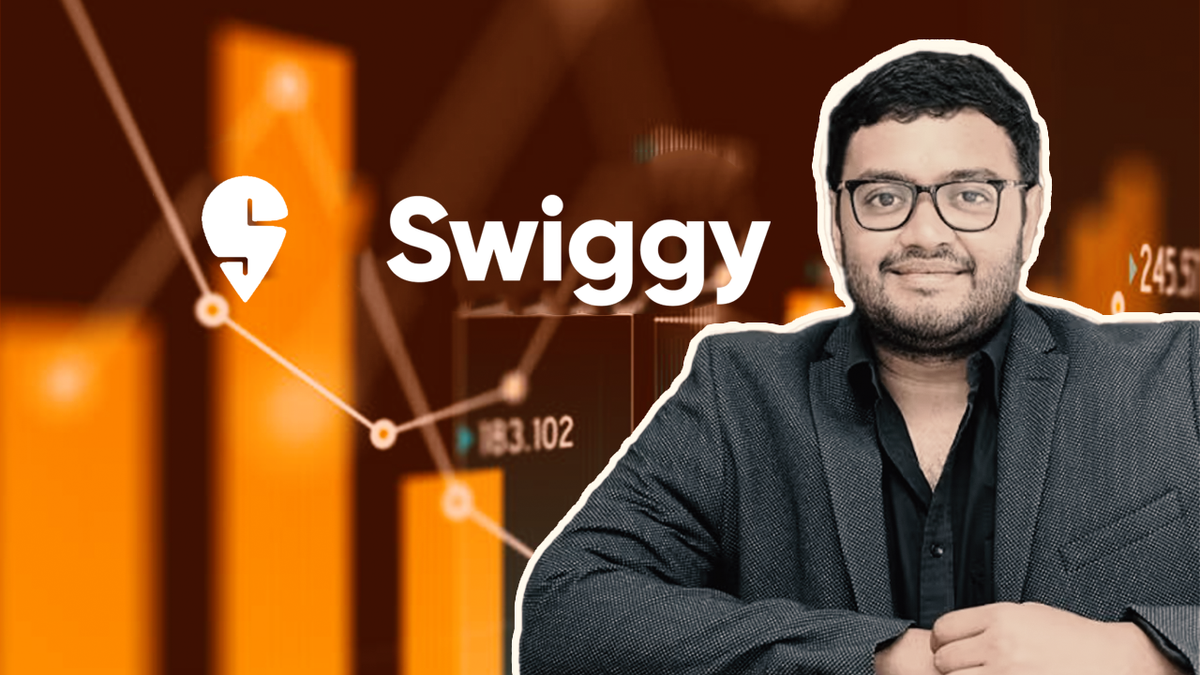
Swiggy reported a 54% YoY rise in operating revenue to Rs 5,561 crore in Q2 FY26 from Rs 3,601 crore a year earlier, while losses jumped over 74% during the quarter. Swiggy, the foodtech and quick commerce major, recorded a 54% year-on-year rise in operating revenue to Rs 5,561 crore in Q2 FY26 from Rs 3,601 crore in Q2 FY25. Despite the strong topline growth, the Bengaluru-based firm’s losses swelled by more than 74% in the quarter, according to its consolidated financial statements filed with the stock exchanges. Scootsy Logistics contributed the largest share, 46%, to Swiggy’s overall operating revenue. Its income grew 76% year-on-year to Rs 2,560 crore in Q2 FY26, up from Rs 1,453 crore in the same quarter last year. Swiggy’s food delivery business also grew strongly, rising 22% year-on-year to Rs 1,923 crore in Q2 FY26, and accounted for nearly 35% of the company’s total revenue during the quarter. Swiggy’s quick commerce arm, Instamart, also posted strong growth, with revenue doubling to Rs 980 crore in Q2 FY26 from Rs 490 crore in Q1 FY25. Swiggy’s Dine Out, Genie, Swiggy Mini and other non-operating income took its total revenue to Rs 5,620 crore in Q2 FY26. On the cost front, procurement of FMCG products for supply chain distribution accounted for 34.9% of Swiggy’s total expenses, rising 69% year-on-year to Rs 2,342 crore in Q2 FY26. Delivery expenses grew 30% to Rs 1,426 crore during the quarter. The company spent Rs 690 crore on employee benefits and Rs 1,039 crore on advertising, which surged 94% year-on-year. Depreciation and amortization expenses also increased 132% to Rs 304 crore. Overall, Swiggy’s total expenses for the quarter increased 56% to Rs 6,711 crore from Rs 4,309 crore in Q2 FY25. A 56% rise in total expenses, led by a 94% increase in advertising costs and a 132% jump in depreciation and amortization, widened Swiggy’s losses by over 74% to Rs 1,092 crore in Q2 FY26 from Rs 626 crore in Q2 FY25. For the first half of FY26, Swiggy reported revenue of Rs 10,522 crore, up 54% from Rs 6,824 crore in H1 FY25. However, its losses also widened by 85% to Rs 2,289 crore during the same period. Recently, Swiggy sold its stake in Rapido for Rs 1,968 crore to Prosus-owned MIH Investments One B.V. and Rs 431.5 crore to Setu AIF Trust and WestBridge, netting Rs 2,399.5 crore in total and earning over 2.5x returns on an investment made less than four years ago.

AgroStar crosses Rs 850 Cr revenue in FY25; cuts losses

EntrackrEntrackr · 16d ago
AgroStar crosses Rs 850 Cr revenue in FY25; cuts losses
Medial

AgroStar crosses Rs 850 Cr revenue in FY25; cuts losses AgroStar continued its steady growth and crossed Rs 850 crore in operating revenue in the fiscal year ended March 2025. The Pune-based firm also reduced its losses by 56% during the same period. AgroStar’s operating revenue increased by 14.2% to Rs 853 crore in FY25 from Rs 747 crore in FY24, according to its consolidated financial statement sourced from the Registrar of Companies (RoC). AgroStar runs a full-stack agritech platform that sells agri-inputs such as seeds, crop protection and nutrition products, while using AI-led and expert advisory to drive farmer engagement and repeat purchases. It also enables limited output linkages through brands such as Kimaye. Revenue from product sales accounted for 97% of operating revenue and rose 14.5% to Rs 827 crore in FY25. Income from services stood at Rs 13 crore, while other operating income also contributed Rs 13 crore during the year which took its total income to Rs 864 crore in FY25. On the spending side, the cost of materials remained the largest expense and accounted for 56% of the expense. To the tune of scale, this cost increased 6% to Rs 567 crore in FY25 from Rs 535 crore in FY24. Transportation costs rose 31% to Rs 145.5 crore, while employee benefit expenses declined marginally to Rs 108 crore. Depreciation expenses fell sharply by 72.3% to Rs 57 crore. Finance costs increased to Rs 36 crore in the period. Overall, AgroStar reduced its total expenses by 7.4% to Rs 1,008 crore in FY25 from Rs 1,089 crore in FY24. With steady revenue growth and cost control measures helped Agrostar to cut its losses by 56% to Rs 143.5 crore in FY25 from Rs 327 crore in FY24. Its ROCE and EBITDA margin stood at -140.48% and -7.15% respectively. On a unit basis, the company spent Rs 1.18 to earn a rupee of operating revenue during the fiscal year, compared to Rs 1.46 in FY24. As of March 2025, AgroStar reported cash and bank balances of Rs 120 crore, while its current assets stood at Rs 437 crore. AgroStar has raised about $186 million to date, including a $30 million round led by Just Climate. Its investors include Aavishkaar India, Bertelsmann, Evolvence India, Chiratae Ventures, and Hero Enterprises. It competes with Ninjacart, DeHaat, and WayCool.

Tractor Junction revenue crosses Rs 100 Cr in FY25

EntrackrEntrackr · 5m ago
Tractor Junction revenue crosses Rs 100 Cr in FY25
Medial

Tractor-focused marketplace Tractor Junction maintained a strong momentum in FY25, with operating revenue jumping 1.7X to cross the Rs 100 crore milestone, following a 2.3X jump in the previous fiscal year. Tractor Junction’s operating revenue surged over 70% to Rs 106.43 crore in FY25 from Rs 62 crore in FY24, according to its consolidated financial statements filed with the Registrar of Companies (RoC). Tractor Junction is a rural vehicle marketplace that facilitates buying, selling, financing, and insuring new and used tractors, farm equipment, and rural commercial vehicles. It also offers verified reviews and price comparisons to ensure transparency for users. Sales of tractors and equipment contributed 80% of Tractor Junction’s total revenue and rose nearly 90% to Rs 85.14 crore in FY25. The remaining Rs 21.29 crore came from services, including financing and other related offerings. The company claims that its financial services grew 10 times in FY25, and its used vehicle business grew 1.8 times, supported by 65 COCO outlets in Rajasthan, Madhya Pradesh, and Maharashtra. Tractor Junction also earned Rs 12.44 crore in non-operating revenue, including commission income and interest on fixed deposits, taking its total income to Rs 118.8 crore in FY25. The cost of materials accounted for 63% of total expenses which rose 86% to Rs 80.26 crore in FY25. Employee benefit expenses grew 47% to Rs 22 crore, while advertising, contract wages, RTO, insurance, and other costs drove total expenses up 75% to Rs 127.53 crore from Rs 72.7 crore in FY24. Tractor Junction’s total expenses grew faster than its revenue, primarily due to higher material costs, leading the Alwar-based company to post a loss of Rs 9.08 crore in FY25, which increased 2.5X from Rs 3.67 crore in FY24. Its EBITDA margin and ROCE stood at -18.03% and -70.3%, respectively. On a unit basis, it spent Rs 1.2 to earn a rupee of operating revenue in FY25. As of March 2025, the company’s current assets stood at Rs 70.43 crore, including cash and bank balances of Rs 13.76 crore. The company aims for another double-digit revenue growth in FY26, expand its COCO outlet network to 100, and focus more on profitability. According to startup data intelligence platform TheKredible, Tractor Junction has raised around $6 million to date, including a $5.7 million seed round in April 2022 co-led by Info Edge Ventures and Omnivore.

FirstCry parent’s revenue crosses Rs 1,900 Cr in Q4 FY25; losses surge 74%

EntrackrEntrackr · 9m ago
FirstCry parent’s revenue crosses Rs 1,900 Cr in Q4 FY25; losses surge 74%
Medial

The parent company of FirstCry has released its quarterly report for the last financial year ending March 2025. The report highlights moderate growth, with a 16% year-on-year growth in scale while losses surged 74%. FirstCry's revenue from operations grew to Rs 1,930 crore in Q4 FY25 from Rs 1,667 crore in Q4 FY24, its financial statements sourced from the National Stock Exchange show. For the full fiscal year (FY25), BrainBees’s operating revenue increased 18% to Rs 7,660 crore in FY25 from Rs 6,481 crore in FY24. The sale of its products through offline stores and websites in India and the international market was the primary source of revenue, accounting for 69% of total operating revenue, while its subsidiary, GlobalBees, contributed Rs 398 crore income for Q4 FY25. The company also made Rs 48 crore from interest income which took its overall revenue to Rs 1,979 crore in Q4 FY25, compared to Rs 1,685 crore in Q4 FY24. For the omnichannel retailer, the cost of procurement of materials accounted for 58% of the overall expenditure which increased 14% quarter-on-quarter to Rs 1,206 crore in Q4 FY25 from Rs 1055 crore in Q4 FY24. FirstCry employee benefits stood at Rs 229 crore in Q4 FY25 which includes Rs 82 crore as ESOP cost. Marketing, legal, rent, and technology expenses were key overheads that drove total expenditure up to Rs 2,060 crore in Q4 FY25, compared to Rs 1,737 crore in the same quarter last year. For the fiscal year ending March 2025, the company’s total expenses rose to Rs 7,992 crore. BrainBees’ loss surged by 74% to Rs 75 crore in Q4 FY25. For FY25, the firm losses stood at 215 crore in FY25, down from Rs 321 crore in FY24. (We have excluded exceptional items amounting to Rs 37 crore from the loss calculation.) BrainBees debuted on the stock exchange at Rs 446 and is now trading at 376.5 on May 26, bringing its total market capitalization to Rs 19,631 crore.

IndiQube crosses Rs 1,000 Cr revenue mark in FY25; cuts losses by 58%

EntrackrEntrackr · 8m ago
IndiQube crosses Rs 1,000 Cr revenue mark in FY25; cuts losses by 58%
Medial

IndiQube crosses Rs 1,000 Cr revenue mark in FY25; cuts losses by 58% IndiQube, a provider of managed workspace solutions, submitted its red herring prospectus (RHP) to SEBI for a proposed Rs 700 crore Initial Public Offering (IPO) last week. The company's financial report indicates a 57% reduction in net loss, attributed to revenue growth and controlled costs. Indiqube’s revenue from operations increased by 28% to Rs 1,059 crore in FY25 from Rs 830 crore in FY24, according to its restated financial statement filed in the RHP. IndiQube derives the majority of its income from rental services, which accounted for Rs 870 crore or over 82% of its total operating revenue. Other income sources included the sale of goods (Rs 66 crore), maintenance charges (Rs 51 crore), electricity charges (Rs 33 crore), and others (Rs 39 crore). The company also made additional Rs 44 crore from non-operating sources, which pushed its total revenue to Rs 1,103 crore in FY25. For the managed space providing firm, depreciation cost related to lease stood at Rs 487 crore, accounting for 39% of the total expense, followed by finance costs, which were recorded at Rs 330 crore. Employee benefit expenses rose to Rs 76 crore while material cost stood at Rs 52 crore during the year. Overall, total expenses remained largely flat at Rs 1,260 crore in FY25 from Rs 1,252 crore a year ago. Despite the high depreciation and finance costs, IndiQube’s near-flat expenses coupled with its top-line expansion helped the company to cut losses by 58% to Rs 141 crore in FY25, as compared to Rs 341 crore in FY24. The Bengaluru-based company spent Rs 1.2 to earn a Rupee of operating revenue in FY25. The company recorded current assets worth Rs 210 crore in FY25, including Rs 61 crore in Cash and bank balances. IndiQube’s equity shares will be listed on both the National Stock Exchange (NSE) and the Bombay Stock Exchange (BSE). The issue will open for subscription on July 23, 2025, and close on July 25, with the anchor book opening on July 22.

Petcare startup Supertails crosses Rs 100 Cr revenue in FY25; losses surge 28%

EntrackrEntrackr · 18d ago
Petcare startup Supertails crosses Rs 100 Cr revenue in FY25; losses surge 28%
Medial

Petcare startup Supertails crosses Rs 100 Cr revenue in FY25; losses surge 28% Petcare startup Supertails reported a 68% year-on-year jump in operational revenue, surpassing Rs 100 crore in FY25, while its losses widened 28% to Rs 52.5 crore amid ongoing expansion. Supertails’ revenue from operations surged 68% to Rs 108.3 crore in FY25, compared to Rs 64.6 crore in FY24, according to its financial statements filed with the Registrar of Companies (RoC). Founded in 2021 by Varun Sadana, Aman Tekriwal, and Vineet Khanna, Supertails addresses the evolving needs of pet parents through customised offerings, positioning itself as a full-stack digital platform for pet care and parenting solutions. The Supertails app offers more than 30,000 pet care products, including pet food, treats, accessories, healthcare products, and other essentials. The sale of these products accounted for nearly 95% of its total operating revenue, which stood at Rs 102.5 crore. It also provides veterinary services, including consultations, vaccinations, grooming, and preventive care at home or through its clinics. These services contributed Rs 2.65 crore during the period. The rest of the operating revenue came from franchise fees and through ad monetisation. The company also earned Rs 5 crore from non-operating sources such as gain from investments and interest income, this pushed its total income to Rs 113.3 crore in FY25. On the cost side, the cost of materials was the largest expense, accounting for 50% of the overall expenditure. This cost rose 45% to Rs 83.3 crore in FY25, while employee benefit expenses increased 15% year-on-year to Rs 25.3 crore for Supertails. Supertails spent Rs 22.9 crore on marketing in FY25 to boost its sales, a 37% increase from FY24. Other overheads such as shipping charges, legal and professional fees, warehousing costs, and software charges added Rs 34.3 crore to its expenses. Overall expenses surged 53% to Rs 165.8 crore in FY25 from Rs 108.4 crore in FY24. In the end, although Supertails’ operating revenue growth outpaced its expense growth, its losses still widened 28% to Rs 52.5 crore in FY25 from Rs 41 crore in FY24. Its ROCE and EBITDA margin stood at -52.58% and -48.9% respectively. On a unit basis, the company spent Rs 1.53 to earn every rupee of revenue in FY25, a marginal improvement over FY24. As of March 2025, the Bengaluru-based firm held cash and bank balances of Rs 39 crore, while its total current assets stood at Rs 100 crore. To date, the company has raised around $51 million, including its most recent $30 million round led by Venturi Partners with participation from Nippon India, Titan Capital, Fireside Ventures, RPSG Capital Ventures, and others.

Exclusive: BigHaat crosses Rs 1,100 Cr revenue in FY25; turns EBITDA profitable

EntrackrEntrackr · 6m ago
Exclusive: BigHaat crosses Rs 1,100 Cr revenue in FY25; turns EBITDA profitable
Medial

Exclusive All Stories Exclusive: BigHaat crosses Rs 1,100 Cr revenue in FY25; turns EBITDA profitable Full-stack agritech platform BigHaat Agro posted a flat scale with single-digit year-on-year growth in the fiscal year ending March 2025. However, the Bengaluru-based company managed to narrow its losses by over 25% during the last fiscal year. According to its co-founder Sateesh Nukala, BigHaat has crossed the Rs 1,100 crore revenue threshold in FY25 from Rs 1,050 crore in FY24. BigHaat’s revenue split consists of 85% of revenue coming from farm produce sales, with agri-inputs, which is direct to farmers, and digital only contributing 15%. The platform now counts 3 million monthly active farmers and reported 15% gross margins in FY25, said Nukala in an interaction with Entrackr. Nukala highlighted that exports and advanced processing, a high-margin vertical launched in FY25, now contribute 20% to its monthly revenue. “We have reduced our net loss to Rs 25 crore in FY25 from Rs 35 crore in FY24 and turned EBITDA positive for the last three quarters,” said Nukala. He also added that BigHaat is among the few agritech startups to achieve profitability at scale with 6x revenue-to-capital efficiency. As per Nukala, the company is targeting Rs 1,400 crore in FY26, with spices emerging as a key growth driver. “We are also open to acquisitions of new brands to strengthen our portfolio,” he emphasized. BigHaat has raised around $25 million to date. In January 2022, it raised Rs 100 crore led by JM Financial. Beyond Next Ventures, Ashish Kacholia, Ankur Capital, and others are some notable investors for the firm. This contrasts with larger peers. DeHaat, India’s most valued agritech startup, clocked Rs 2,675 crore revenue in FY24 but with losses of over Rs 240 crore. Ninjacart, backed by Walmart and Flipkart, crossed Rs 2,000 crore revenue in the same fiscal but recorded a Rs 259.6 crore loss. By combining steady topline growth, improving margins, and sustained EBITDA profitability, BigHaat is positioning itself as one of the few agritech ventures balancing scale with financial discipline, while many peers continue to burn capital at larger scales.

Exotel turns profitable in FY25; total income crosses Rs 500 Cr

EntrackrEntrackr · 1m ago
Exotel turns profitable in FY25; total income crosses Rs 500 Cr
Medial

Exotel turns profitable in FY25; total income crosses Rs 500 Cr The last fiscal year proved to be a milestone for Exotel as the cloud communication platform crossed the Rs 500 crore revenue mark in FY25 and also turned profitable, supported with controlled expenses and steady growth in its operating revenue. Exotel’s operating revenue increased by 10% to Rs 490.5 crore in FY25 from Rs 444.5 crore in FY24, according to its consolidated financial statements sourced from the Registrar of Companies (RoC). Exotel provides cloud-based voice and SMS contact center solutions, enabling businesses to manage customer engagement efficiently. Its primary revenue stream comes from offering internet-enabled cloud communication services. The bulk of the company’s revenue came from domestic services, which grew 9.5% to Rs 416 crore in FY25, while export services revenue rose 16% to Rs 74 crore. Including other income of Rs 16.5 crore, the company’s total income rose to Rs 507 crore in FY25 from Rs 460 crore a year earlier. On the cost side, Telephone and postage costs remained the largest expense, accounting for 44% of total costs. To the tune of scale, this expense increased 9% to Rs 212 crore in FY25 from Rs 195 crore in FY24. Employee benefit expenses, the second-largest cost head, declined by 21% to Rs 147 crore. Advertising and legal costs rose to Rs 12.5 crore and Rs 10 crore, respectively. Other expenses added the rest of Rs 77.5 crore. Overall, Exotel managed to bring down its total expenses by 4% to Rs 481 crore in FY25 from Rs 499 crore in FY24. The moderation in expenses and the steady revenue helped Exotel achieve profitability in the last fiscal year. The company posted a profit of Rs 20 crore in FY25, as compared to a loss of Rs 37 crore in FY24. Its ROCE and EBITDA margin improved to 2.46% and 6.83%, respectively. On a unit basis, Exotel spent Rs 0.98 to earn a rupee during the fiscal year, an improvement from Rs 1.12 in the previous year. As of March 2025, Exotel reported cash and bank balances of Rs 131 crore, while its current assets stood at Rs 290 crore. According to TheKredible, Exotel has raised $100 million of funding to date across multiple funding rounds, and counts Blume Ventures, A91 Partners, and Sistema Asia among its backers. According to the startup data intelligence platform TheKredible, A91 Partners is the largest external stakeholder with a 25.7% stake, followed by Blume Ventures. However, despite turning profitable in FY25, Exotel has witnessed notable leadership churn. Since late 2024, the company has seen the exit of several senior executives, including co-founder and COO Ishwar Sridharan.

Info Edge-backed Zingbus crosses Rs 150 Cr revenue in FY25

EntrackrEntrackr · 2m ago
Info Edge-backed Zingbus crosses Rs 150 Cr revenue in FY25
Medial

Intercity mobility platform Zingbus nearly doubled its scale in the fiscal year ending March 2025. However, the Gurugram-based company continued to remain in losses. Zingbus’ revenue from operations surged 85% to Rs 161 crore in FY25 from Rs 87 crore in FY24, according to its financial statements filed with the Registrar of Companies (RoC). Zingbus primarily generates revenue from intercity bus ticketing services. Revenue from these services was the sole source of revenue for the company. On the spending side, bus hire charges formed the largest expense element contributing over 63% of the total expenditure. This cost jumped 147% to Rs 121 crore in FY25 from Rs 49 crore in FY24. Guarantee commission paid to fleet partners also rose sharply by 78% to Rs 16 crore, whereas employee benefit expenses grew moderately by 7% to Rs 15 crore. Advertising expenses increased 9% to Rs 6 crore in the same period. Overall, Zingbus’ total expenditure grew 65% to Rs 191 crore in FY25 from Rs 116 crore in FY24. Despite the sharp scale up, the company managed to significantly improve its operating efficiency. EBITDA loss reduced to Rs 30.4 crore in FY25 from Rs 38.7 crore, translating into an EBITDA margin improvement from -44.5% in FY24 to -18.9% in FY25. Zingbus posted a net loss of Rs 25 crore in FY25, almost flat compared to Rs 24 crore loss in FY24. Its ROCE and EBITDA margin stood at -40.39% and -18.88% respectively. On a unit level, the company spent Rs 1.19 to earn a rupee of operating revenue during FY25 as compared to Rs 1.33 per rupee in the previous fiscal year. Zingbus held cash and bank balances of Rs 3 crore, with current assets standing at Rs 9 crore at the end of FY25. According to TheKredible, Zingbus has raised a total of $25 million of funding till date, having AdvantEdge Technologies, Info Edge and BP Ventures as its lead investors. Zingbus is focusing on an EV fleet and carbon neutral rides, aiming to build a valuable brand and recognition in a cluttered market. It faces challenges such as high dependence on imported buses and inadequate charging infrastructure, as well as potential impacts from fluctuating LNG prices.

Download the medial app to read full posts, comements and news.