News on Medial

Chaayos crosses Rs 300 Cr revenue in FY25; EBITDA jumps 6.5X

EntrackrEntrackr ยท 18h ago
Chaayos crosses Rs 300 Cr revenue in FY25; EBITDA jumps 6.5X
Medial

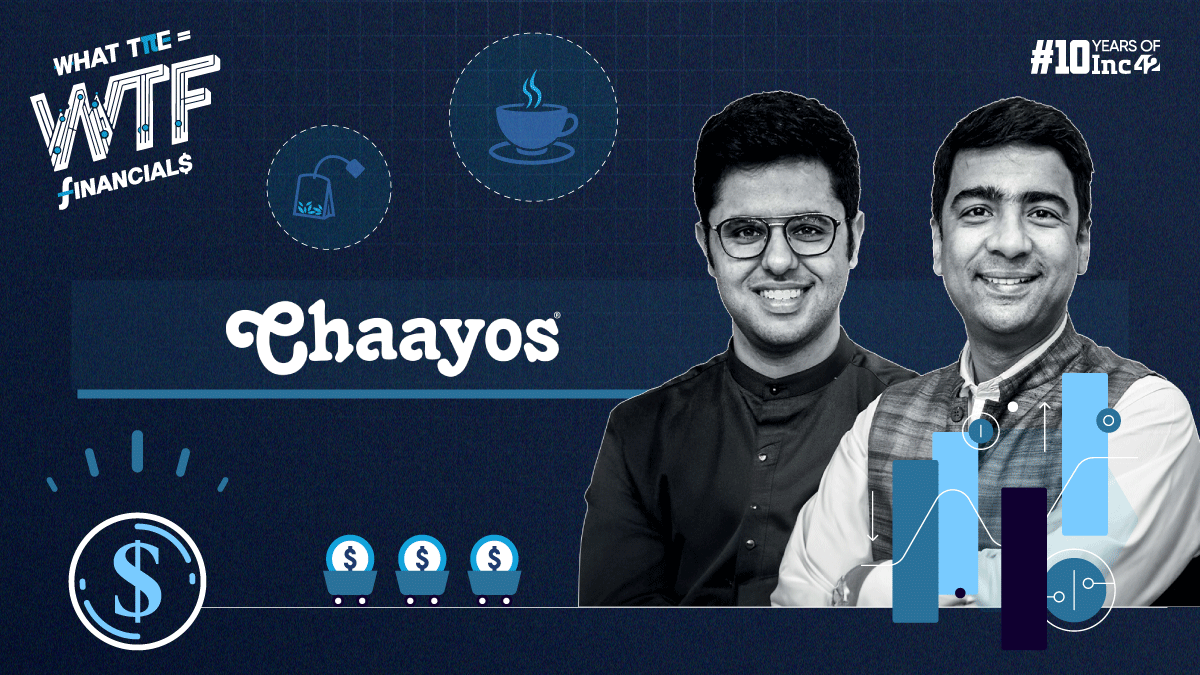
After flat growth in FY24, Chaayos rebounded in FY25, posting 25% revenue growth to cross Rs 300 crore, while cutting losses by 53% and boosting EBITDA 6.5 times. After flat revenue growth in FY24, tea cafรฉ chain Chaayos staged a strong comeback in the fiscal year ended March 2025 and posted 25% revenue growth to cross the Rs 300 crore mark. During the same period, the company narrowed its losses by 53%, while EBITDA jumped 6.5 times. Chaayosโ€™ revenue from operations grew by 25% to Rs 310.6 crore in FY25 from Rs 248.6 crore in FY24, according to its consolidated financial statement filed on the Registrar of Companies (Roc). Founded in 2012 by Nitin Saluja and Raghav Verma, Chaayos sells a variety of teas and other snacks and beverages with dine-in, takeaways, and online ordering facilities. It has over 200 outlets across Delhi-NCR, Mumbai and Bengaluru. The company is aiming to have 400 outlets by next year. The sale of teas, snacks, and beverages remained the firmโ€™s primary revenue source. Sales of manufactured goods accounted for over 96% of total revenue at Rs 300 crore, while sales of traded goods stood at Rs 9.5 crore. The company generated Rs 19.1 crore from non-operating income, which took its total income to Rs 329.7 crore in the last fiscal year. On the expense front, Chaayosโ€™ largest cost component, the cost of materials, rose 26% year-on-year to Rs 96.32 crore in FY25. Employee benefits expenses declined marginally by 3% to Rs 78.65 crore. Other major costs included depreciation and amortization at Rs 51.8 crore and commissions, which increased 21% to Rs 31.3 crore. Finance cost and expenses were recorded at Rs 29.42 crore and Rs 14.55 crore respectively. Other expenses, including power & fuel, legal & professional, travelling expenses added another Rs 53 crore to total expenses for the firm, which increased 9% to Rs 355 crore in FY25. A 25% increase in revenue from operations, along with tighter cost control across verticals, helped Chaayos cut its losses by 53% to Rs 25.4 crore in FY25. The company also posted a sharp improvement in profitability, with EBITDA rose nearly 6.5X to Rs 37 crore, while ROCE and EBITDA margin improved to -3.72% and 11.85%, respectively. On a unit basis, the company spent Rs 1.14 to earn one rupee of operating revenue in FY25. As of March 2025, the Tiger Globalโ€“backed firm reported current assets of Rs 155.7 crore, which included Rs 17 crore in cash and bank balances. Chaayos has raised over $90 million across multiple funding rounds, including its $45 million Series C round in June 2022 led by Alpha Wave, with participation from Elevation Capital, Tiger Global, and Think Investments.

Related News

Info Edge-backed Zingbus crosses Rs 150 Cr revenue in FY25

EntrackrEntrackr ยท 1m ago
Info Edge-backed Zingbus crosses Rs 150 Cr revenue in FY25
Medial

Intercity mobility platform Zingbus nearly doubled its scale in the fiscal year ending March 2025. However, the Gurugram-based company continued to remain in losses. Zingbusโ€™ revenue from operations surged 85% to Rs 161 crore in FY25 from Rs 87 crore in FY24, according to its financial statements filed with the Registrar of Companies (RoC). Zingbus primarily generates revenue from intercity bus ticketing services. Revenue from these services was the sole source of revenue for the company. On the spending side, bus hire charges formed the largest expense element contributing over 63% of the total expenditure. This cost jumped 147% to Rs 121 crore in FY25 from Rs 49 crore in FY24. Guarantee commission paid to fleet partners also rose sharply by 78% to Rs 16 crore, whereas employee benefit expenses grew moderately by 7% to Rs 15 crore. Advertising expenses increased 9% to Rs 6 crore in the same period. Overall, Zingbusโ€™ total expenditure grew 65% to Rs 191 crore in FY25 from Rs 116 crore in FY24. Despite the sharp scale up, the company managed to significantly improve its operating efficiency. EBITDA loss reduced to Rs 30.4 crore in FY25 from Rs 38.7 crore, translating into an EBITDA margin improvement from -44.5% in FY24 to -18.9% in FY25. Zingbus posted a net loss of Rs 25 crore in FY25, almost flat compared to Rs 24 crore loss in FY24. Its ROCE and EBITDA margin stood at -40.39% and -18.88% respectively. On a unit level, the company spent Rs 1.19 to earn a rupee of operating revenue during FY25 as compared to Rs 1.33 per rupee in the previous fiscal year. Zingbus held cash and bank balances of Rs 3 crore, with current assets standing at Rs 9 crore at the end of FY25. According to TheKredible, Zingbus has raised a total of $25 million of funding till date, having AdvantEdge Technologies, Info Edge and BP Ventures as its lead investors. Zingbus is focusing on an EV fleet and carbon neutral rides, aiming to build a valuable brand and recognition in a cluttered market. It faces challenges such as high dependence on imported buses and inadequate charging infrastructure, as well as potential impacts from fluctuating LNG prices.

Proost Beer crosses Rs 100 Cr revenue in FY25, achieves EBITDA breakeven

EntrackrEntrackr ยท 1m ago
Proost Beer crosses Rs 100 Cr revenue in FY25, achieves EBITDA breakeven
Medial

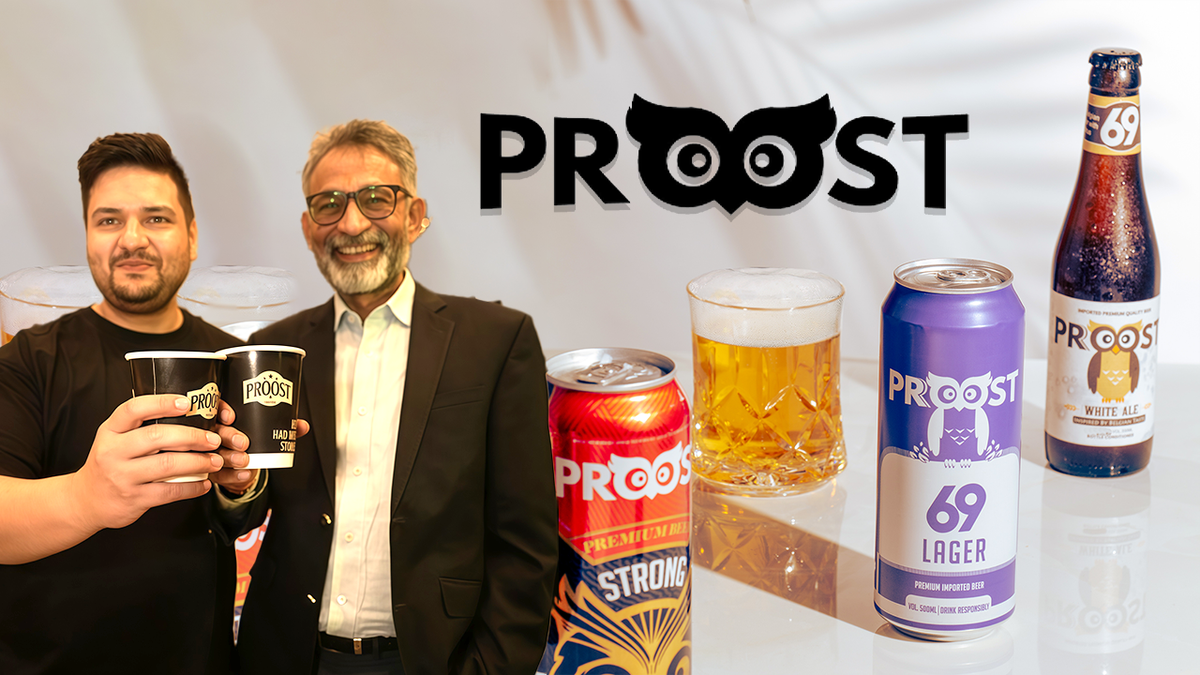
Proost Beer crosses Rs 100 Cr revenue in FY25, achieves EBITDA breakeven Proost, a homegrown beer startup, has recorded strong growth in FY25 with its revenue surging by 2.7X. Alongside the rapid revenue expansion, the company also claimed to have achieved EBITDA breakeven during the fiscal year, according to the companyโ€™s press release. The companyโ€™s revenue from operations increased by 174% to Rs 115 crore in FY25 from Rs 42 crore in FY24. According to the company, the growth was led by a steep rise in sales volume, which increased from 2.5 lakh cases in FY24 to 8 lakh cases in FY25. โ€œGrowing from around Rs 42 crore in FY24 to Rs 115 crore in FY25 and turning EBITDA breakeven is a validating moment for the teamโ€ฆ it proves a beer brand in India can be built sustainably and capital efficiently,โ€ said Tarun Bhargava, CEO and co-founder of Proost. The company has achieved EBITDA breakeven, which was largely driven by sharper cost discipline. A major lever was keeping marketing and brand spends under 2% of revenue, while maintaining a lean organisational structure to control people costs. According to TheKredible, Proost has raised $8 million of funding till date, having Dauble Pte, UMJD Family, Dev Punj, and Manshi Parashar as its lead investors. Proostโ€™s capital-efficient growth comes as some early players in the craft beer segment reassess their strategies. Bira 91, once a leading homegrown beer brand, has scaled back its operations over the past year following regulatory disruptions that impacted sales across multiple states. The company also deferred its IPO plans amid pressure on financials. Along with this, it competes with Maka Di, Arbor Brewing Company, Kati Patang, Witlinger, Simba, et al.

Infibeam crosses Rs 1,000 Cr revenue threshold in Q2 FY25

EntrackrEntrackr ยท 1y ago
Infibeam crosses Rs 1,000 Cr revenue threshold in Q2 FY25
Medial

Digital payments firm Infibeam's operating revenue grew by 29.19% during the quarter ending September 2024. Moreover, the Ahmedabad-based companyโ€™s profit also increased 16.45% in Q2 FY25. Infibeam Avenuesโ€™s revenue from operations spiked to Rs 1,016.65 crore in Q2 FY25 from Rs 786.97 crore in Q2 FY24, its unaudited consolidated financial statements from Bombay Stock Exchange (BSE) show. Payment business accounted for 95.7% of its total collection which increased by 31.82% to Rs 973.34 crore in Q2 FY25. Meanwhile, there was a 10.81% decline in e-commerce platform business, which fell to Rs 43.31 crore. The company recorded a total revenue of 1,020.19 crore in Q2 FY25. Infibeam operates a diversified digital platform, with a primary focus on digital payments and e-commerce solutions. The companyโ€™s total expenses for Q2 FY25 rose by 30.41% to Rs 957.1 crore in Q2 FY25. Operating expenses was the largest contributor, rising by 29.98% to Rs 882.3 crore. Employee benefits increased by 10.86% to Rs 34.5 crore, while depreciation cost grew 3.64% to Rs 17.1 crore. The company also incurred Rs 23.2 crore on other undisclosed expenses. Infibeamโ€™s profit after tax rose 16.495 to Rs 47.4 crore in Q2 FY25 from Rs 40.69 crore in the same period last year. Its ROCE and EBITDA margin stood at 1.62% and 7.96%, respectively. On a unit basis, the company spent Re 0.94 to earn a rupee of operating revenue in Q2 FY25. Infibeam competes with major players like Paytm, Razorpay, and PhonePe in the digital payments sector. At the end of today, its market cap stood at Rs 7,600 crore while the firm stock was trading at Rs 27.30.

Exclusive: BigHaat crosses Rs 1,100 Cr revenue in FY25; turns EBITDA profitable

EntrackrEntrackr ยท 5m ago
Exclusive: BigHaat crosses Rs 1,100 Cr revenue in FY25; turns EBITDA profitable
Medial

Exclusive All Stories Exclusive: BigHaat crosses Rs 1,100 Cr revenue in FY25; turns EBITDA profitable Full-stack agritech platform BigHaat Agro posted a flat scale with single-digit year-on-year growth in the fiscal year ending March 2025. However, the Bengaluru-based company managed to narrow its losses by over 25% during the last fiscal year. According to its co-founder Sateesh Nukala, BigHaat has crossed the Rs 1,100 crore revenue threshold in FY25 from Rs 1,050 crore in FY24. BigHaatโ€™s revenue split consists of 85% of revenue coming from farm produce sales, with agri-inputs, which is direct to farmers, and digital only contributing 15%. The platform now counts 3 million monthly active farmers and reported 15% gross margins in FY25, said Nukala in an interaction with Entrackr. Nukala highlighted that exports and advanced processing, a high-margin vertical launched in FY25, now contribute 20% to its monthly revenue. โ€œWe have reduced our net loss to Rs 25 crore in FY25 from Rs 35 crore in FY24 and turned EBITDA positive for the last three quarters,โ€ said Nukala. He also added that BigHaat is among the few agritech startups to achieve profitability at scale with 6x revenue-to-capital efficiency. As per Nukala, the company is targeting Rs 1,400 crore in FY26, with spices emerging as a key growth driver. โ€œWe are also open to acquisitions of new brands to strengthen our portfolio,โ€ he emphasized. BigHaat has raised around $25 million to date. In January 2022, it raised Rs 100 crore led by JM Financial. Beyond Next Ventures, Ashish Kacholia, Ankur Capital, and others are some notable investors for the firm. This contrasts with larger peers. DeHaat, Indiaโ€™s most valued agritech startup, clocked Rs 2,675 crore revenue in FY24 but with losses of over Rs 240 crore. Ninjacart, backed by Walmart and Flipkart, crossed Rs 2,000 crore revenue in the same fiscal but recorded a Rs 259.6 crore loss. By combining steady topline growth, improving margins, and sustained EBITDA profitability, BigHaat is positioning itself as one of the few agritech ventures balancing scale with financial discipline, while many peers continue to burn capital at larger scales.

Gameskraft crosses Rs 4,000 Cr revenue in FY25; PAT nears Rs 1,000 Cr

EntrackrEntrackr ยท 5m ago
Gameskraft crosses Rs 4,000 Cr revenue in FY25; PAT nears Rs 1,000 Cr
Medial

Gameskraft crosses Rs 4,000 Cr revenue in FY25; PAT nears Rs 1,000 Cr Gameskraftโ€™s FY25 numbers reflect strong performance before the RMG ban. The firm reported double-digit revenue growth and maintained profitability during the fiscal year. The Indian governmentโ€™s recent ban on real-money gaming formats has disrupted the sector overnight, but Gameskraftโ€™s FY25 numbers reflect strong performance before the clampdown. The firm reported double-digit revenue growth and maintained profitability during the fiscal year. Gameskraftโ€™s revenue from operations grew 12% to Rs 3,896 crore in FY25 from Rs 3,475 crore in FY24, according to its consolidated financial statements sourced from the Registrar of Companies (RoC). Gameskraft operated popular gaming apps such as Rummy Culture, Playship, Pocket 52, RummyPrime, Ludo Culture, and Rummy Time. Its revenue (gross gaming revenue) came from platform fee or commission charged as a percentage of the buy-in fees users invest in games, which contributed Rs 3,882 crore (99.6% of operating revenue), registering a 12.2% growth. Its real estate business added Rs 11 crore, while other income sources contributed Rs 3 crore in FY25. The Bengaluru-based company made an additional Rs 113 crore from non-operating sources which pushed its total revenue to Rs 4,009 crore in FY25. On the cost side, promotional spending emerged as the single largest expense and accounted for 75% of total burn. To the tune of scale, this cost surged 58% to Rs 2,072 crore in FY25 from Rs 1,315 crore in FY24. Employee benefits, on the other hand, saw a decline of 11% to Rs 410 crore, while legal and professional fees fell 22.8% to Rs 112 crore in FY25. Overall, the companyโ€™s total expenses shot up 24% to Rs 2,766 crore in FY25 as against Rs 2,232 crore in FY24. See TheKredible for the detailed cost breakdown during the last fiscal year. Despite the jump in ad spend, Gameskraft managed to sustain profitability on the back of its strong topline and controlled costs in other areas. Its net profit stood at Rs 976 crore in FY25, slightly higher than the Rs 947 crore posted in FY24. It's worth noting that we have excluded exceptional items worth Rs 270.5 crore in the calculation of net profit of the company. Gameskraft's ROCE and EBITDA margin stood at 58.40% and 31.63%, respectively. On a unit basis, Gameskraft spent Rs 0.71 to earn a rupee of operating revenue in FY25. The company recorded current assets worth Rs 2,232 crore in FY25 which includes Rs 253 crore in cash and bank balances and Rs 1,319 crore invested in mutual funds. While Gameskraftโ€™s FY25 numbers were unaffected, the Indian governmentโ€™s new gaming law effective August 2025 has forced the company to halt its real-money operations, including shutting down โ€œAdd Cashโ€ features and discontinuing its flagship rummy platform RummyCulture, alongside pausing its poker venture Pocket52 earlier in the year. The move, mandated by the Promotion and Regulation of Online Gaming Act, has also led Gameskraft to publicly state it will not pursue a legal challenge, instead opting for full compliance. Given that real-money gaming contributed nearly all of Gameskraftโ€™s FY25 revenue, the ban is expected to significantly impact its business model, revenue streams, and growth trajectory going forward.

Tractor Junction revenue crosses Rs 100 Cr in FY25

EntrackrEntrackr ยท 4m ago
Tractor Junction revenue crosses Rs 100 Cr in FY25
Medial

Tractor-focused marketplace Tractor Junction maintained a strong momentum in FY25, with operating revenue jumping 1.7X to cross the Rs 100 crore milestone, following a 2.3X jump in the previous fiscal year. Tractor Junctionโ€™s operating revenue surged over 70% to Rs 106.43 crore in FY25 from Rs 62 crore in FY24, according to its consolidated financial statements filed with the Registrar of Companies (RoC). Tractor Junction is a rural vehicle marketplace that facilitates buying, selling, financing, and insuring new and used tractors, farm equipment, and rural commercial vehicles. It also offers verified reviews and price comparisons to ensure transparency for users. Sales of tractors and equipment contributed 80% of Tractor Junctionโ€™s total revenue and rose nearly 90% to Rs 85.14 crore in FY25. The remaining Rs 21.29 crore came from services, including financing and other related offerings. The company claims that its financial services grew 10 times in FY25, and its used vehicle business grew 1.8 times, supported by 65 COCO outlets in Rajasthan, Madhya Pradesh, and Maharashtra. Tractor Junction also earned Rs 12.44 crore in non-operating revenue, including commission income and interest on fixed deposits, taking its total income to Rs 118.8 crore in FY25. The cost of materials accounted for 63% of total expenses which rose 86% to Rs 80.26 crore in FY25. Employee benefit expenses grew 47% to Rs 22 crore, while advertising, contract wages, RTO, insurance, and other costs drove total expenses up 75% to Rs 127.53 crore from Rs 72.7 crore in FY24. Tractor Junctionโ€™s total expenses grew faster than its revenue, primarily due to higher material costs, leading the Alwar-based company to post a loss of Rs 9.08 crore in FY25, which increased 2.5X from Rs 3.67 crore in FY24. Its EBITDA margin and ROCE stood at -18.03% and -70.3%, respectively. On a unit basis, it spent Rs 1.2 to earn a rupee of operating revenue in FY25. As of March 2025, the companyโ€™s current assets stood at Rs 70.43 crore, including cash and bank balances of Rs 13.76 crore. The company aims for another double-digit revenue growth in FY26, expand its COCO outlet network to 100, and focus more on profitability. According to startup data intelligence platform TheKredible, Tractor Junction has raised around $6 million to date, including a $5.7 million seed round in April 2022 co-led by Info Edge Ventures and Omnivore.

Burma Burma crosses Rs 100 Cr revenue in FY25; almost breaks even

EntrackrEntrackr ยท 4m ago
Burma Burma crosses Rs 100 Cr revenue in FY25; almost breaks even
Medial

Burma Burma crosses Rs 100 Cr revenue in FY25; almost breaks even Burma Burma, a vegetarian pan-Asian restaurant chain, narrowed its losses significantly by 78% in the fiscal year ending March 2025, on the back of strong revenue growth and improved operating margins. The company nearly achieved break-even as it recorded 47% year-on-year growth in operating revenue, crossing the Rs 100 crore mark during FY25. Burma Burmaโ€™s revenue from operations rose to Rs 106 crore in FY25 from Rs 72 crore in FY24, according to its financial statements filed with the Registrar of Companies (RoC). The company operates a restaurant chain serving Burmese cuisine influenced by Indian, Chinese, and Thai flavors across more than a dozen locations in Delhi NCR, Mumbai, Bengaluru, Hyderabad, Kolkata, and Ahmedabad. Its entire revenue in FY25 came from these restaurants. Employee benefits and cost of material formed 53% of the companyโ€™s total cost. Employee benefit expenses rose 29% to Rs 29 crore, while the cost of material increased by 33% to Rs 28 crore in FY25. Rent expenses for the restaurants' outlets jumped 64% to Rs 18 crore, while depreciation increased 43% to Rs 10 crore during the year. Other overheads, including utilities and miscellaneous costs, collectively stood at Rs 23 crore. Total expenses grew 37% to Rs 108 crore in FY25 compared to Rs 79 crore in FY24. The strong growth helped Burma Burma to cut its loss by 78% to Rs 1.3 crore in FY25 from Rs 6 crore in FY24. The company reported a positive EBITDA of Rs 6.6 crore in FY25 with an EBITDA margin of 6.23%. Its return on capital employed (ROCE) improved from -48.6% in FY24 to -6.9% in FY25. The restaurant chain closed the year with Rs 9 crore in cash and bank balances and current assets worth Rs 19 crore. Burma Burma has raised a total of $7 million of funding to date, with Negen Capital and Bbigplas Poly Pvt Ltd as its lead investors. The companyโ€™s co-founders Chirag Chhajer and Ankit Gupta together own 88% of the company. The high promoter holding is well reflected in careful spending, with no rush to expand rapidly while keeping losses under control. This cautious approach is linked to cash on hand, and the niche positioning may require more advertising or promotional efforts to support growth.

Fractal crosses Rs 2,700 Cr revenue in FY25, regains profitability

EntrackrEntrackr ยท 5m ago
Fractal crosses Rs 2,700 Cr revenue in FY25, regains profitability
Medial

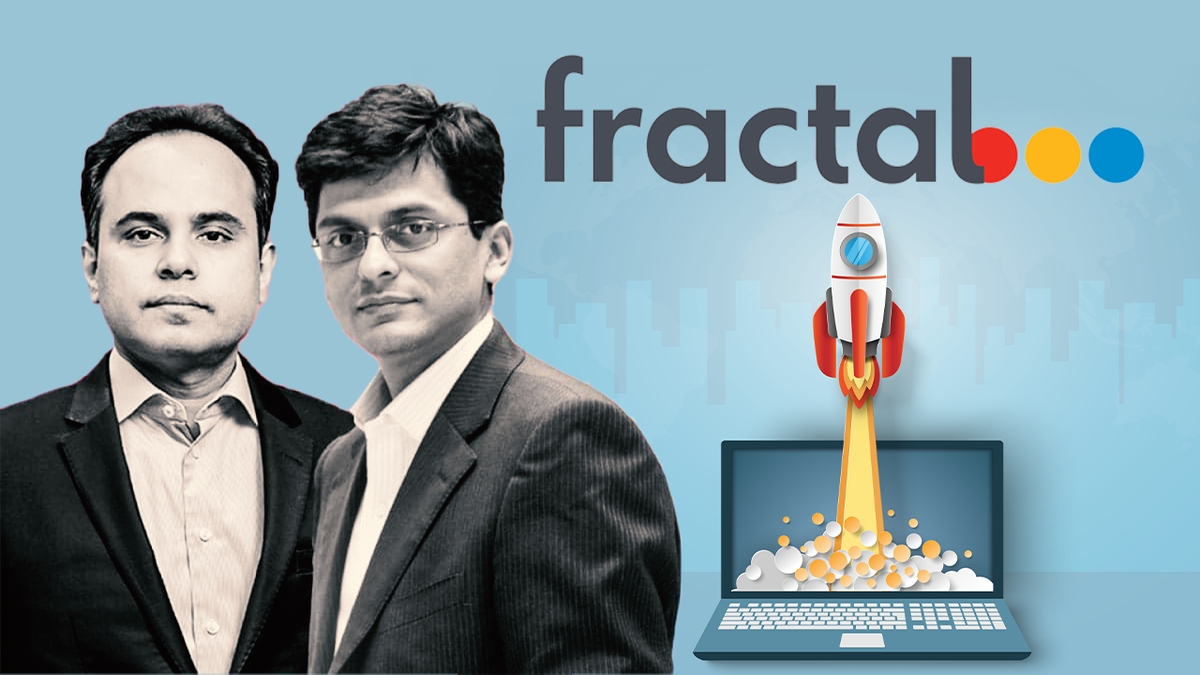
Fractal crosses Rs 2,700 Cr revenue in FY25, regains profitability Fractal, a data analytics and AI solutions company, has filed its draft red herring prospectus (DRHP) with SEBI to raise up to Rs 4,900 crore through a mix of fresh issue and offer for sale (OFS). Its financial statement shows the company regaining profitability with revenue growth of 26% in the fiscal year ending March 31, 2025. Fractalโ€™s revenue from operations grew 26% to Rs 2,765 crore in FY25 from Rs 2,196 crore in FY24, as per its consolidated financial statements sourced from the draft red herring prospectus (DRHP). The company derives nearly all of its revenue from analytical services, which contributed Rs 2,701 crore in FY25, up 24% from the previous year. Subscription income surged 167% to Rs 64 crore, pushing overall top-line growth. Fractalโ€™s revenue base continues to be dominated by the US market, which contributed Rs 1,802 crore in FY25, up 33% from Rs 1,358 crore in FY24, and accounted for 65% of total operating revenue. Revenue from Europe grew 12.56% to Rs 484 crore, making up 17.5% of the total. India contributed Rs 232 crore, a 22% increase from the previous year, representing 8% of revenue. The revenue from the rest of the world rose 13% to Rs 247 crore. Fractalโ€™s customer relationships remained a key driver of growth. Its Net Revenue Retention in the Fractal.ai segment stood at 121.3% in FY25, up from 110.2% in FY24, reflecting strong client retention and expansion through upsells and cross-sells. The firm has served its top 10 clients by revenue in the Fractal.ai segment who contributed 54% to segment revenue in FY25 for an average of more than eight years. On the expense front, employee benefit costs remained the largest outgo at Rs 2,005 crore, accounting for 78% of the total, and grew 15% over FY24. Depreciation expense increased by 23% to Rs 102 crore, while outsourced manpower costs decreased by 3.33% to Rs 58 crore. Marketing expenses dropped by 31.58% to Rs 13 crore. Legal and professional fees climbed 13% to Rs 52 crore. Overall, Fractalโ€™s total expenses rose 14.4% to Rs 2,575 crore in FY25, slower than the pace of revenue growth. As a result, the company swung to profitability, posting Rs 221 crore in net profit, in contrast to a loss of Rs 55 crore in FY24. On a per-unit basis, the company spent Rs 0.93 to earn a rupee in FY25. Its ROCE and EBITDA margin stood at 12.97% and 14.13% respectively. The analytics company had current assets worth Rs 1,625 crore, including Rs 288 crore in cash and bank balances in FY25. As per the DRHP, TPG Fett is the largest external stakeholder with 25.67% followed by Apax Partners-owned Quinag Bidco, which commands 18.78% in the company. GLM Family Trust, which owns 15.7% of the cap table.

Download the medial app to read full posts, comements and news.