News on Medial

HUL-owned Minimalist revenue spikes 48% to Rs 515 Cr in FY25

EntrackrEntrackr · 10d ago
HUL-owned Minimalist revenue spikes 48% to Rs 515 Cr in FY25
Medial

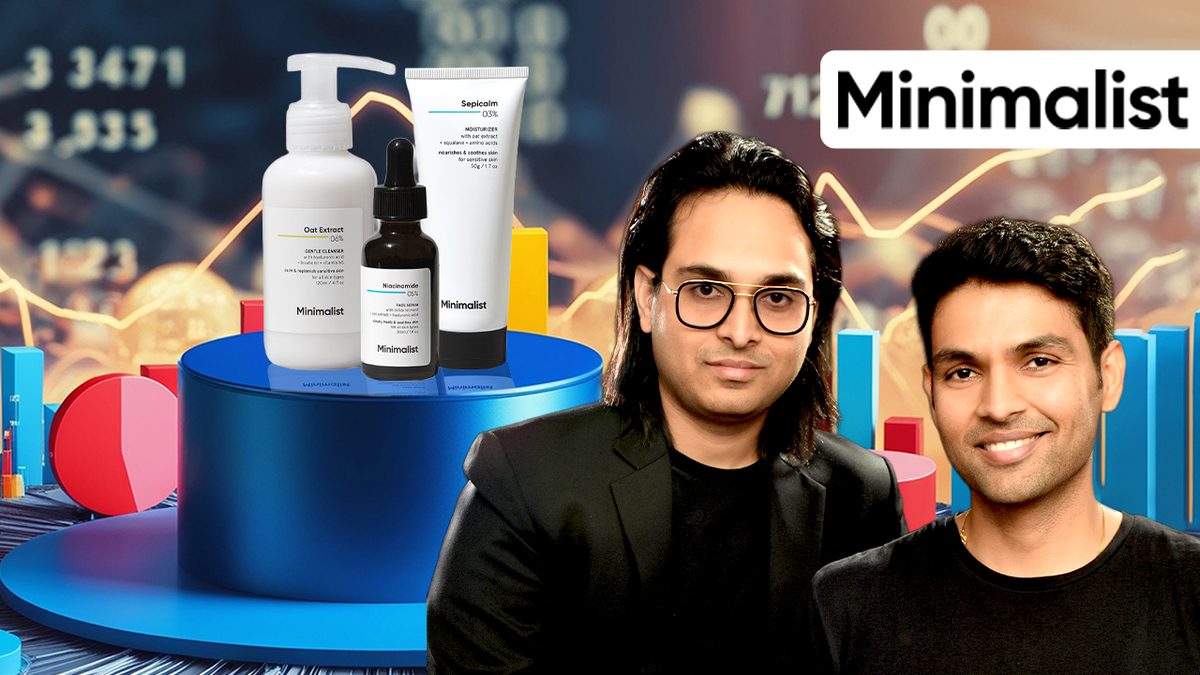
HUL-owned D2C brand Minimalist reported a 48% year-on-year rise in operating revenue to cross Rs 500 crore in FY25, but posted a loss due to exceptional items worth Rs 46 crore. Hindustan Unilever Limited (HUL)-owned D2C brand Minimalist continues to grow at a strong pace, as operating revenue rose 48% year on year to cross the Rs 500 crore threshold in the fiscal year ended March 2025. However, the Jaipur-based company reported a loss in the last fiscal year due to exceptional items worth Rs 46 crore. Minimalist’s revenue from operations spiked to Rs 514.8 crore in FY25, from Rs 347.4 crore in FY24, according to its consolidated financial statements sourced from the Registrar of Companies (RoC). Founded in 2020 by Mohit Yadav and Rahul Yadav, Minimalist is a skin and hair care brand that offers products such as serums, toners, and moisturizers. It retails through its own website, as well as third-party e-commerce platforms like Amazon, Nykaa, and Flipkart, among others. Sales of these products were the sole source of the brand’s revenue in FY25. The company also earned Rs 2.84 crore from non-operating sources, which took its overall income to Rs 517.6 crore in FY25. For the D2C brand, Minimalist continued to spend heavily on advertising and promotion, which accounted for over 30% of its total expenses and stood at Rs 154 crore in FY25. This cost increased 28% compared to FY24. In line with its revenue growth, the cost of materials consumed rose 57% to Rs 146.7 crore in FY25 from Rs 93.7 crore in FY24. Distribution costs, primarily commissions to marketplaces, stood at Rs 84.3 crore, while employee benefits expenses increased 29% to Rs 36.8 crore. Other overheads, including rent, transportation, legal and professional fees, and warehousing costs, added another Rs 82 crore. This pushed the company’s overall expenses to Rs 504 crore in the fiscal year ended March 2025 from Rs 333.2 crore in FY24, a 51% year-on-year increase. In the end, the company’s EBITDA remained positive at Rs 18 crore as both expenses and revenue grew at nearly the same pace. However, Minimalist reported a net loss of Rs 31.5 crore in the previous fiscal year due to one-time exceptional expenses of Rs 46 crore, for which details were not disclosed in the financial statements. Its ROCE and EBITDA margin stood at Rs 10.55% and 3.45%, respectively. On a unit basis, Minimalist spent Rs 0.98 to earn a rupee of operating revenue in FY25. As of March 2025, the firm had current assets of Rs 229 crore which includes Rs 48 crore in cash and bank balances. In January 2025, fast-moving consumer goods major Hindustan Unilever Limited (HUL) acquired a 90.5% stake in Minimalist at a pre-money valuation of Rs 2,955 crore (nearly $350 million). This deal ranks among the largest transactions in the direct-to-consumer (D2C) space in recent years. The transaction is expected to be completed in Q1 FY26. Prior to the acquisition, Minimalist had raised $17 million, including a $15 million Series A round led by Peak XV, which holds a 27.9% stake. Co-founders Mohit and Rahul Yadav control 62% of the company.

Related News

FirstCry parent records Rs 2,424 Cr revenue in Q3 FY26, loss spikes 2.5X

EntrackrEntrackr · 8d ago
FirstCry parent records Rs 2,424 Cr revenue in Q3 FY26, loss spikes 2.5X
Medial

FirstCry parent records Rs 2,424 Cr revenue in Q3 FY26, loss spikes 2.5X Brainbees Solutions, the parent of kids-focused omnichannel retailer FirstCry, reported a 12% year-on-year rise in revenue and a 2.5X spike in its losses for the quarter ending December 2025. FirstCry's revenue from operations grew to Rs 2,424 crore in Q3 FY26 from Rs 2,172 crore in Q3 FY25, its unaudited financial statements sourced from the National Stock Exchange (NSE) show. The sale of its products through offline stores and websites in India and the international market was the primary source of revenue, accounting for nearly 79% of total operating revenue, while its subsidiary, GlobalBees, contributed Rs 515 crore. The company also made Rs 56 crore from interest income which took its overall revenue to Rs 2,480 crore in Q3 FY26, compared to Rs 2,216 crore in Q3 FY25. For the Pune-based company, the cost of procurement of materials accounted for 64% of the overall expenditure which increased 15% year-on-year to Rs 1,580 crore in Q3 FY26 from Rs 1,369 crore in Q3 FY25. FirstCry’s employee benefits stood at Rs 197 crore in Q3 FY26 which includes Rs 57 crore as ESOP cost. The marketing, legal, rent, and technology were other overheads that pushed the overall expenditure to Rs 2,469 crore in Q3 FY26. FirstCry’s losses increased by 153% to Rs 38 crore in Q3 FY26 from Rs 15 crore in Q3 FY25. For the nine months ended December 2025, the company’s loss remained flat at Rs 154 crore from Rs 153 crore. At the end of today’s trading session, FirstCry’s share price stood at Rs 270 per share, with a total market capitalization of Rs 14,096 crore (approximately $1.5 billion).

HUL acquires 90.5% stake in Minimalist at Rs 2,955 Cr valuation

EntrackrEntrackr · 1y ago
HUL acquires 90.5% stake in Minimalist at Rs 2,955 Cr valuation
Medial

HUL acquires 90.5% stake in Minimalist at Rs 2,955 Cr valuation Hindustan Unilever Limited (HUL), a fast-moving consumer goods company, has acquired the homegrown skincare brand Minimalist at a pre-money valuation of Rs 2,955 crore (nearly $350 million). The board at HUL has entered into the Share purchase agreement for the acquisition of 90.5% of Minimalist shares at a cash consideration of Rs 2,670 crore (secondary buyout) along with Rs 45 crore as a primary infusion in the company. The transaction is expected to be completed in Q1 of FY 2026 and the remaining 9.5% shareholding of Uprising in about two years from the completion date, the filing sourced from NSE added. This is one of the largest deals in the direct-to-consumer (D2C) space in recent years. Founded by serial entrepreneurs Mohit and Rahul Yadav, Minimalist is a skin and hair care brand offering products such as serums, toners, and moisturizers. The sale of these products was the sole source of revenue for the brand in the last fiscal year. The founder duo will continue to lead the company for next two years. Minimalist's revenue surged to Rs 347 crore in FY24 from Rs 184 crore in FY23. Despite higher marketing costs, profits doubled to Rs 10.83 crore in FY24. According to the company, the business has rapidly scaled to cross an annual revenue runrate (ARR) of Rs 500 crore in a short span of four years. Minimalist has raised $17 million, including a Series A round led by Peak XV, which holds a 27.9% stake. Co-founders Mohit and Rahul Yadav control 62% of the company.

Hindustan Unilever in talks to acquire Minimalist for Rs 3,000 Cr

EntrackrEntrackr · 1y ago
Hindustan Unilever in talks to acquire Minimalist for Rs 3,000 Cr
Medial

Hindustan Unilever in talks to acquire Minimalist for Rs 3,000 Cr Founded by serial entrepreneurs Mohit and Rahul Yadav, Minimalist is a skin and hair care brand offering products such as serums, toners, and moisturizers. Hindustan Unilever Limited (HUL), a fast-moving consumer goods company, is reportedly in advanced discussions to acquire a majority stake in the skincare startup Minimalist for approximately Rs 3,000 crore (more than $350 million). Moneycontrol, which reported the development first, said that it would also be one of the largest deals in the direct-to-consumer (D2C) space in recent years. Minimalist retails through its own website as well as third-party e-commerce platforms like Amazon, Nykaa, and Flipkart, among others. In response to queries from Entrackr, an HUL spokesperson said, “In line with our business strategy, on an ongoing basis, we evaluate various strategic opportunities for the growth and expansion of our business. We will make appropriate disclosures whenever there is any material development that requires disclosure under applicable laws.” Queries sent to Minimalist did not receive an immediate response. Minimalist’s revenue from operations surged to Rs 347 crore in FY24, up from Rs 184 crore in FY23. Despite increasing marketing costs, the company’s profits jumped two-fold to Rs 10.83 crore in the last fiscal year. Minimalist has raised around $17 million to date, including its Series A round led by Peak XV (formerly Sequoia Capital), which holds a 27.9% stake as the largest external shareholder. Its co-founders, Mohit and Rahul Yadav, together control 62% of the company, as per TheKredible. In December 2022, HUL acquired a 51% stake in D2C brand Oziva for a cash consideration of Rs 264.28 crore.

Hindustan Unilever acquires remaining 49% stake in OZiva for Rs 824 Cr

EntrackrEntrackr · 8d ago
Hindustan Unilever acquires remaining 49% stake in OZiva for Rs 824 Cr
Medial

Hindustan Unilever acquires remaining 49% stake in OZiva for Rs 824 Cr Mumbai-based FMCG major Hindustan Unilever Limited has completed the acquisition of the remaining 49% stake in OZiva, operated through Zywie Ventures Private Limited, for a total consideration of Rs 824 crore. The transaction makes OZiva a wholly owned subsidiary of HUL. The deal shows a sharp jump in OZiva’s valuation. In December 2022, HUL had acquired a 51% stake in OZiva for a cash consideration of Rs 264.28 crore, which implied a valuation of around Rs 518 crore at the time. The latest transaction values the company at nearly Rs 1,682 crore and represents a more than threefold increase over a little more than three years. Founded in 2019, the six-year-old direct-to-consumer firm sells plant-based nutrition products across health, skin, hair, and general wellness categories. Prior to the HUL transaction, OZiva had raised around $17 million from investors such as Matrix Partners, Eight Road Ventures, and Stride Ventures. The company also reported a sharp improvement in operating performance. Its revenue from operations jumped 148% to Rs 258 crore in FY25 from Rs 104 crore in FY24 while losses declined 90% to Rs 4.5 crore in FY25 compared to Rs 43.5 crore in the previous fiscal. The deal follows a series of acquisitions in India’s D2C space this year. On Thursday, pharmaceutical major USV acquired a 79% stake in Wellbeing Nutrition. Earlier this month, Mumbai-based consumer goods major Marico acquired a 60% stake in plant-based protein startup Cosmix at an equity valuation of Rs 375 crore. The trend builds on last year’s consolidation, which included HUL’s acquisition of skincare brand Minimalist at a pre-money valuation of Rs 2,955 crore.

Infibeam profit spikes 50% to Rs 64 Cr in Q3 FY25

EntrackrEntrackr · 1y ago
Infibeam profit spikes 50% to Rs 64 Cr in Q3 FY25
Medial

Digital payments firm Infibeam continued its strong financial momentum, with profits surging 50% in the quarter ending December 2024. The Ahmedabad-based company's operating revenue also grew 18% year on year in the quarter ending December 2024. Infibeam Avenues’ revenue from operations spiked to Rs 1,070 crore in Q3 FY25 from Rs 907 crore in Q3 FY24, as per its unaudited consolidated financial statements sourced from the National Stock Exchange (NSE). Payment business accounted for 94% of its total collection which increased by 17% to Rs 1,010 crore in Q3 FY25. Meanwhile, there was a 23.2% increase in the e-commerce platform business, which rose to Rs 60.3 crore. The company recorded a total revenue of 1,093.5 crore in Q3 FY25. Infibeam operates a diversified digital platform, with a primary focus on digital payments and e-commerce solutions. The company’s total expenses rose by 18% to Rs 1,013 crore in Q3 FY25. For the digital payment firm, its payment processing was the largest cost center, rising by 16.6% to Rs 930.4 crore. Employee benefits Increased by 30% to Rs 40 crore, while depreciation cost grew 11.8% to Rs 19 crore. The company also incurred Rs 23.6 crore on other undisclosed expenses in the said quarter. Infibeam’s profit after tax rose 50% to Rs 64.4 crore in Q3 FY25 from Rs 43 crore in the same period last year. On a unit basis, the company spent Re 0.95 to earn a rupee of operating revenue in the last quarter. Infibeam competes with major players like Paytm, Razorpay, and PhonePe in the digital payments sector. At 14:22 PM today, its market cap stood at Rs 6,504 crore while the firm stock was trading at Rs 23.32.

Fibe crosses Rs 1,200 Cr revenue in FY25; profit spikes 13%

EntrackrEntrackr · 4d ago
Fibe crosses Rs 1,200 Cr revenue in FY25; profit spikes 13%
Medial

Fibe crosses Rs 1,200 Cr revenue in FY25; profit spikes 13% In the fiscal year ending March 2025, the consumer lending firm Fibe reported nearly 50% growth in operating revenue to over Rs 1,200 crore, while profit also rose in double digits. Fibe, formerly EarlySalary, recently raised $35 million in a Series F round led by the International Finance Corporation. The impact of this funding will likely reflect in FY26. In the fiscal year ending March 2025, the consumer lending firm reported nearly 50% growth in operating revenue to over Rs 1,200 crore, while profit also rose in double digits. Fibe’s revenue from operations grew 49% year-on-year to Rs 1,228 crore in FY25 from Rs 824 crore in FY24, according to its consolidated financial statements filed with the Registrar of Companies (RoC). Co-founded in 2015 by Akshay Mehrotra and Ashish Goyal, Fibe provides personal loans, long-term loans, loans against mutual funds, and fixed deposits across healthcare, education, and solar rooftop installations. It claims to have facilitated more than 9 million loans, with total disbursements exceeding Rs 40,000 crore through over 8,500 lenders. Interest on loans was the largest revenue contributor for Fibe, with over 80% share of its total operating revenue. This income rose 46% in FY25 and crossed the Rs 1,000 crore mark. The company also earned servicing fee income for managing loan collections and administration on behalf of lending partners. It has partnered with several banks and NBFCs, including Northern Arc Capital, InCred Finance, Tata Capital, and many others. Income from guarantee premium, i.e., fees earned for providing default protection to lending partners, also stood at Rs 104 crore for Fibe and grew 83% year-on-year. The remaining revenue came from marketing income, commission income, and other operating sources. Fibe also earned around Rs 41 crore from non-operating sources such as interest income and gains on the sale of current investments, and this took its total income to Rs 1,269 crore in the last fiscal year. For the consumer lending company, finance cost formed the largest cost centre, with over 62% share of the total expenditure, and stood at Rs 691 crore in FY25 for Fibe. This cost rose 85% year-on-year from Rs 373 crore in FY24. Notably, it included Rs 257 crore towards loan write-offs and Rs 207 crore as loss on guarantees invoked. Advertising and promotional expenses, another major cost centre for Fibe, stood at Rs 128 crore in FY25. Employee benefit expenses, which accounted for under 10% of the total cost, rose 34% to Rs 111 crore, including Rs 9.2 crore of ESOP expenses. Commission paid to selling agents, legal & professional, travelling and other miscellaneous overheads took the overall expenses for the firm to Rs 1,112 crore in FY25 from Rs 706 crore in FY24. Higher non-operating income, which rose from Rs 18 crore to Rs 41 crore, helped the Pune-based firm post a 13% increase in profit to Rs 114 crore. Fibe spent Rs 0.91 to earn one rupee of operating revenue on a unit basis. As of March 2025, it had total current assets of Rs 3,135 crore, which includes cash and bank balance of Rs 259 crore. Fibe has raised over $265 million to date, including a $90 million Series E round led by TR Capital, Trifecta Capital, and Amara Partners. In August last year, Fibe also raised Rs 250 crore in debt for its lending arm, EarlySalary, from a group of investors including AK Capital Finance.

Lenskart posts Rs 2,096 Cr revenue in Q2 FY26; profit spikes 20%

EntrackrEntrackr · 2m ago
Lenskart posts Rs 2,096 Cr revenue in Q2 FY26; profit spikes 20%
Medial

Lenskart posts Rs 2,096 Cr revenue in Q2 FY26; profit spikes 20% Eyewear brand Lenskart announced its financial results for Q2 FY26 after debuting on Indian stock exchanges earlier this month. The firm’s revenue increased by 21% during the second quarter while its profit also rose by 20% and neared the Rs 150 crore threshold in the same period. The company’s revenue from operations increased to Rs 2,096 crore in Q2 FY26 from Rs 1,736 crore in the same quarter last year, according to its financial statement sourced from NSE. Other income contributed an additional Rs 33 crore, which drove its total income of Rs 2,129 crore for the quarter. However, for the six months period ending September 2025, the firm’s revenue increased 23% to Rs 3,991 crore in H1 FY26 from Rs 3,256 crore in H1 FY25. On the expense side, cost of material was the largest burn which accounted for 33% of the total expense. This cost increased by 19% to Rs 650 crore in Q2 FY26 from Rs 546 crore in Q2 FY25. Employee benefit expense rose 55% to Rs 502.5 crore in Q2 FY26 from Rs 325 crore in Q2 FY25. Finance cost, depreciation cost were other overheads which added to the total expense which increased by 18.5% to Rs 1,980 crore in Q2 FY26. Lenskart’s profit increased by 20% to Rs 103 crore in Q2 FY26 as compared to Rs 86 crore in Q2 FY25. On a half-yearly basis, its profit increased by 120% to Rs 165 crore in H1 FY26 as compared to Rs 75 crore in H1 FY25. Lenskart made a tepid debut on the Indian stock exchanges, listing at Rs 395 per share on the NSE, about 1.7% lower than the issue price of Rs 402. The Gurugram-based company raised Rs 2,150 crore through a fresh issue and Rs 5,028 crore via an offer for sale (OFS), valuing the company at around Rs 70,000 crore ($8 billion). According to exchange data, Lenskart’s IPO was oversubscribed 28.26 times with the retail portion at 7.53X, QIBs (ex-anchors) at 40.35X, Non-Institutional Investors (NIIs) at 18.2X and employee portion subscribed 4.96 times. During the last trading session, its share traded at Rs 411.80, giving the firm a total market capitalization of Rs 71,441 crore ($7.9 billion).

Yatra profit spikes 10X in Q3 FY25; revenue doubles

EntrackrEntrackr · 1y ago
Yatra profit spikes 10X in Q3 FY25; revenue doubles
Medial

Yatra’s revenue from operations increased to Rs 235 crore in Q3 FY25 from Rs 110 crore in Q3 FY24, its consolidated unaudited financials sourced from National Stock Exchange (NSE) shows. The Gurugram-based firm managed to double its year-on-year revenue during the third quarter of FY25, compared to the same quarter of the previous fiscal (Q3 FY24). Income from hotels and packages was the largest revenue source followed by air ticketing and other allied services. It also made Rs 6 crore from financial sources tallying the firm’s overall income to Rs 241 crore in Q3 FY25 from Rs 119.2 crore in Q3 FY24. For more context, Yatra has reported a revenue of Rs 572 crore with a positive bottom line of Rs 21.3 crore in the first nine months of the ongoing fiscal year (FY25). The travel aggregator firm spent 56% of the overall expenditure on service costs which stood at Rs 131 crore, followed by employee benefits which were recorded at Rs 39 crore. Its spending on marketing, legal, information technology, and other costs pushed its overall expense to Rs 231 crore in Q3 FY25. The twofold year-on-year scale helped Yatra to register a 10X surge in its profits, bringing it to Rs 10 crore in Q3 FY25 against Rs 1 crore in Q3 FY24. On a unit level, the firm spent Re 0.98 to earn a rupee in Q3 FY25. Yatra is currently trading at Rs 93.21 with a 0.52% increase in its share price. Its total market capitalization stood at Rs 1,462 crore.

The Sleep Company’s revenue spikes 60% to Rs 499 Cr in FY25

EntrackrEntrackr · 4m ago
The Sleep Company’s revenue spikes 60% to Rs 499 Cr in FY25
Medial

The Sleep Company continued its strong growth streak in the fiscal year ending March 2025. It recorded 60% year-on-year revenue growth and achieved a 34% reduction in EBITDA losses during the last fiscal year. The Sleep Company’s revenue increased to Rs 499 crore in FY25 from Rs 312 crore in FY24, according to its provisional financial statements sourced from the Registrar of Companies (RoC). The Sleep Company offers mattresses, pillows, cushions, bedding, and office chairs. Apart from its own website, the firm sells its products across e-commerce platforms including Amazon and Flipkart. The Sleep Company’s total costs rose 46% to Rs 550 crore in FY25 from Rs 376.8 crore in FY24. The cost of material formed the largest expense, accounting for nearly 40% of the total spent. This cost increased by 52% to Rs 220 crore in FY25 from Rs 145 crore in FY24. Marketing spend grew modestly by 5% to Rs 105 crore, while depreciation expenses more than doubled to Rs 12 crore. Other expenses, which include logistics, technology, and other costs added another Rs 213 crore in FY25. Despite the jump in expenses, the company managed to narrow EBITDA losses by 34% to Rs 39 crore in FY25. Its EBITDA margin also improved significantly to -7.82% from -18.91% in the previous fiscal. The Sleep Company’s ROCE remained broadly flat at -30.03% in FY25 as compared to -29.91% in FY24. On a unit basis, it spent Rs 1.10 to earn a rupee of operating revenue in the last fiscal year. As of March 2025, the company held cash and bank balances of Rs 25 crore, up from Rs 4.2 crore a year ago. Its total assets were recorded at Rs 291.5 crore while current assets stood at Rs 186.5 crore. According to TheKredible, The Sleep Company has raised a total of $105 million of funding till date, having Fireside Ventures and Premji Invest as its lead investors who own 21% and 25% of the company respectively. The company will be keeping more than just a wary eye on competitors like Wakefit, that are headed towards a possible IPO and the kicker it will provide to their marketing focus. The category itself is almost unrecognizable today in terms of players, distribution channels and sheer variety of options for consumers when compared to even 5 years back. So far, that has ensured the whole pie expands, but it won't be long before the industry runs up against a wall too high to jump over. Be it replacement inertia or unorganised players selling same size mattresses at a 30% lower price point. A differentiator like its SmartGrid technology works for a very narrow segment of the market, if at all. Going offline is also expensive, leaving the Sleep Company with some very tough choices to make to reach profitability soon.

Download the medial app to read full posts, comements and news.