News on Medial

Related News

Fabric and subsidiary Intellicar raise $13.5 Mn in Series A funding from Nuveen

EntrackrEntrackr · 7m ago
Fabric and subsidiary Intellicar raise $13.5 Mn in Series A funding from Nuveen
Medial

Fabric and its subsidiary Intellicar have raised $13.5 million in a Series A funding round led by Nuveen. This is the fifth investment on behalf of Nuveen’s second climate inclusion strategy, which recently announced similar partnerships with CleanPlanet, Longevity Partners, and Onepak. The fresh funding will be used to scale its cutting-edge data and energy solutions. Co-founded in 2022 by Karan Makhija and Shunmuga Krishnan Senthil Arumugam, Fabric and its subsidiary Intellicar build cutting-edge technologies that empower the EV ecosystem to manage energy and data seamlessly. With over 300,000 connected EV assets, Intellicar leads in EV IoT and data solutions, while Fabric expands its energy and AI portfolio. Fabric says that its integrated approach unlocks new efficiencies for EV businesses at scale. It aims to continue to deepen its role in addressing the evolving needs of data and energy markets, with its rapidly deployable data and energy stack being a crucial part of driving the widespread adoption of EVs. According to market research, road transport currently accounts for 12% of India’s energy-related CO2 emissions. The Bengaluru-based company delivers data solutions for the EV and automotive industry through Intellicar, which currently serves over 300,000 EVs, enabling the adoption of technology across the entire EV value chain. The company aspires to enable individuals and businesses to embrace sustainable transportation and contribute to a cleaner, more energy-independent India.

Powerless but profitable: How Google India evades accountability

EntrackrEntrackr · 1y ago
Powerless but profitable: How Google India evades accountability
Medial

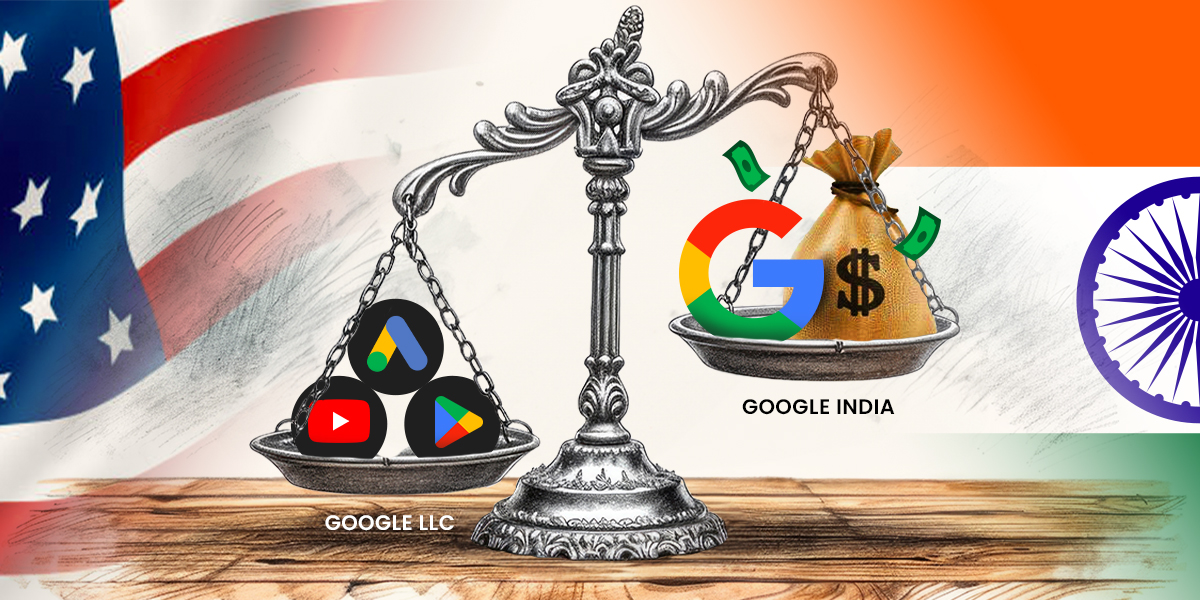
In a legal filing, Google India Private Limited clarified its limited role as a mere operational arm of Google LLC, while claiming to have no authority over key services such as YouTube, Ads, Search, G Suite, Google Play Store and others. Google India claimed it only operates as a “non-exclusive reseller” of the Google Ads program in India and functions solely as a support entity, according to a judgment by Bombay High Court in August 2021. A lawyer representing Google India took a similar stance while arguing in the case of Dinkum Data Solutions Private Limited v. Google India, heard on October 14, 2024, at the District Court of Gurugram. The lawyer argued that Google India lacked authority regarding the GSuite email service dispute, contending that Google LLC, as the relevant entity, should be included in the case. Based on this argument, the judge directed the petitioner to add Google LLC as a party to the proceedings. Entrackr attended the court proceedings in person. This revelation sparked concerns among Indian businesses, which face challenges addressing issues locally due to Google India’s lack of control and accountability over the very products and services driving their operations in India. Entrackr also analyzed the petition filed on 24 August 2021 by Google India, (Google India Pvt. Ltd vs. The Bombay Talkies Studios And Ors) where it was emphasized that Google India“does not act as an agent” for Google LLC. Instead, it operates independently, providing only limited support without control over crucial decision-making and management functions tied to Google’s services. In simple words, Indian users and businesses who encounter problems with Google’s services have no alternative but to address these issues with Google LLC, based in the United States. This logic seems flawed and no longer tenable, as Google India reported over Rs 28,000 crore in gross ad revenue with substantial profit in FY23. Thus, even as the firm continues to generate hefty revenues from India, its local operating entity’s toothlessness to provide adequate support or resolve issues for its clients here is beginning to grate. A burden for Indian businesses This limited role Google Indiapresents costly challenges for local companies as Google LLC has no offline presence nor any support team in India. When problems arise, Indian businesses find themselves forced to engage with the teams based in the US or approach legally, a process that can be both time-consuming and financially burdensome. Making one wonder if this was designed to be deliberately so. Thus, unresolved issues often end up in long legal proceedings—a last resort that no business wants to pursue unless absolutely necessary. The situation has also put a heavy financial and operational strain on India’s judicial system. Court cases involving support from Google can take years to conclude, and while a company waits for a resolution, its business continues to suffer, which means that essential matters like data access, service continuity, or even payment processing might be halted, impacting the business’s viability. Vasundhara Shankar, Managing Partner at Verum Legal, explained, “It’s true that Google LLC, the main U.S.-based entity, lacks a direct physical or ‘offline’ presence in many countries, including India, despite generating substantial revenue from these markets. India’s evolving regulatory landscape could introduce more stringent requirements, potentially compelling tech giants to expand their legal and operational footprint within the country.” Google India’s position: local support only Google India has reiterated its limited jurisdiction in its petition, stating that it “maintains a principal-to-principal relationship” with Google LLC and does not operate any core product platforms, such as YouTube or Search, within India, as per the judgment cited above. The petition underscores that any complaints or regulatory actions involving Google’s core services should target Google LLC, which controls all operational and decision-making powers for all services being rendered in India, to its customers. This structure effectively shields Google India from being held accountable for issues stemming from Google’s main services in India. Despite generating substantial revenue through ad sales and other indirect income sources, Google India lacks the authority to directly address concerns from Indian businesses and users. Its position as a support entity means it has no sway in policy changes, customer complaints, or dispute resolutions, leaving Indian businesses to navigate these issues independently or seek costly, time-intensive legal recourse. The larger regulatory debate This situation comes against the backdrop of an ongoing dispute with the Competition Commission of India (CCI) regarding Google’s alleged monopolistic practices, such as requiring device manufacturers to pre-install Google apps on Android devices, a practice criticized as anti-competitive. The CCI’s scrutiny reflects India’s need for regulatory clarity as global tech giants continue to consolidate influence in the Indian market. However, Google India’s limited powers highlight a structural challenge: how can local regulators ensure accountability when decision-making authority resides in another country? This challenge highlights the urgent need for a robust regulatory framework to address foreign tech subsidiaries’ responsibilities within India. Many Indian businesses argue that if Google India can derive revenue from the Indian market, it should be empowered to address local grievances. Otherwise, the accountability gap leaves Indian businesses and consumers to deal with extended service disruptions and limited avenues for redress. Toward a new regulatory paradigm? Google India’s petition cited above may set a significant precedent for tech companies operating in India through foreign parent entities. As more global tech giants establish Indian subsidiaries, it raises a pressing question: should these entities have greater accountability if they are conducting business locally? The answer has implications not just for Google but for the wider landscape of international tech companies that have entrenched themselves in India’s economy. Importantly, in case of social media firms like Google , Meta and others, the argument of India being a small market in the context of global revenues does not hold, as due weightage needs to be given to user base as well, where India is a key market for most, if not all. There is a growing call for the Indian government to mandate that major tech companies empower their Indian subsidiaries with greater authority to handle disputes and service issues. Such a policy would not only bolster consumer protection but also ensure that these corporations remain directly accountable within Indian jurisdiction, aligning with the country’s push for digital sovereignty and data localization. For now, Google India’s legal stance underscores a need for Indian businesses to carefully consider the limitations of subsidiaries in resolving disputes. And until legal and regulatory changes catch up, Indian businesses continue to bear the brunt of an arrangement that shields Google’s parent company from direct accountability, while their operations suffer in the absence of swift and effective resolutions.

Download the medial app to read full posts, comements and news.