

Back

Rahul Agarwal
Founder | Agentic AI... • 22d
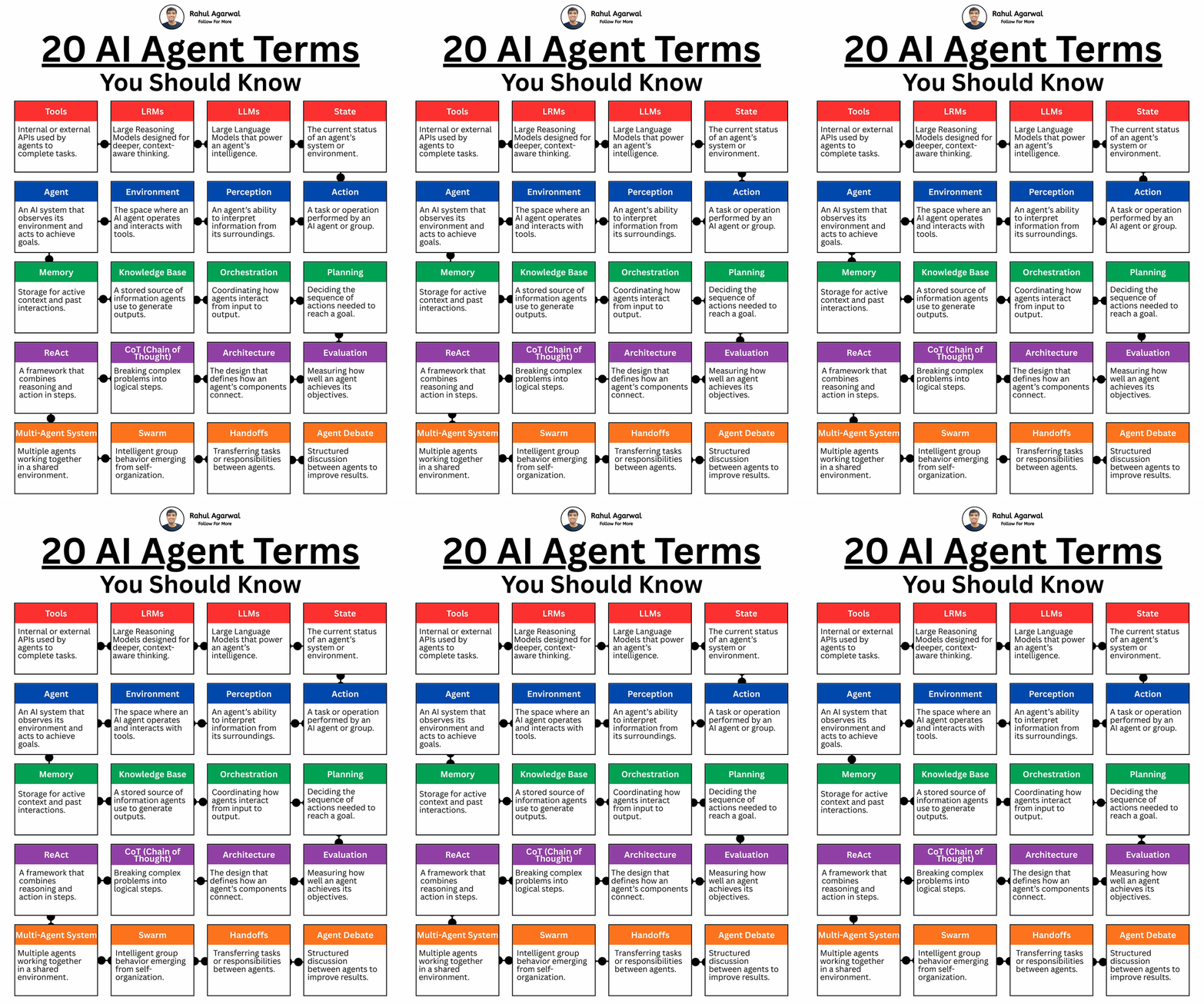
Everyone talks about AI agents. Very few people understand what’s actually happening under the hood. Here’s the vocabulary that shows up constantly when working with agent systems. First, the core ideas. An agent is software that observes information, decides what to do, and executes actions toward a defined objective. It operates inside an environment. That environment includes tools, APIs, databases, and everything the agent interacts with. Agents rely on perception. That’s the mechanism used to interpret inputs and understand surrounding context. Every step results in an action. Each action moves the system closer to completing the objective. The system also maintains a state. That simply means the current condition of everything happening right now. Now the intelligence layer. Large Language Models generate text, reason through prompts, and guide many decisions. More advanced reasoning models handle deeper logical problems and complex multi-step thinking. Agents also rely on memory. This stores previous interactions, context, and past execution history. A knowledge base supplies structured information the agent can reference while working. Next comes the system design. Agents call tools. These are APIs, services, or applications that actually perform tasks. Orchestration coordinates how inputs move through the system and become outputs. Agents often plan. They break a goal into smaller steps before execution begins. Some systems follow structured reasoning approaches like step-by-step problem solving. Others use loops that alternate between thinking and acting until the task completes. Finally, the more advanced patterns. Multiple agents can collaborate inside a multi-agent system. Groups may operate using swarm-style coordination driven by simple rules. Tasks sometimes move between agents through structured handoffs. Some architectures even run agent debates to compare multiple generated answers. Then comes evaluation. This measures whether the agent actually performed the job correctly. Understanding these terms makes modern AI systems much easier to reason about. Save and share this. You’ll run into these concepts everywhere as agent systems become more common.
More like this
Recommendations from Medial
Rahul Agarwal
Founder | Agentic AI... • 25d
Most people studying AI agents never deploy one real system people actually use. Because they stop at prompts. Prompting is practice. Building is different. Production systems require architecture, workflows, evaluation, and real operational think
See More

Rahul Agarwal
Founder | Agentic AI... • 2m
Enterprise AI agents are systems, not simple prompts. Some teams use a single agent with tools. This works well for simple automation tasks. Structured work often uses agents in sequence. Each agent handles one clear stage. At scale, tools are cen
See MoreRahul Agarwal
Founder | Agentic AI... • 3m
Everyone wants to build AI agents these days. But very few actually understand what sits beneath the surface. Here’s the part most people ignore: AI agents are mostly software engineering - about 95%. The “AI” part is just the remaining 5%. All the
See More
Baqer Ali
AI agent developer |... • 9m
Yep 2025 is the era of ai agents. We have MCPS that is the Model context protocol in which your AI agent that is a LLM model will have a access to server and that server will have tools like duckduckgo serach YFinance etc this was from antopic ai and
See More
Rahul Agarwal
Founder | Agentic AI... • 3m
8 common LLM types used in modern agent systems. 1) GPT (Generative Pretrained Transformer) Core model for many agents, strong in language understanding, generation, and instruction following. 2) MoE (Mixture of Experts) Routes tasks to specialized
See MoreRahul Agarwal
Founder | Agentic AI... • 2m
Most people miss these principles while building AI agents. I’ve explained everything that you should keep in mind. 1. Never run an agent without clear context. 2. Define who the agent is and what it is responsible for. 3. Always log inputs, action
See More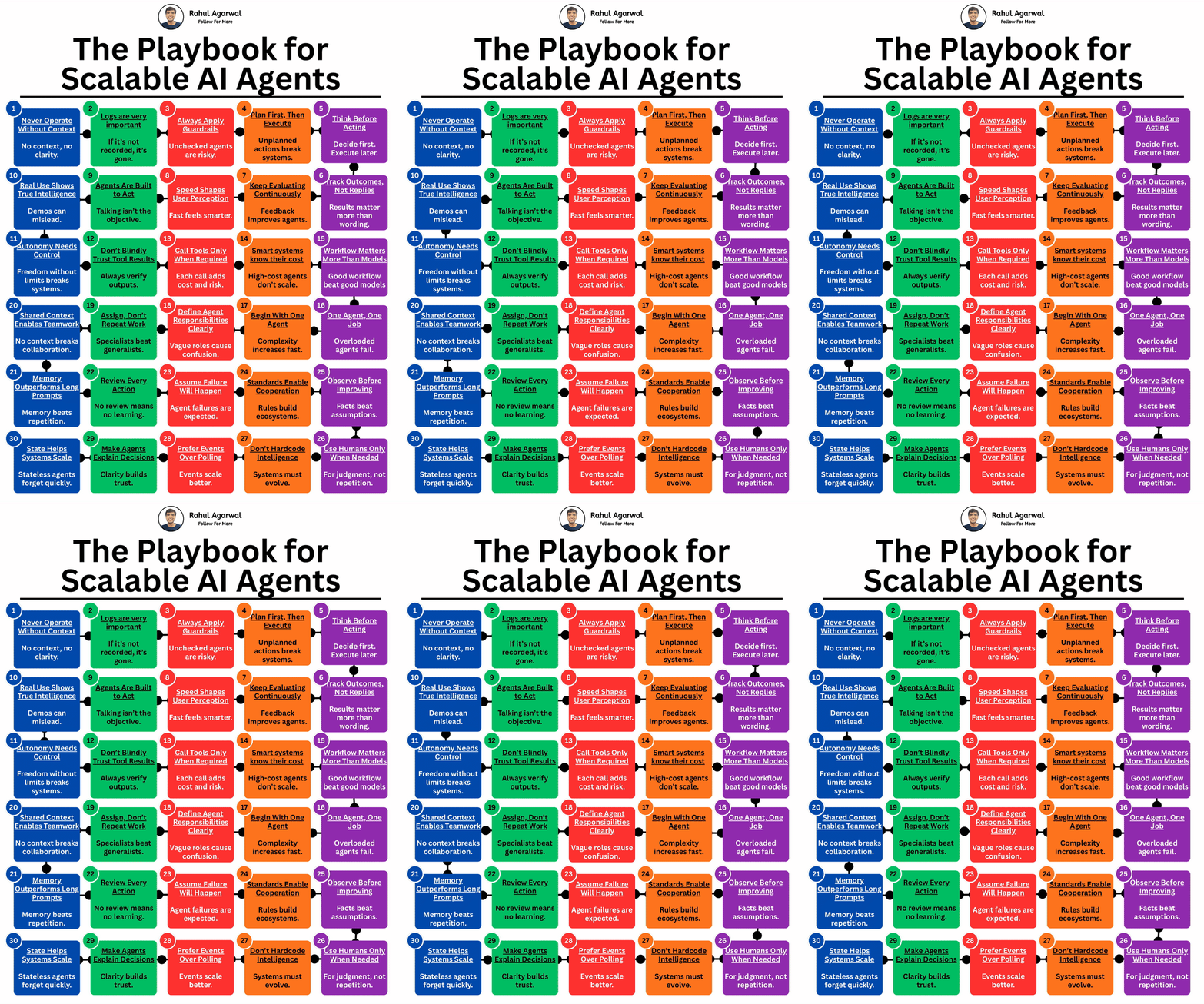


/entrackr/media/post_attachments/wp-content/uploads/2021/08/Accel-1.jpg)























Download the medial app to read full posts, comements and news.