News on Medial

Related News

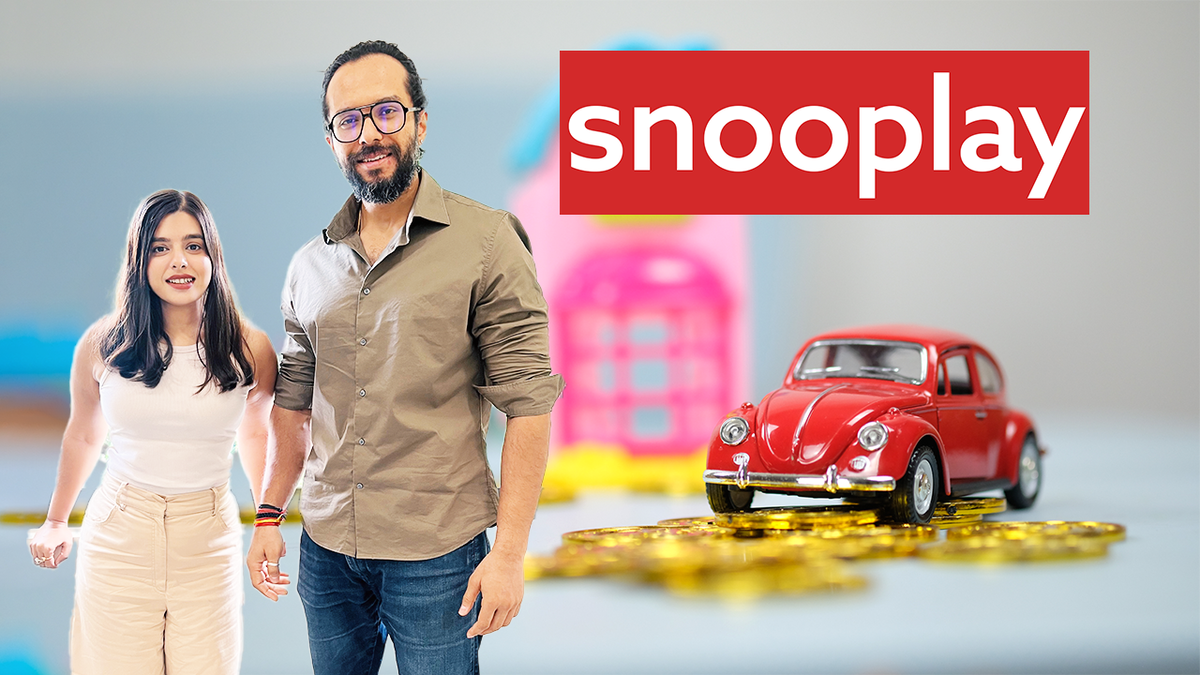
Toy marketplace Snooplay raises pre- Series A1 round led by Pravek Family Office

EntrackrEntrackr · 6m ago
Toy marketplace Snooplay raises pre- Series A1 round led by Pravek Family Office
Medial

Toy marketplace Snooplay raises pre-Series A1 round led by Pravek Family Office Toy marketplace Snooplay has raised Rs 8 crore in a pre-Series A1 funding round led by Pravek Family Office along with participation from other strategic angel investors. Prior to this, the Noida-based company had raised $535K in a seed funding round from Ajay Kumar Gupta and others. The proceeds will be utilized to launch its two proprietary innovative tech products that aim to transform how India discovers, buys, and recirculates toys - through AI, data, and empathy, Snooplay said in a press release. Co-founded in 2019 by Aanchal Mahajan and Brij Raj Singh, Snooplay builds a full-stack, AI-powered toy platform that integrates discovery, purchase, and guilt-free disposal into one seamless ecosystem. The company’s proprietary Toy Intelligence Database—an industry-first effort to map toys to developmental skills, moods, play types, and learning goals. “We are building India’s only toy app that’s serious about play. An app that helps you discover and buy the right toy when your child needs it and lets you trade it in for store credits once they’ve outgrown it. No clutter, no guilt. Just a smarter way to play,” said Aanchal Mahajan, co-founder, Snooplay. Snooplay claims that it houses over 35,000 toys from more than 600 brands, and serves a growing community of Indian parents, collectors and gift-givers. The platform aims to create a single, intelligent loop of smarter discovery and guilt-free exit - making Snooplay the first App in India to build infrastructure around play. Snooplay intends to expand its buyback program in collaboration with NGOs, enabling sustainable toy donations and encouraging conscious consumption. The brand will strengthen its private label offerings across modern retail outlets, e-commerce marketplaces, and curated gifting verticals, while also enhancing its technology, logistics, and operational backbone. The other prominent companies in the toy industry include Funskool, Mattel Toys (India), Simba Toys India, Hamleys (India), Hasbro India, and Lego India.

Pine Labs sees credit line on UPI as India’s next credit growth driver

EntrackrEntrackr · 3m ago
Pine Labs sees credit line on UPI as India’s next credit growth driver
Medial

Pine Labs sees credit line on UPI as India’s next credit growth driver India has 330 million credit-ready consumers but 150–200 million remain underserved, a gap that embedded credit products like CLOU aim to address. Pine Labs’ latest industry report, supported by McKinsey, points to “credit line on UPI” (CLOU) as the big growth driver for credit-linked payments at checkout, as India’s lending landscape undergoes rapid changes. By 2030, the report estimates, credit-linked payment products could generate as much revenue as home and auto loans. The push will be led by UPI’s 65 million QR-enabled merchants and digital-native customer base, with 490 million consumers already on UPI. Despite high awareness among the non-carded base, actual usage of products like BNPL or EMI on debit cards remains low, largely due to discoverability, acceptance, and trust issues. At present, consumers prefer credit options that are easy to access on familiar apps, simple to use, transparent, and widely accepted. CLOU’s pitch is to leverage existing QR infrastructure for small-ticket credit, which unlocks viable lending economics for banks and NBFCs. The product will allow lenders to offer customized propositions, improve risk management through AI-led underwriting, and scale via ecosystem partnerships. The report also flags the need for banks and tech players to invest in configurable, modern tech stacks and develop strong merchant and TPAP (third-party app provider) partnerships for adoption. The report further highlights that the next lending revolution is starting right at the checkout, with new credit products set to change the way Indians shop and borrow.

Why EV maker Ather’s IPO didn’t tick all right boxes

EntrackrEntrackr · 9m ago
Why EV maker Ather’s IPO didn’t tick all right boxes
Medial

Why EV maker Ather’s IPO didn’t tick all right boxes Ather had to scale down its expected valuation from $2 billion to $1.4 billion ahead of the IPO — a move that, to some investors, signaled weaker demand or a lack of confidence. Ather Energy’s Rs 2,626 crore IPO — India’s third-largest public offering of 2025 so far — had all the makings of a headline event: a respected EV brand, strong engineering pedigree, and a fast-growing electric scooter market. Yet, as the subscription window closed, the response appeared muted. Institutional investors subscribed to just 1.7 times the shares allocated for Qualified Institutional Buyers (QIB) category, while Non-Institutional Investors (NIIs) subscribed to only 66% of their quota. Retail investors showed comparatively more interest, with a subscription rate of 1.78 times, thanks possibly to some last minute pushing by brokerages promising the possibility of listing gains. Ather is known for its solid engineering and high-quality scooters. But when it came to the IPO, it struggled to get attention. Many investors felt the company didn’t share a big, bold vision — something Ola did well. Ather had to scale down its expected valuation from $2 billion to $1.4 billion ahead of the IPO — a move that, to some investors, signaled weaker demand or a lack of confidence, especially when compared to the bolder positioning of rivals like Ola Electric. Even when we look at the financials of both EV companies, the contrast is clear. Ahead of its IPO, Ola Electric disclosed in its Red Herring Prospectus (RHP) that it recorded Rs 5,000 crore in revenue for FY24, with a net loss of Rs 1,584 crore — meaning the company spent Rs 1.25 to earn every Rs 1 in revenue. Ather Energy, on the other hand, reported Rs 1,579 crore in revenue with a loss of Rs 580 crore for the first nine months of FY25, translating to a cost of Rs 1.36 to earn every Rs 1. That higher per-unit cost, combined with lower scale, may have made investors cautious, especially when comparing Ather’s path to profitability with Ola’s stronger topline growth. Ather’s slow and steady approach to expansion, which ensured high customer loyalty and trust, has boomeranged when it comes to the IPO. Public markets tend to reward speed, growth, or profitability, and in Ather’s case, it appears lucky to have scraped through with none of the above. That is a huge endorsement of its reputation and promise, and possibly positive word of mouth. That the IPO was practically a compulsion is also a reason why the firm decided to forge ahead, with limited runway available and backers holding off. There is every possibility that investors will have to be more patient than usual to see the firm deliver returns. The founders have almost been timid in making claims linked to prospects, the antithesis of what Bhavish Aggarwal of Ola Electric. One can only hope that this refusal to chest thump will deliver the kind of returns that gladden the heart in time.

Download the medial app to read full posts, comements and news.