News on Medial

Treebo crosses Rs 100 Cr revenue in FY24, outstanding losses climb to Rs 488 Cr

EntrackrEntrackr · 1y ago
Treebo crosses Rs 100 Cr revenue in FY24, outstanding losses climb to Rs 488 Cr
Medial

Treebo crosses Rs 100 Cr revenue in FY24, outstanding losses climb to Rs 488 Cr Treebo Hotels, a premium-budget hotel chain, crossed the Rs 100 crore revenue milestone in the fiscal year ending March 2024. Despite this growth, the Bengaluru-based company saw its losses rise by 17%, bringing total outstanding losses to Rs 488 crore. Treebo Hotels’s revenue from operations grew 22.5% to Rs 109 crore in FY24 from Rs 89 crore in FY23, its consolidated financial statements filed with the Registrar of Companies show. Income from accommodation services (taken on lease and managed properties) formed 95% of the total operating revenue which increased by 22.3% to Rs 104 crore in FY24 from Rs 85 crore in FY23. The rest of the income comes from the sale of products, and subscription services. The company also added Rs 7.22 crore as other income (non-operating) which tallied its overall revenue to Rs 116 crore in FY24 from Rs 94 crore in FY23. Treebo spent 41% of its overall expenditure on employee benefits which increased marginally by 7% to Rs 59 crore in FY24. Its cost and commission surged 70% and 48% to Rs 17 crore and Rs 43 crore in the previous fiscal year. Its cost of materials, legal, technology, traveling, and other overheads took the overall cost up by 22% to Rs 144 crore in FY24 from Rs 118 crore in FY23. The increased advertising and commission costs led Treebo to raise its losses by 16.7% to Rs 28 crore in FY24, compared to Rs 24 crore in FY23. Its ROCE and EBITDA margin stood at -540% and -18.1% respectively. On a unit level, it spent Rs 1.32 to earn a rupee in FY24. The company’s total current assets stood at Rs 34 crore with cash and bank balances of Rs 7 crore in the previous fiscal. According to startup data intelligence platform TheKredible, decade-old Treebo has secured Rs 566 crore (approximately $70 million) in funding from investors including Accor, Elevation Capital, Matrix Partners, and Bertelsmann. The company’s most recent major funding, amounting to $16 million, was raised in June 2021. Treebo competes directly with Bloom Hotels and FabHotels. In FY24, Bloom Hotels saw its operational revenue rise by 73.6% to Rs 250 crore, with a profit of Rs 14 crore. FabHotels recorded Rs 224 crore in operating revenue for FY23 but has not yet filed its FY24 annual report.

Related News

FabHotels gross revenue crosses Rs 550 Cr in FY24, losses widen 23%

EntrackrEntrackr · 1y ago
FabHotels gross revenue crosses Rs 550 Cr in FY24, losses widen 23%
Medial

FabHotels gross revenue crosses Rs 550 Cr in FY24, losses widen 23% Casa2 Stays, the parent firm of FabHotels, reported a 34% increase in gross revenue for the fiscal year ending March 2024. However, its loss rose by 23%, driven by a twofold increase in employee benefit expenses. FabHotels’ gross revenue increased to Rs 552 crore in FY24 from Rs 412 crore in the previous fiscal year (FY23), according to its financial statement sourced from the Registrar of Companies (RoC). The revenue for FY23 appears different this year as it marks FabHotels’ first set of financial statements prepared in compliance with Indian Accounting Standards (Ind AS). FabHotels, a budget hotel chain with over 600 properties across more than 50 cities in India, generated 99.4% of its gross revenue from accommodation bookings. Gross revenue increased by 33.35% to Rs 549 crore in FY24. Meanwhile, other revenue sources contributed Rs 3.3 crore. The company also recorded an additional income of Rs 11 crore from interest on deposits and liabilities written off, which pushed its overall revenue to Rs 563.6 crore in the last fiscal year. Accommodation expenses remained the largest cost component forming 74% of the overall cost, which grew by 32% to Rs 435 crore. FabHotels’ employee costs shot up 2X to Rs 92 crore in FY24. This includes Rs 15 crore as ESOP cost. Its commission expenses rose by 8% to Rs 27 crore, while other costs added Rs 34 crore. Overall, total expenses grew by 38.5% to Rs 588 crore in FY24 from Rs 424.7 crore in FY23. The two-fold jump in employee benefits led FabHotel to increase its losses by 23% to Rs 114 crore in FY24, compared to Rs 93 crore in FY23. Its ROCE and EBITDA Margin were recorded at -84.09% and -19.52%, respectively. On a unit basis, the company spent Rs 1.06 to earn a rupee of revenue. At the end of FY24, FabHotel’s current assets stood at Rs 172 crore, including cash and bank balances worth Rs 94 crore. FabHotel has raised around $70 million to date. Accel is the largest external stakeholder with 21.39% followed by Goldman Sachs. FabHotels competes directly with Treebo and Bloom Hotels. In FY24, Treebo surpassed Rs 100 crore in revenue, while Bloom Hotels achieved a 73.6% increase in operational revenue to Rs 250 crore and recorded a profit of Rs 14 crore. FabHotels, with its budget offerings and reach, faces a moment of truth to deliver sustainable profitability that can power future growth. The hospitality sector leaves very little margin for major misses now. FabHotels has placed its bets, with little leeway to change much now. Judgement awaits in the next few months and year, perhaps.

BigBasket’s revenue crosses Rs 10,000 Cr in FY24

EntrackrEntrackr · 1y ago
BigBasket’s revenue crosses Rs 10,000 Cr in FY24
Medial

Tata Digital-owned BigBasket is making a strategic shift to focus exclusively on the burgeoning quick commerce market targeting $1.5 billion (Rs 12,400 crore) in total sales for the current fiscal year (FY25). While the impact of the pivot and its new target will unfold after the completion of FY25, it crossed the Rs 10,000 crore topline mark in FY24. Significantly, BigBasket also narrowed down losses by over 20%. BigBasket’s revenue from operations went up 6.27% to Rs 10,061.9 crore during the fiscal year ending March 2024 as compared to Rs 9,468.5 crore in FY23, as per the company’s consolidated financial statements sourced from the Registrar of Companies (RoC). It’s worth highlighting that, Supermarket Grocery Supplies Private Limited is the main entity of BigBasket which also includes its business-to-consumer (B2C) unit, Innovative Retail Concepts Private Limited, and other acquired companies. The company made 97% of its total operating revenue via the sale of grocery products and the rest came from ancillary services and other operating activities. It also earned Rs 37.89 crore from interest and gain on financial assets which took the firm’s overall revenue to Rs 10,099.8 crore during the last financial year (FY24). BigBasket, which recently announced a pivot of its business entirely to quick commerce, is planning to consolidate services by merging its BBdaily subscription service into its main app. By aligning its operations with 10-15 minute delivery, BigBasket is positioning itself to compete more aggressively with established players like Blinkit, Swiggy Instamart, Zepto, and Flipkart Minutes. Moving to the expenses, the cost of goods sold (COGS) accounted for 71.3% of the total expenses and grew 3.4% to Rs 8,209.6 crore in FY24. Employee benefits expenses, however, slipped 11.7% to Rs 936.6 crore during the same period. The employee cost also includes employee stock options (ESOP) expenses worth Rs 98.5 crore. Other major expenses of the company include transportation, distribution, advertising & promotions, technical services, and other admin and operating expenses. For more details, head to TheKredible. Overall, BigBasket managed to control its total expenses which increased a mere 2% to Rs 11,515 crore in FY24 from Rs 11,284.7 crore in FY23. The controlled expenses also helped in reducing losses significantly which shrank 20.73% to Rs 1,415 crore during FY24. Its operating cash outflows also improved by 18.5% to Rs 1,103 crore during the year. BigBasket’s outstanding losses stood at Rs 7,619.85 crore as of FY24. The Bengaluru-based firm’s EBITDA margin improved by 463 BPS to -9.39% in FY24. On a unit level, BigBasket spent Rs 1.14 to earn a rupee of operating revenue during the last fiscal year. FY23-FY24 FY23 FY24 EBITDA Margin -14.02% -9.39% Expense/₹ of Op Revenue ₹1.19 ₹1.14 ROCE -51.37% -70.62% During FY24, Zomato’s Blinkit and Swiggy’s Instamart recorded Rs 2,301 crore and Rs 1,100 crore gross revenue, respectively. Another competitor in the space, Zepto claimed that its revenue has jumped five-fold to more than Rs 10,000 crore in FY24. The audited numbers of the Aadit Palicha-led company is yet to come.

IntrCity crosses Rs 320 Cr income in FY24, nears break-even

EntrackrEntrackr · 1y ago
IntrCity crosses Rs 320 Cr income in FY24, nears break-even
Medial

Travel-tech platform IntrCity, which owns SmartBus and RailYatri, could not replicate its FY23 growth momentum in FY24. After achieving six-fold growth in FY23, the company recorded a modest 16% year-on-year revenue increase for the fiscal year ending March 2024. However, the Nandan Nilekani family trust-backed firm reduced its losses by over 52%, bringing them below Rs 10 crore in FY24. IntrCity's revenue from operations grew 15.9% to Rs 317.34 crore during FY24 as compared to Rs 273.9 crore in FY23, as per the company's consolidated financial statements with the Registrar of Companies. IntrCity operates web and mobile platforms for its brands, SmartBus and RailYatri. The flagship brand, IntrCity SmartBus, caters to long-distance bus routes across India, while RailYatri offers train travel services such as ticket booking and meal ordering. As per the filings, the majority of commission revenue came from the Indian Railway Catering and Tourism Corporation (IRCTC) during FY24. The company collected 93.8% of the revenue from bus operations which went up 16.9% to Rs 297.71 crore in FY24. It also earned Rs 18.08 crore from commission along with Rs 1.55 crore via advertisement services. Additionally, collection from interest and gain on financial assets (non-operating revenue) stood at Rs 3.38 crore. Including this, the company's overall revenue climbed to Rs 320.7 crore in FY24. On the expense side, the cost of revenue (direct cost for the distribution of services) accounted for 68.3% of the total expenditure. This cost grew 14.2% to Rs 225.8 crore in FY24 from Rs 197.8 crore in FY23. Operation and maintenance costs went up 9.3% to Rs 43.5 crore while spending on employee benefits remained almost flat at Rs 36.85 crore during the last fiscal year. The company incurred Rs 7.42 crore on advertisement and promotions and paid Rs 3.9 crore commission for catering and payment gateway services. In the end, IntrCity's expenses increased 9.7% to Rs 330.6 crore during FY24 in comparison to Rs 301.3 crore during FY23. On the back of controlled expenditure and double-digit growth in revenues, the firm managed to bring down its losses by 53.7% to Rs 9.9 crore in FY24. The losses were at Rs 21.4 crore in the previous fiscal year. Operating cash outflows of IntrCity also improved by 69.8% during the period and stood at Rs 6.1 crore. As of the last fiscal year, the firm's outstanding losses stood at Rs 242.5 crore. During FY24, the travel-tech platform managed to improve its EBITDA margin by 459 BPS to -2.08%. On a unit level, IntrCity spent Rs 1.04 to earn an operating revenue during the said period. IntrCity has Rs 17.4 crore in cash and bank balances while its total assets stood at Rs 41.2 crore for the fiscal year ended March 2024. As per the startup data intelligent platform TheKredible, IntrCity has raised over $50 million to date and was valued at around Rs 912 crore or $110 million in the latest funding round in February this year. Among online travel aggregator (OTA) platforms, MakeMyTrip is the largest player in terms of revenue. Ixigo, EaseMyTrip, Yatra, and Cleartrip are also the key players in the segment.

Dezerv reports Rs 66 Cr revenue in FY25, employee costs climb to Rs 111 Cr

EntrackrEntrackr · 1m ago
Dezerv reports Rs 66 Cr revenue in FY25, employee costs climb to Rs 111 Cr
Medial

Following a 2.5X growth in FY24, wealthtech platform Dezerv achieved a similar scale in FY25. Despite the aggressive expansion, the company’s losses widened during the year and crossed the Rs 100 crore mark in FY25. Dezerv’s revenue from operations grew 2.5X to Rs 66 crore in FY25 from Rs 26 crore in FY24, according to its consolidated financial statements sourced from the Registrar of Companies (RoC). Dezerv offers portfolio management services (PMS) to top tier working professionals and affluent individuals with expert advice, direct bonds, and angel investment opportunities in startups. Fees and commission income accounted for 67% of the operating revenue, which spiked nearly 4X to Rs 44 crore in FY25. Interest income surged more than 4X to Rs 16.8 crore during the year. However, net gains on fair value changes declined 55% to Rs 4.8 crore in the period. Employee benefit expenses remained the largest cost head for Dezerv, accounting for 62% of the total cost. This expense increased 76% to Rs 111 crore in FY25 from Rs 63 crore in FY24. Advertising and marketing expenses rose 67% to Rs 30 crore, while software expenses jumped 220% to Rs 8 crore during the last fiscal year. Depreciation costs increased to Rs 6 crore while legal and professional charges declined to Rs 3 crore in FY25. Overall, the firm’s total expenses grew 76% to Rs 178 crore in FY25 from Rs 101 crore in FY24. Higher spending pushed Dezerv’s losses up by 49% to Rs 112 crore in FY25. Its ROCE and EBITDA margin stood at -39.36% and -159.09%, respectively. On a unit basis, the company spent Rs 2.70 to earn a rupee in FY25. The Bengaluru-based firm reported cash and bank balances of Rs 204 crore, while its current assets stood at Rs 267 crore as of March 2025. According to startup data intelligence platform TheKredible, Dezerv has raised around $100 million in funding to date, including the recent $40 million round from its lead investors Accel and Premji Invest. Dezerv competes with players such as Zerodha, Upstox, and Wealthdesk. In FY25, Zerodha being a bootstrapped company reported revenue of Rs 8,847 crore with a profit of Rs 4,237 crore, while Upstox has raised over $200 million and posted flat revenue in FY25 at Rs 3,902 crore in FY25.

Progcap crosses Rs 150 Cr revenue in FY24, cuts losses

EntrackrEntrackr · 1y ago
Progcap crosses Rs 150 Cr revenue in FY24, cuts losses
Medial

Progcap crosses Rs 150 Cr revenue in FY24, cuts losses Peak XV and Tiger Global-backed fintech firm Progcap has scaled more than 5X in the last two fiscal years, from Rs 26 crore in FY22 to Rs 139 crore in FY24. The firm also managed to reduce its losses in the same period. Progcap’s revenue from operations nearly doubled to Rs 139 crore in FY24 from Rs 71 crore in FY23, its consolidated financial statement sourced from the Registrar of Companies (RoC) shows. Progcap facilitates debt capital for underserved micro and small businesses. The fintech platform digitizes supply chains and facilitates access to finance for last mile retailers. Revenue from these services was the sole source of income for the company. Progcap made an additional Rs 20 crore from interest on deposits and gains on current investments which pushed its total income to Rs 159 crore in FY24 from Rs 102 crore in FY23. On the expense side, employee benefit costs remained the largest expenditure, accounting for 61% of the total expense, to the tune of scale. This cost grew by 15% to Rs 124 crore in FY24. The firm’s finance costs surged sharply to Rs 22.5 crore from just Rs 1 crore in FY23. Other major expenses included collection deficiency charges (Rs 9.5 crore), travel expenses (Rs 6 crore), and miscellaneous costs. Overall, the company’s total expenses grew by 36% to Rs 203 crore in FY24 from Rs 149 crore in the preceding fiscal year. Progcap managed to cut its losses by 6% to Rs 46 crore in FY24 from Rs 49 crore in FY23. Its ROCE and EBITDA Margin improved to -2.96% and -11.32% respectively. On a unit basis, the company spent Rs 1.46 to earn a rupee of operating revenue in FY24. The Delhi-based firm reported current assets worth Rs 1,321 crore which include Rs 163 crore of cash and bank balance in FY24. According to TheKredible, Progcap has raised a total of approx $112 million in funding to date, having Tiger Global, Peak XV, Creation Investments, and GrowX Ventures as its lead investors. Progcap’s co-founders, Pallavi Shrivastava and Himanshu Chandra, collectively hold a 23.41% stake in the company.

Bakingo crosses Rs 200 Cr revenue in FY24 with marginal losses

EntrackrEntrackr · 1y ago
Bakingo crosses Rs 200 Cr revenue in FY24 with marginal losses
Medial

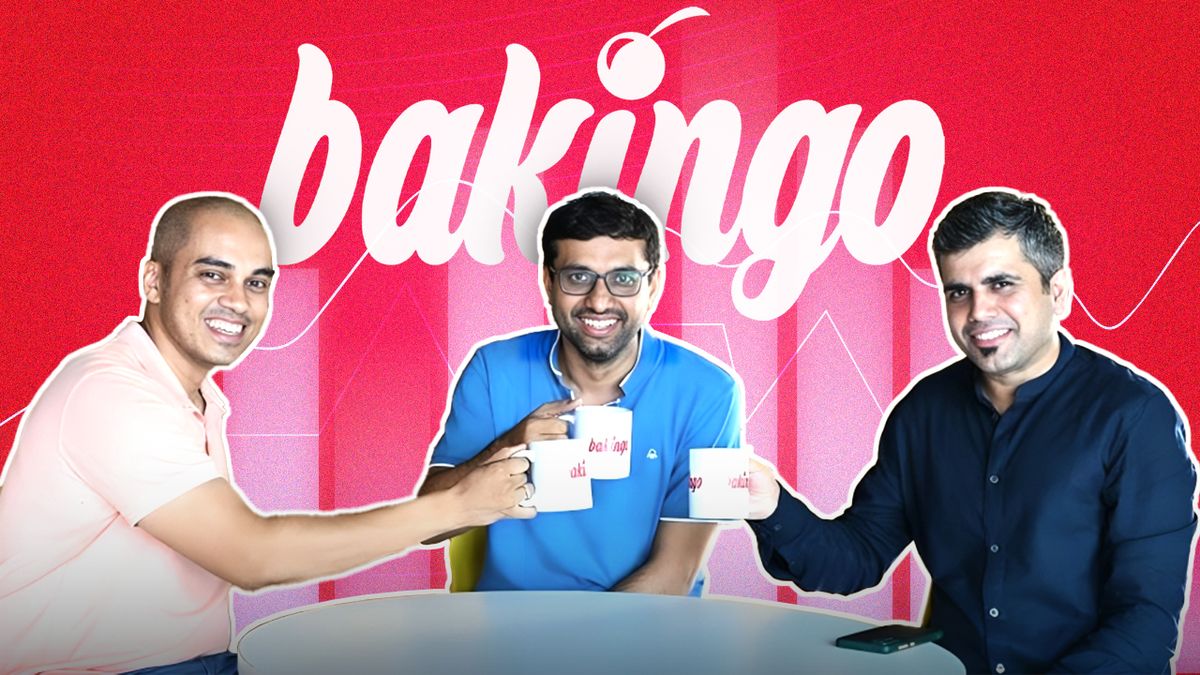
Fintrackr All Stories Bakingo crosses Rs 200 Cr revenue in FY24 with marginal losses Online bakery brand Bakingo recorded a 43% year-on-year growth during the last fiscal year ending March 2024. However, in pursuit of expansion, the losses for the Gurugram-based company increased marginally in the same period. Bakingo’s revenue from operations grew by 43% to Rs 208.7 crore in FY24, compared to Rs 145.7 crore in FY23, its consolidated financial statements sourced from the Registrar of Companies (RoC) show. Founded by Himanshu Chawla, Shrey Sehgal, and Suman Patra, Bakingo offers a variety of cakes and desserts, including its signature Cheesecake, Gourmet Cakes, Jar Cakes, and over 100 SKUs. The sale of these products was the only source of revenue for Bakingo. For the bakery firm, the cost of product procurement accounted for 42.2% of its overall expenditure. To the tune of scale, this cost increased 43% to Rs 90 crore in FY24. Its employee benefit grew by 40% to Rs 31.6 crore, while advertising expenses rose by 38% to Rs 27.7 crore. Platform commission fees also saw a jump of 65% to Rs 26.2 crore. Overall, Bakingo’s total expenses rose by 46% to Rs 213.8 crore in FY24 from Rs 146.3 crore in FY23. The surge in employee benefits, advertising, and procurement costs outpaced the revenue growth, resulting in its losses to increase to Rs 5.3 crore in FY24. Its ROCE and EBITDA margin stood at -6.05% and -0.98% respectively. Bakingo’s expense-to-revenue ratio was recorded at Rs 1.02 with total current assets of Rs 96.5 crore during FY24. Bakingo has raised $16 million (Rs 130 crore) to date, which was its maiden round led by Faering Capital last year at a valuation of Rs 571 crore. According to Fintrackr’s estimates, its enterprise value to revenue multiple stood at 2.7X. The growth in the last year seems to be an outcome of being able to optimise operations to a higher level. In a discretionary category with very high competition, we believe Bakingo still has work to do on the brand, quality perception and distribution to keep growing. For now, it seems to be simply a branded offering for those looking to buy from one, rather than the neighborhood shop or bakery. Signature offerings, better word of mouth, and perhaps even packaging are all gaps that need work.

Petcare startup Supertails crosses Rs 100 Cr revenue in FY25; losses surge 28%

EntrackrEntrackr · 11d ago
Petcare startup Supertails crosses Rs 100 Cr revenue in FY25; losses surge 28%
Medial

Petcare startup Supertails crosses Rs 100 Cr revenue in FY25; losses surge 28% Petcare startup Supertails reported a 68% year-on-year jump in operational revenue, surpassing Rs 100 crore in FY25, while its losses widened 28% to Rs 52.5 crore amid ongoing expansion. Supertails’ revenue from operations surged 68% to Rs 108.3 crore in FY25, compared to Rs 64.6 crore in FY24, according to its financial statements filed with the Registrar of Companies (RoC). Founded in 2021 by Varun Sadana, Aman Tekriwal, and Vineet Khanna, Supertails addresses the evolving needs of pet parents through customised offerings, positioning itself as a full-stack digital platform for pet care and parenting solutions. The Supertails app offers more than 30,000 pet care products, including pet food, treats, accessories, healthcare products, and other essentials. The sale of these products accounted for nearly 95% of its total operating revenue, which stood at Rs 102.5 crore. It also provides veterinary services, including consultations, vaccinations, grooming, and preventive care at home or through its clinics. These services contributed Rs 2.65 crore during the period. The rest of the operating revenue came from franchise fees and through ad monetisation. The company also earned Rs 5 crore from non-operating sources such as gain from investments and interest income, this pushed its total income to Rs 113.3 crore in FY25. On the cost side, the cost of materials was the largest expense, accounting for 50% of the overall expenditure. This cost rose 45% to Rs 83.3 crore in FY25, while employee benefit expenses increased 15% year-on-year to Rs 25.3 crore for Supertails. Supertails spent Rs 22.9 crore on marketing in FY25 to boost its sales, a 37% increase from FY24. Other overheads such as shipping charges, legal and professional fees, warehousing costs, and software charges added Rs 34.3 crore to its expenses. Overall expenses surged 53% to Rs 165.8 crore in FY25 from Rs 108.4 crore in FY24. In the end, although Supertails’ operating revenue growth outpaced its expense growth, its losses still widened 28% to Rs 52.5 crore in FY25 from Rs 41 crore in FY24. Its ROCE and EBITDA margin stood at -52.58% and -48.9% respectively. On a unit basis, the company spent Rs 1.53 to earn every rupee of revenue in FY25, a marginal improvement over FY24. As of March 2025, the Bengaluru-based firm held cash and bank balances of Rs 39 crore, while its total current assets stood at Rs 100 crore. To date, the company has raised around $51 million, including its most recent $30 million round led by Venturi Partners with participation from Nippon India, Titan Capital, Fireside Ventures, RPSG Capital Ventures, and others.

AgroStar crosses Rs 850 Cr revenue in FY25; cuts losses

EntrackrEntrackr · 9d ago
AgroStar crosses Rs 850 Cr revenue in FY25; cuts losses
Medial

AgroStar crosses Rs 850 Cr revenue in FY25; cuts losses AgroStar continued its steady growth and crossed Rs 850 crore in operating revenue in the fiscal year ended March 2025. The Pune-based firm also reduced its losses by 56% during the same period. AgroStar’s operating revenue increased by 14.2% to Rs 853 crore in FY25 from Rs 747 crore in FY24, according to its consolidated financial statement sourced from the Registrar of Companies (RoC). AgroStar runs a full-stack agritech platform that sells agri-inputs such as seeds, crop protection and nutrition products, while using AI-led and expert advisory to drive farmer engagement and repeat purchases. It also enables limited output linkages through brands such as Kimaye. Revenue from product sales accounted for 97% of operating revenue and rose 14.5% to Rs 827 crore in FY25. Income from services stood at Rs 13 crore, while other operating income also contributed Rs 13 crore during the year which took its total income to Rs 864 crore in FY25. On the spending side, the cost of materials remained the largest expense and accounted for 56% of the expense. To the tune of scale, this cost increased 6% to Rs 567 crore in FY25 from Rs 535 crore in FY24. Transportation costs rose 31% to Rs 145.5 crore, while employee benefit expenses declined marginally to Rs 108 crore. Depreciation expenses fell sharply by 72.3% to Rs 57 crore. Finance costs increased to Rs 36 crore in the period. Overall, AgroStar reduced its total expenses by 7.4% to Rs 1,008 crore in FY25 from Rs 1,089 crore in FY24. With steady revenue growth and cost control measures helped Agrostar to cut its losses by 56% to Rs 143.5 crore in FY25 from Rs 327 crore in FY24. Its ROCE and EBITDA margin stood at -140.48% and -7.15% respectively. On a unit basis, the company spent Rs 1.18 to earn a rupee of operating revenue during the fiscal year, compared to Rs 1.46 in FY24. As of March 2025, AgroStar reported cash and bank balances of Rs 120 crore, while its current assets stood at Rs 437 crore. AgroStar has raised about $186 million to date, including a $30 million round led by Just Climate. Its investors include Aavishkaar India, Bertelsmann, Evolvence India, Chiratae Ventures, and Hero Enterprises. It competes with Ninjacart, DeHaat, and WayCool.

Download the medial app to read full posts, comements and news.