News on Medial

Related News

Return Prime aims to make return management seamless for brands

EntrackrEntrackr ยท 1y ago
Return Prime aims to make return management seamless for brands
Medial

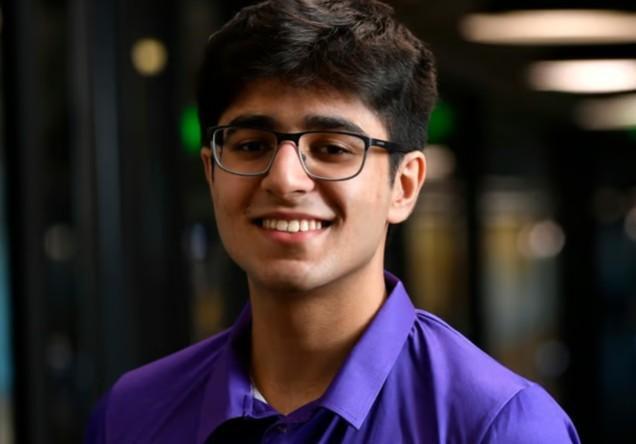
Bengaluru-based Return Prime provides a customer return platform which includes a business dashboard for managing returns. The company aims to make it easier for brands, specially smaller ones, to use its services through a plug-and-play model. Beyond basic returns, brands can use the Return Prime platform for automating return logistics, refunds, replacements, and more. We spoke to founder and CEO Shashwat Swaroop to learn more about Return Prime, what distinguishes it from the competition and the roadmap ahead. Here are the edited excerpts: How did you come up with this idea? I have always been extremely passionate about creating something and solving problems, building my brand which helped other people solve their challenges was always something that I intended to do. Once an eCommerce brand came to me with their return management nightmare. They were doing everything manually and it was too cumbersome. It was not only time-consuming but was impacting their customer experience too. Customers were used to a certain speed, standards, and experience, and to ensure their shoppers wouldnโ€™t leave them, they needed a solution to cater to this. But building a whole software program was just out of reach โ€“ both financially and in terms of time! I then began researching, and my study confirmed what I suspected โ€“ there was a massive gap in the market for managing returns. Existing solutions were few and far between, and mostly focused on the US. We saw a chance to empower brands worldwide to make return management extremely seamless, one that ensures their GMV losses are minimized while customer experience is maximized, thatโ€™s what led to the birth of Return Prime. Please help understand how you generate revenues. The pricing models are quite fair and simple. This was one of the most important things for us to simplify. When we started building Return Prime, we were simplifying the complicated experience of returns for both brands and their customers so keeping everything around Return Prime simple was important. The pricing model is just based on the scale of business which is how many returns they do in a given month. One can start with the Free Forever plan if they are a small brand and pay nothing forever. They only have to choose a paid plan when they start to grow. As you grow, you can choose one of our Grow plans which starts at $9.99 a month. What are the key challenges in the industry that have not been addressed yet? And how do you plan to address this? We are working to solve the way businesses see returns. The correct solution is not to focus on reducing the returns but on figuring out how you can turn your returns into a revenue-making opportunity. Returns are simply inevitable so the merit is not in reducing it by another few per cent but in converting the majority of it into additional revenue. We are constantly working on it and on average, our brands see an ROI of 183%+ with Return Prime, which is on the cost they pay for Return Prime every month. This is going up constantly with our focused effort to turn returns into revenue. How has your startup performed since its inception? Please share statistics. We have been growing from day 1, completely bootstrapped. We grew 150% YoY in the last 3 years and this is not just India, across the globe. We serve merchants in 100+ countries today and our market share across these countries continues to increase every year. In the last 3 years, we have processed over 12 million returns for brands and customers globally. What are your short-term and long-term goals in terms of product and business expansion and diversification? From a product expansion point of view, we are focused on increasing the ROI for our brands as we believe in keeping strong fundamentals. While we do this, we will continue to increase our market share across other regions as well along with India. As consumer behaviour evolves, we are also trying to help brands offer Omnichannel returns experiences to their customers making it super easy and delightful for them. This not only helps the customer but also increases the repeat purchase and LTV for brands as this customer will trust them even more. On the other hand, we are also trying to help bigger brands solve more complex operational problems and policies which now with Return Prime is just a matter of click. We will continue to simplify complexities as we grow along with brands. In terms of geographical expansion, we will go deeper into some of the regions and increase our market share while we continue to turn returns into revenue for the rest of the world.

No hurry to sell, indefinite horizon on Zomato holding: Sanjeev Bikhchandani

EntrackrEntrackr ยท 1y ago
No hurry to sell, indefinite horizon on Zomato holding: Sanjeev Bikhchandani
Medial

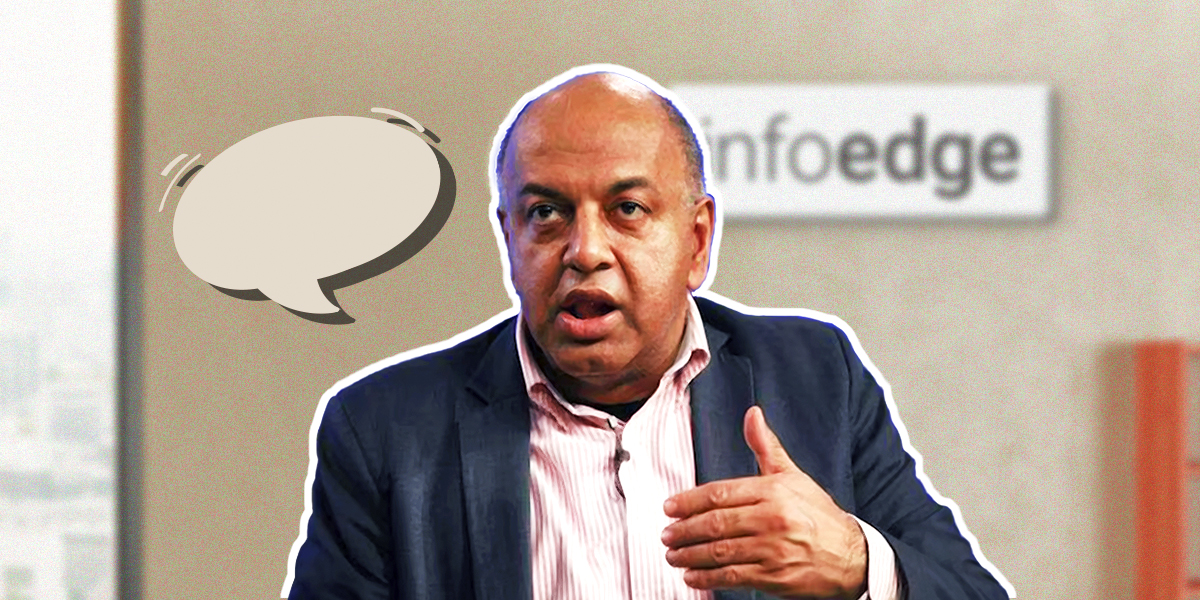
Info Edge, Indiaโ€™s largest and most storied recruitment portal, has had a stellar run in the last three years with its portfolio company Zomatoโ€™s market cap surging almost 2.3X since its stock exchange debut. The firmโ€™s bet on fintech unicorn Policybazaar is also paying off well. The company has made it clear it is in no hurry to book profits on these investments, even as it continues to nurse its own brands beyond Naukri to profitability. The firm, one of the few to survive the dotcom boom and bust cycle of 2000, has been led by founder and chairman Sanjeev Bikhchandani for a large part of this journey. And today, Bikhchandani has earned the right to be looked up to as the statesman for the sector. Entrackr caught up with Bikhchandani in his Gurugram office and he spoke on a range of topics including Naukri, Info Edgeโ€™s investments, serial entrepreneurs and corporate governance. Here are the edited excerpts. As a listed firm that carries a heavy overhang from its investment portfolio, does it worry you that it might impact the valuation of the core Naukri business? Not really. Institutional investors are smart. We give them adequate data so that they analyze Naukri thoroughly before making a conclusion about valuation. We donโ€™t run Naukri for valuation every day or month or quarter. We look at how we create value for our shareholders in the long run. And thatโ€™s how we run our businesses. So, this hypothesis about our core or even group business doesnโ€™t stand. Info Edge has been an investor in Zomato for over 14 years and despite the latterโ€™s share price rising nearly 14o% from its listing price, Info Edge didnโ€™t sell its shares. What level of return are you anticipating from Zomato? Actually, we donโ€™t calculate Investment Return Rate (IRR). Info Edge invested in Zomato because of our conviction that it could become a great company. And if you are convinced about your conviction then it will happen. So, IRR is the happy incidental outcome of investing early behind companies that you want to help. Thatโ€™s my belief. We are not in any hurry to sell and have an indefinite horizon. Every VC firm has a fund cycle and pressure to return capital to their limited partners but thatโ€™s not the case with Info Edge as you are investing from your own balance sheet. Could you elaborate on this? That pressure does not make this choice. We have a long term horizon and we call it patient capital. To be a successful early stage investor in India, you have to be quite patient because companies take anywhere between 10-15 years to go to IPO from seed stage. So if you have funds for only 6-10 years, you will not realize the full fruits of your investment. If you have a 20 year fund, you tend to perform better. However, such a horizon could be possible only when youโ€™re investing from your own whole balance sheet. Do you believe that Blinkit could become bigger than Zomato? I think both are large but Blinkit is going to be fairly large. If we look at Zomatoโ€™s quarter-on-quarter numbers, online food ordering appears to have stagnated in top 10-15 cities. Whatโ€™s your take on this? Obviously, there is the base effect. But, we donโ€™t see stagnation. Also, you need to compare year-on-year, not quarter-on-quarter. When YoY numbers are compared, there is growth. I think full fiscal year performance is more important than quarter. We used to commonly hear about Naukriโ€™s recruitment business that it was not the online presence, but your sales force or feet on the street that made the difference. Does that still hold true? Online sales have never been a big part of our strategy. When you want to sell more expensive products, you need face-to-face contact. At Naukri, we have clients whom we bill several crore rupees for annual subscription and such accounts need heavy offline touch. While the product will be consumed online, the stuff around it very often will be offline. Over the years, several players have tried to crack the recruitment business in the blue collar segment but most of them died. What are the challenges in the segment? Blue collar segment has broadly three challenges. First, itโ€™s hyperlocal. The job seekers in this segment donโ€™t move to different cities as they look for opportunities in and around their locality. Second, very often there isnโ€™t a detailed text CV which makes the process slow and inefficient. Third, potential workforce in the segment do not search for jobs on the laptop and use vernacular languages. They are mostly on mobile. So youโ€™ve got to adapt to all these things and still somehow get revenue and profit. We have been trying to get inroads in the blue collar segment for over two years now but we have just started monetizing it. Our future position in the segment depends on monetization. Some of the celebrated entrepreneurs are launching a second or third company without their first startup churning profit. How do you see this trend? I think this isnโ€™t a progressive trend. As an entrepreneur, you need to focus on one thing and do really well. Once youโ€™ve cracked that you can add on a second thing in the same company. Over the past couple of years, we have witnessed corporate governance issues with some startups. Even Info Edge saw serious lapses at 4B Networks. Whatโ€™s your opinion about this? By and large, my belief is that 95-98% of Indian founders are genuine but there will be a few bad examples. Investors make sure that when something wrong happens in their portfolio, it is highlighted and actions are taken to ensure that such incidents do not repeat. Any governance issue isnโ€™t good for anyone including limited partners, investors, founders and the startup ecosystem. What factors contributed to the lack of success with Info Edgeโ€™s e-commerce investments 99labels, MyDala, and Happily Unmarried? Limitation of raising foreign direct investment (FDI) and heavy investment into competition were two major reasons for failure of 99labels while MyDala had a product market fit (PMF) issue. Happily Unmarried is now a part of VLCC and we are still a shareholder there.

VerSe FY24 financials receive clean audit opinion from Deloitte

EntrackrEntrackr ยท 8m ago
VerSe FY24 financials receive clean audit opinion from Deloitte
Medial

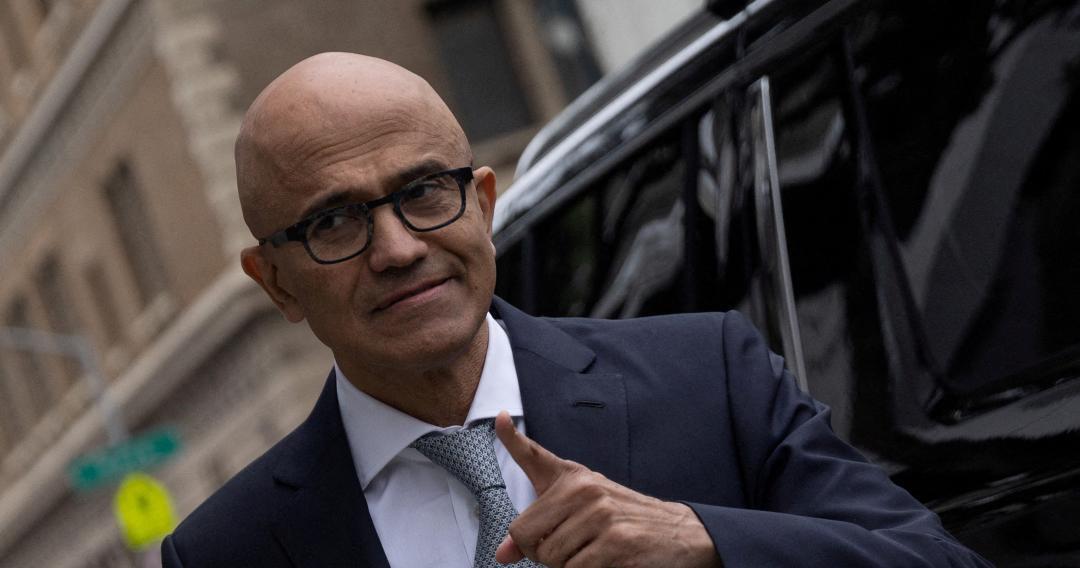
VerSe FY24 financials receive clean audit opinion from Deloitte Deloitte had identified issues around revenue recognition, expense management, and internal controls, casting doubts on the companyโ€™s financial integrity. Deloitte has issued an audit opinion on Verse Innovationโ€™s consolidated financial statements for FY24, stating that the financials present a fair view of the firmโ€™s financial position and performance, according to a press release from the company. This comes as a major relief for VerSe Innovation, which had previously faced scrutiny regarding its internal control processes, particularly in FY23, when concerns were raised about material weaknesses in its financial operations. Deloitte had identified issues around revenue recognition, expense management, and internal controls, casting doubts on the companyโ€™s financial integrity. However, in its latest report for FY24, Deloitte reassured that despite acknowledging these control weaknesses, they did not impact their overall opinion on the company's financial statements, as per the companyโ€™s release. โ€œ... Their assessment highlights that, despite some internal control weaknesses, the financials remain a true and fair representation of our companyโ€™s health,โ€ said a spokesperson from VerSe Innovation. The Bengaluru-based firm has committed to addressing these internal control issues and remains confident in its ability to break even by H2 FY25. Deloitteโ€™s new report further clarified that while material weaknesses were noted, they did not affect the audit opinion. The audit included a special mention of retrospective adjustments made for figures from FY23, acknowledging the company's efforts to improve its financial reporting. VerSe reported total revenue of Rs 1,261 crore for the fiscal year ending March 2024 and reduced its EBITDA loss by 51% year-on-year to Rs 710 crore. It is projecting over 75% revenue growth for the fiscal year ending March 2025. โ€œWe are on track to achieve break-even in H2 2025, driven by product innovation and an AI-led expansion strategy. Our commitment to financial discipline and operational efficiency will enable us to navigate the challenges of the digital landscape and create long-term value for our stakeholders,โ€ the spokesperson added.

RockClimber banks on authenticity and quality to tap into Indiaโ€™s beverage market

EntrackrEntrackr ยท 1y ago
RockClimber banks on authenticity and quality to tap into Indiaโ€™s beverage market
Medial

India has a massive beverage market with many established brands, though several new players, such as Bira, have also made their mark. Considering the sheer size of the market, itโ€™s safe to say that thereโ€™s ample scope for newcomers. One such new player is RockClimber. The company creates fruit beverages and fruit spirits designed specifically for India, made from locally grown fruits like jamun, grapes, pomegranate, kiwi, mulberry, and litchi, among others. One of the companyโ€™s objectives is to help reduce fruit wastage and create a sustainable ecosystem for farmers and fruit produce. We spoke to Cofounder Hariprasad Shetty to learn more about RockClimber, what distinguishes it from the competition, and the roadmap ahead. Here are the edited excerpts: The beverage market is filled with multiple brands, including some very established ones. How do you plan to stand out from the competition? As a truly authentic fruit based beverage brand, we are committed to using high quality fruits with an experimentative approach to crafting unique fruit combinations that incorporate global flavour trends. This has allowed us to offer a very diverse range of exciting and refreshing beverages while keeping fruits at the center of everything we do. Thatโ€™s what makes us stand out from the rest of the competition โ€“ we see ourselves as fruit experts and our products are fresh and engage with the evolving consumer preferences. So our focus is on delivering an uncompromising product experience. We source the finest fruits from across the country. This commitment to authenticity and quality sets us apart from many competitors who rely heavily on artificial flavors and preservatives. And the traction we have had in the last three years also points to how we have been accepted in the market. [FY 22 7 Cr, FY 23 7 Cr, FY 24 25 Cr, FY 25 60-70 Cr domestic and 30-35 outside India = 100 Cr+ target] 140 strong distributor network across 11 states. 3 million + bottles of beverages sold. 3000 tons of fruits processed sourced from a farmer base of 200,000 small scale fruit farmers producing grapes, pomegranate, pineapple, jamun, strawberry, mango etc. What is your offline and distribution strategy, usually the key to robust growth in your category? Most of the work should happen before Day Zero โ€“ the launch day. We recognized early on that a robust distribution network is the backbone of success in this business. We adopted a systematic approach to build our distribution network from the ground up. Mapping out territories and identifying potential distributors and retailers who could penetrate different markets. We only went ahead with experienced and reputable distributors who had an in-depth understanding of local market dynamics and consumer preferences. What is your strategy for online? Are you considering partnerships with any quick commerce platform? Yes, now that we have a headway in the distribution aspect and have achieved product market fit, we are now going to go aggressive on the marketing front especially online channels. What are the incentives for a farmer dealing with your platform other than the convenience of direct sale and price? Farmers are looking for a stable assured source of income every year. Timely procurement of their fruit produce, immediate payments, reduction in time to sale, and providing access to a large pool of buyers are all the benefits farmers get by working with us. We started with 500 tons of fruit procurement, and now at over 5000 tons. We aim for 10X procurement volumes in the next 2-3 years, thereby contributing to 10 times reduction in fruit loss, and hence a direct positive impact on small scale farmers livelihood and stable income generation. As we expand our facilities, we aim to recruit local talent to be part of our company and thereby directly provide employment opportunities as well. RockClimber aims to: Scale to 10,00,000 farmer base in the next 3 years Platform building for farmer outreach, communication, and forecasting Patented mobile fruit processing system Export unit in select locations for UAE and Africa markets You also mentioned entering the UAE and Africa markets. What is your roadmap for global expansion? And why particularly these two markets? We expect 30-35% revenues coming in from global markets in the near term. Particularly markets like UAE are huge on experimentation as consumers there are well traveled and have an international palette. We see a large market opportunity in the innovative โ€“ new age beverage category in this region.

Download the medial app to read full posts, comements and news.