News on Medial

Related News

Here is how Skydo addressing challenges in B2B cross-border payments

EntrackrEntrackr · 1y ago
Here is how Skydo addressing challenges in B2B cross-border payments
Medial

Bengaluru-based fintech firm Skydo aspires to make cross-border B2B payments much more hassle-free and address common challenges such as steep forex charges. Founded in 2022 by former Ola executives Movin Jain and Srivatsan Sridhar, the company aims to tap into the massive market of cross-border payments, which is dominated by global players like PayPal and Stripe. We spoke to cofounder and CEO Sridhar to learn more about Skydo, how it works, and what is the roadmap ahead. Here are the edited excerpts: How did you come up with the idea of Skydo? My co-founder Movin Jain and I used to work together at Ola. This was about six years back and we’ve been good friends since then. I’ve been mostly doing business roles throughout my career. First year at McKinsey, then for several years in startups and in between for about six years I ran my family-owned business. Movin has been an engineering and product guy and most recently before we started up he was actually at Phonepe, leading the payments platform. So given I have been a manufacturing exporter myself, somehow you know making life simple for exports, figuring out the problems that exporters have in terms of the complicated foreign exchange and other things that they have to deal with has been on my mind. But I never kind of thought about it consciously until we started brainstorming about which space we have to build in. Given Movin’s recent stint in payments, he was very excited about payments and the value of technology in improving payments. So since we were brainstorming about payments, some of my experiences studying the payments and wanting to solve for them came to our thinking and then we kind of started deeply digging into whether these problems are real, how can we solve them as a small company, what kind of actual issues do exporters face on a ground level, let’s talk to a few people and understand. And as we did the initial research, we realized that this is actually a real problem and it’s worth solving and this is a large enough market for us to solve it in. So this was largely the genesis of Skydo. What are the key challenges in payments and exports, cross-border payments that have not been addressed yet and how do you plan to address this? Up until 20-30 years ago, inter-entity payments were slow and cumbersome, often involving manual processes like cheque writing. International wire transfers were particularly sluggish and document-heavy. However, the likes of PayPal, business and international payments have transitioned to facilitate online transactions globally. Conventional banking systems have also significantly improved their infrastructure, with the inclusion of faster payment systems within domestic countries. This robust infrastructure, coupled with various payment options, enables companies like us with the right tools to address unsolved customer challenges. Moreover, consumers now expect instant payments, regardless of geography. Though things like compliance pose another hurdle, with varying regulations across countries causing confusion and complexity. Simplifying and standardizing compliance procedures can enable seamless international payments and business transactions. While companies like Skydo are lowering costs, there still remains room to tackle margins through technological solutions. While issues like Forex hedging and treasury management exist, addressing these concerns should be the next frontier in the payment landscape. Can you take us through how Skydo has performed since inception. So we started the company exactly two years back in March of 2022. It took us about seven months to launch the product after our first set of partnerships and approvals came. We launched in November 2022 with a small pilot batch and since January of 2023, we have been gradually and systematically scaling the business. Today, we have onboarded close to 2,500 businesses and currently our rate of acquiring new businesses is almost 500 to 600 businesses every month. So, this number is doubled, the customer base is doubled at the end of March from what it was at the end of December 2023. And I think at this pace of growth, it looks like it is going to sustain for quite a bit of time now. From onboarding, then if I look at the total payments processed, we are currently processing about $50 million of payments. This again is growing quite strongly and I think by the end of next year, that is the March of 2025, we hope to be processing over $750 million of payments annually. That is the kind of scale that we are looking at. What are your goals in terms of product and business expansion? So in the short term, obviously we want to really scale and hold a very large market share for Indian small businesses. I think that will keep us busy for the next couple of years at least. Although we will also follow this with multiple product features that will be required to make this happen from creating more countries where we can have local collections, enabling credit card payments, enabling two-way payments both from India to outward and along with the export payments that today exist and so on. So there’s an entire product roadmap that will support this growth in India. We also have to be looking for multiple licenses throughout the world. We have already applied and are waiting for approval for the payment aggregator license that RBI gives for cross-border companies. But in addition, we will be looking for multiple licensing in other geographies that will allow us to slowly and steadily expand to more corridors beyond India, which is slightly on the longer term plan. Apart from payments, the diversification is primarily into software to start with. Over time, when we have a very large scale, we might diversify into commerce as well as working capital. But that is very long term.

Return Prime aims to make return management seamless for brands

EntrackrEntrackr · 1y ago
Return Prime aims to make return management seamless for brands
Medial

Bengaluru-based Return Prime provides a customer return platform which includes a business dashboard for managing returns. The company aims to make it easier for brands, specially smaller ones, to use its services through a plug-and-play model. Beyond basic returns, brands can use the Return Prime platform for automating return logistics, refunds, replacements, and more. We spoke to founder and CEO Shashwat Swaroop to learn more about Return Prime, what distinguishes it from the competition and the roadmap ahead. Here are the edited excerpts: How did you come up with this idea? I have always been extremely passionate about creating something and solving problems, building my brand which helped other people solve their challenges was always something that I intended to do. Once an eCommerce brand came to me with their return management nightmare. They were doing everything manually and it was too cumbersome. It was not only time-consuming but was impacting their customer experience too. Customers were used to a certain speed, standards, and experience, and to ensure their shoppers wouldn’t leave them, they needed a solution to cater to this. But building a whole software program was just out of reach – both financially and in terms of time! I then began researching, and my study confirmed what I suspected – there was a massive gap in the market for managing returns. Existing solutions were few and far between, and mostly focused on the US. We saw a chance to empower brands worldwide to make return management extremely seamless, one that ensures their GMV losses are minimized while customer experience is maximized, that’s what led to the birth of Return Prime. Please help understand how you generate revenues. The pricing models are quite fair and simple. This was one of the most important things for us to simplify. When we started building Return Prime, we were simplifying the complicated experience of returns for both brands and their customers so keeping everything around Return Prime simple was important. The pricing model is just based on the scale of business which is how many returns they do in a given month. One can start with the Free Forever plan if they are a small brand and pay nothing forever. They only have to choose a paid plan when they start to grow. As you grow, you can choose one of our Grow plans which starts at $9.99 a month. What are the key challenges in the industry that have not been addressed yet? And how do you plan to address this? We are working to solve the way businesses see returns. The correct solution is not to focus on reducing the returns but on figuring out how you can turn your returns into a revenue-making opportunity. Returns are simply inevitable so the merit is not in reducing it by another few per cent but in converting the majority of it into additional revenue. We are constantly working on it and on average, our brands see an ROI of 183%+ with Return Prime, which is on the cost they pay for Return Prime every month. This is going up constantly with our focused effort to turn returns into revenue. How has your startup performed since its inception? Please share statistics. We have been growing from day 1, completely bootstrapped. We grew 150% YoY in the last 3 years and this is not just India, across the globe. We serve merchants in 100+ countries today and our market share across these countries continues to increase every year. In the last 3 years, we have processed over 12 million returns for brands and customers globally. What are your short-term and long-term goals in terms of product and business expansion and diversification? From a product expansion point of view, we are focused on increasing the ROI for our brands as we believe in keeping strong fundamentals. While we do this, we will continue to increase our market share across other regions as well along with India. As consumer behaviour evolves, we are also trying to help brands offer Omnichannel returns experiences to their customers making it super easy and delightful for them. This not only helps the customer but also increases the repeat purchase and LTV for brands as this customer will trust them even more. On the other hand, we are also trying to help bigger brands solve more complex operational problems and policies which now with Return Prime is just a matter of click. We will continue to simplify complexities as we grow along with brands. In terms of geographical expansion, we will go deeper into some of the regions and increase our market share while we continue to turn returns into revenue for the rest of the world.

Zomato board approves renaming company to ‘Eternal’

EntrackrEntrackr · 11m ago
Zomato board approves renaming company to ‘Eternal’
Medial

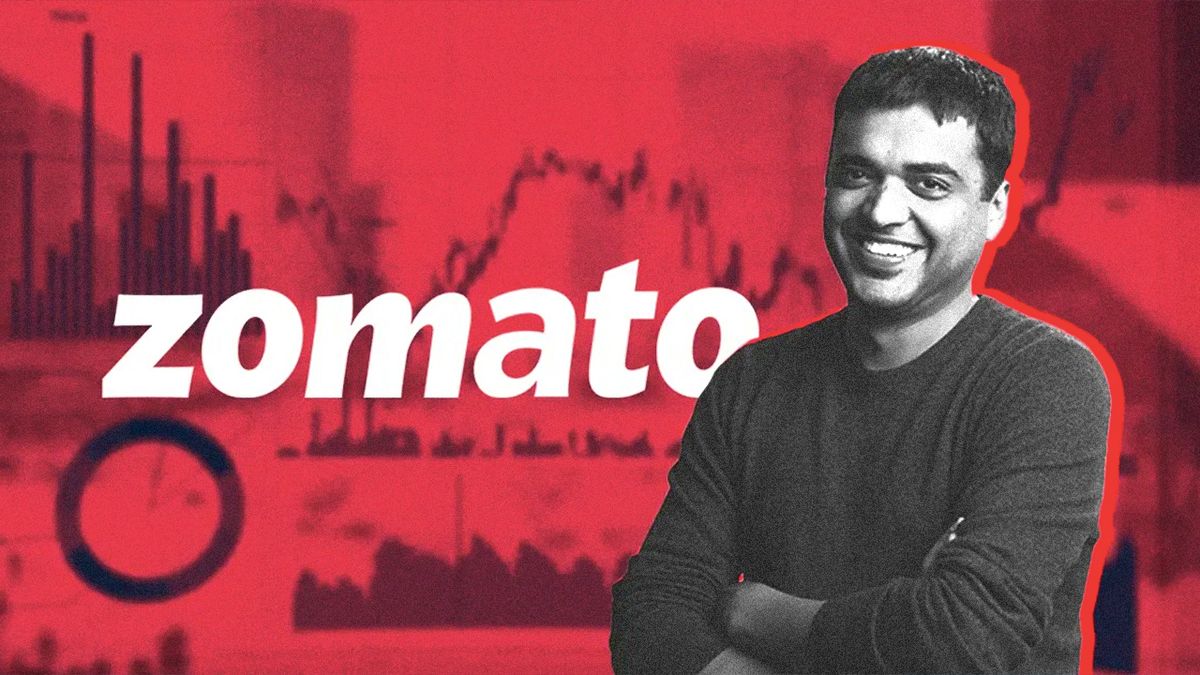
Zomato board approves renaming company to ‘Eternal’ Food tech major Zomato has received board approval to change its legal name from ‘Zomato Ltd’ to ‘Eternal Ltd.’ On February 6th, Zomato’s board approved a resolution to rename the company from ‘Zomato Limited’ to ‘Eternal Limited,’ according to a regulatory filing sourced from the National Stock Exchange. “When we acquired Blinkit, we started using “Eternal” (instead of Zomato) internally to distinguish between the company and the brand/app. We also thought that we would publicly rename the company to Eternal, the day something beyond Zomato became a significant driver of our future. Today, with Blinkit, I feel we are there. We would like to rename Zomato Ltd., the company (not the brand/app), to Eternal Ltd,” said Deepinder Goyal, founder and CEO of Zomato. Goyal added that the company’s corporate website will transition from zomato.com to eternal.com. Additionally, its stock ticker will change from ZOMATO to ETERNAL. As of now, Eternal will comprise four major businesses: Zomato, Blinkit, District, and Hyperpure. The development comes weeks after Zomato’s quarterly results and a couple of months after its $1 billion fundraise via QIP. The Gurugram-based company’s revenue from operations surged 64.4% to Rs 5,405 crore in Q3 FY25, compared to Rs 3,288 crore in Q3 FY24. However, its profit took a hit, slipping 57.2% YoY to Rs 59 crore during the period. Meanwhile, the company re-entered the 10–15 minute food delivery space and invested Rs 500 crore in its quick commerce subsidiary, Blinkit. Zomato also made history as the first new-age Indian tech company to join the Bombay Stock Exchange (BSE) Sensex 30, replacing JSW Steel Limited in India’s benchmark index of the top 30 companies.

How GrowthJockey addresses venture incubation challenges for enterprises

EntrackrEntrackr · 1y ago
How GrowthJockey addresses venture incubation challenges for enterprises
Medial

Large enterprises encounter numerous challenges hindering their growth, especially in the segment of venture incubation. Navigating digital transformation remains complex, compounded by the need to make crucial choices among disruptive technologies like advanced AI, blockchain, and IoT among others. Moreover, scaling innovations beyond the initial stages is another hurdle as future businesses struggle to prioritize ideas and allocate resources effectively. Recruiting digital talent and prioritizing investment amidst numerous options further complicates decision-making, especially for early-stage ventures. Managing the cost and uncertainty of return on investment adds complexity to digital transformation efforts. GrowthJockey is looking to address these challenges for enterprises as well as accelerating the growth of future businesses. We spoke to founder and CEO Ashutosh Kumar to learn more about GrowthJockey, what distinguishes it from the competition and the roadmap ahead. Here are the edited excerpts There are not a lot of companies that are catering to this space, especially targeted at the enterprises. How did you come up with this idea? In my decade-long experience at leading large corporations, I repeatedly found myself involved in building future ventures for these organizations. Throughout these endeavors, I recognized a significant unmet need within the industry – large companies were eager to invest in and develop futuristic ventures but faced considerable challenges in finding the 0-100 capabilities required for building ventures from ground zero to full-scale operation. Reflecting on industry trends, I observed a shift in the mindset of forward-looking companies. While two decades ago, companies began adapting and building digital capabilities, today’s forward-looking enterprises are more inclined towards developing in-house venture building. They recognize the strategic advantage of internal incubation, which aligns closely with their ecosystem and vision, thereby helping in fostering the right company culture from the outset. Recognizing the limitations of past approaches – where large enterprises attempted to navigate the 0-100 journey by engaging multiple agencies and consulting firms leading to fragmented efforts and limited success- I saw an opportunity to address this challenge. This realization motivated me to establish GrowthJockey, aiming to build the massive capability needed to execute the 0-1 and 1-100 journey for large enterprise ventures. Our focus lies in creating an ecosystem of agile technology and talent, enabling us to deliver transformative solutions in venture incubation and digital transformation. How does the platform work? Please help simplify the process. At GrowthJockey, our platform, intellsys.ai, serves as a strategic AI infrastructure designed to harness real-time digital data, empowering companies to operate within a dynamic environment using real time insights. Intellsys.ai has played a pivotal role in our ability to expand, scale, and successfully deliver projects, providing our clients with the agility and foresight needed to thrive in today’s fast-paced digital landscape. However, our platform extends beyond intellsys.ai and encompasses a holistic approach to venture building. At GrowthJockey, we productize venture building by leveraging our specialized capabilities in design thinking, digital technologies, strategic consulting, and business operations. Our approach is supported by a detailed and evolving playbook, ensuring that we deliver comprehensive solutions tailored to the unique needs of each venture. Please explain your business model. At GrowthJockey, our revenue generation model encompasses various streams reflecting our diverse offerings. Firstly, as an institutional incubator, we incubate and build ventures, either for equity and cash or solely for cash. We also work as a strategic growth partner where we deliver growth and scale for businesses with our deep capabilities in technology, digital marketing, strategic consulting and business operations, providing a full suite of customized growth solutions. Additionally we derive our revenue stream from intellsys.ai, our AI infrastructure platform, operated on an AI SaaS model, designed to deliver growth-as-a-service with its real time deep data analytics and ability to analyse, experiment, and execute digital campaigns at a large scale. Furthermore, our involvement in venture building includes equity stakes in startups we incubate, generating revenue through exits from these investments, whether through acquisition, IPO, or other strategic transactions. Anchored by our focus areas of growth, operations, and technology, our business model drives innovation and collaboration, positioning GrowthJockey as a pioneering force in the digital transformation sector, both nationally and globally. Who are your nearest direct and indirect competitors? At GrowthJockey, we pride ourselves on being pioneers in our unique business model, making us stand out in the industry. While traditional competitors may not exist due to our innovative approach, we maintain collaborative relationships with industry giants, including the Big 3 consulting firms, with whom we’ve partnered on building numerous ventures. Regarding our AI infrastructure, intellsys.ai, our nearest direct competitors include companies like Pixis.ai, WatsonX, Adobe 360, and Fractal.ai. While they operate in a similar space, what sets us apart is our DIY vertical and our focus on delivering transformative technology solutions. Our specialization in offering growth, operations, and technology tools has enabled us to carve out a distinct niche for ourselves in the industry.

How GrowthJockey addresses venture incubation challenges for enterprises

EntrackrEntrackr · 1y ago
How GrowthJockey addresses venture incubation challenges for enterprises
Medial

Large enterprises encounter numerous challenges hindering their growth, especially in the segment of venture incubation. Navigating digital transformation remains complex, compounded by the need to make crucial choices among disruptive technologies like advanced AI, blockchain, and IoT among others. Moreover, scaling innovations beyond the initial stages is another hurdle as future businesses struggle to prioritize ideas and allocate resources effectively. Recruiting digital talent and prioritizing investment amidst numerous options further complicates decision-making, especially for early-stage ventures. Managing the cost and uncertainty of return on investment adds complexity to digital transformation efforts. GrowthJockey is looking to address these challenges for enterprises as well as accelerating the growth of future businesses. We spoke to founder and CEO Ashutosh Kumar to learn more about GrowthJockey, what distinguishes it from the competition and the roadmap ahead. Here are the edited excerpts There are not a lot of companies that are catering to this space, especially targeted at the enterprises. How did you come up with this idea? In my decade-long experience at leading large corporations, I repeatedly found myself involved in building future ventures for these organizations. Throughout these endeavors, I recognized a significant unmet need within the industry – large companies were eager to invest in and develop futuristic ventures but faced considerable challenges in finding the 0-100 capabilities required for building ventures from ground zero to full-scale operation. Reflecting on industry trends, I observed a shift in the mindset of forward-looking companies. While two decades ago, companies began adapting and building digital capabilities, today’s forward-looking enterprises are more inclined towards developing in-house venture building. They recognize the strategic advantage of internal incubation, which aligns closely with their ecosystem and vision, thereby helping in fostering the right company culture from the outset. Recognizing the limitations of past approaches – where large enterprises attempted to navigate the 0-100 journey by engaging multiple agencies and consulting firms leading to fragmented efforts and limited success- I saw an opportunity to address this challenge. This realization motivated me to establish GrowthJockey, aiming to build the massive capability needed to execute the 0-1 and 1-100 journey for large enterprise ventures. Our focus lies in creating an ecosystem of agile technology and talent, enabling us to deliver transformative solutions in venture incubation and digital transformation. How does the platform work? Please help simplify the process. At GrowthJockey, our platform, intellsys.ai, serves as a strategic AI infrastructure designed to harness real-time digital data, empowering companies to operate within a dynamic environment using real time insights. Intellsys.ai has played a pivotal role in our ability to expand, scale, and successfully deliver projects, providing our clients with the agility and foresight needed to thrive in today’s fast-paced digital landscape. However, our platform extends beyond intellsys.ai and encompasses a holistic approach to venture building. At GrowthJockey, we productize venture building by leveraging our specialized capabilities in design thinking, digital technologies, strategic consulting, and business operations. Our approach is supported by a detailed and evolving playbook, ensuring that we deliver comprehensive solutions tailored to the unique needs of each venture. Please explain your business model. At GrowthJockey, our revenue generation model encompasses various streams reflecting our diverse offerings. Firstly, as an institutional incubator, we incubate and build ventures, either for equity and cash or solely for cash. We also work as a strategic growth partner where we deliver growth and scale for businesses with our deep capabilities in technology, digital marketing, strategic consulting and business operations, providing a full suite of customized growth solutions. Additionally we derive our revenue stream from intellsys.ai, our AI infrastructure platform, operated on an AI SaaS model, designed to deliver growth-as-a-service with its real time deep data analytics and ability to analyse, experiment, and execute digital campaigns at a large scale. Furthermore, our involvement in venture building includes equity stakes in startups we incubate, generating revenue through exits from these investments, whether through acquisition, IPO, or other strategic transactions. Anchored by our focus areas of growth, operations, and technology, our business model drives innovation and collaboration, positioning GrowthJockey as a pioneering force in the digital transformation sector, both nationally and globally. Who are your nearest direct and indirect competitors? At GrowthJockey, we pride ourselves on being pioneers in our unique business model, making us stand out in the industry. While traditional competitors may not exist due to our innovative approach, we maintain collaborative relationships with industry giants, including the Big 3 consulting firms, with whom we’ve partnered on building numerous ventures. Regarding our AI infrastructure, intellsys.ai, our nearest direct competitors include companies like Pixis.ai, WatsonX, Adobe 360, and Fractal.ai. While they operate in a similar space, what sets us apart is our DIY vertical and our focus on delivering transformative technology solutions. Our specialization in offering growth, operations, and technology tools has enabled us to carve out a distinct niche for ourselves in the industry.

No hurry to sell, indefinite horizon on Zomato holding: Sanjeev Bikhchandani

EntrackrEntrackr · 1y ago
No hurry to sell, indefinite horizon on Zomato holding: Sanjeev Bikhchandani
Medial

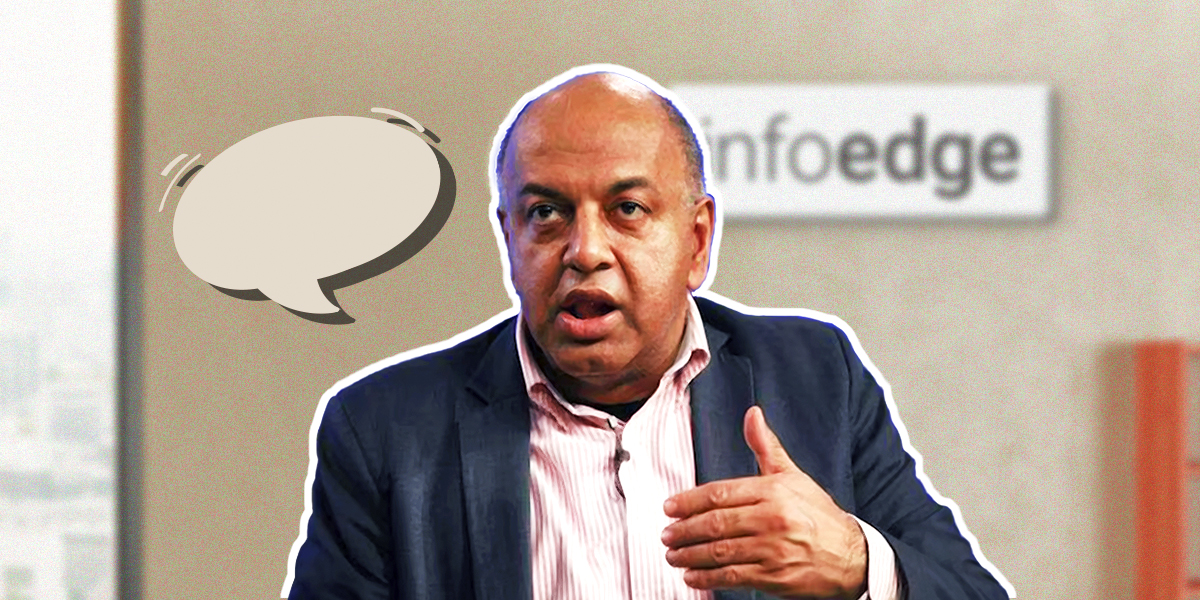
Info Edge, India’s largest and most storied recruitment portal, has had a stellar run in the last three years with its portfolio company Zomato’s market cap surging almost 2.3X since its stock exchange debut. The firm’s bet on fintech unicorn Policybazaar is also paying off well. The company has made it clear it is in no hurry to book profits on these investments, even as it continues to nurse its own brands beyond Naukri to profitability. The firm, one of the few to survive the dotcom boom and bust cycle of 2000, has been led by founder and chairman Sanjeev Bikhchandani for a large part of this journey. And today, Bikhchandani has earned the right to be looked up to as the statesman for the sector. Entrackr caught up with Bikhchandani in his Gurugram office and he spoke on a range of topics including Naukri, Info Edge’s investments, serial entrepreneurs and corporate governance. Here are the edited excerpts. As a listed firm that carries a heavy overhang from its investment portfolio, does it worry you that it might impact the valuation of the core Naukri business? Not really. Institutional investors are smart. We give them adequate data so that they analyze Naukri thoroughly before making a conclusion about valuation. We don’t run Naukri for valuation every day or month or quarter. We look at how we create value for our shareholders in the long run. And that’s how we run our businesses. So, this hypothesis about our core or even group business doesn’t stand. Info Edge has been an investor in Zomato for over 14 years and despite the latter’s share price rising nearly 14o% from its listing price, Info Edge didn’t sell its shares. What level of return are you anticipating from Zomato? Actually, we don’t calculate Investment Return Rate (IRR). Info Edge invested in Zomato because of our conviction that it could become a great company. And if you are convinced about your conviction then it will happen. So, IRR is the happy incidental outcome of investing early behind companies that you want to help. That’s my belief. We are not in any hurry to sell and have an indefinite horizon. Every VC firm has a fund cycle and pressure to return capital to their limited partners but that’s not the case with Info Edge as you are investing from your own balance sheet. Could you elaborate on this? That pressure does not make this choice. We have a long term horizon and we call it patient capital. To be a successful early stage investor in India, you have to be quite patient because companies take anywhere between 10-15 years to go to IPO from seed stage. So if you have funds for only 6-10 years, you will not realize the full fruits of your investment. If you have a 20 year fund, you tend to perform better. However, such a horizon could be possible only when you’re investing from your own whole balance sheet. Do you believe that Blinkit could become bigger than Zomato? I think both are large but Blinkit is going to be fairly large. If we look at Zomato’s quarter-on-quarter numbers, online food ordering appears to have stagnated in top 10-15 cities. What’s your take on this? Obviously, there is the base effect. But, we don’t see stagnation. Also, you need to compare year-on-year, not quarter-on-quarter. When YoY numbers are compared, there is growth. I think full fiscal year performance is more important than quarter. We used to commonly hear about Naukri’s recruitment business that it was not the online presence, but your sales force or feet on the street that made the difference. Does that still hold true? Online sales have never been a big part of our strategy. When you want to sell more expensive products, you need face-to-face contact. At Naukri, we have clients whom we bill several crore rupees for annual subscription and such accounts need heavy offline touch. While the product will be consumed online, the stuff around it very often will be offline. Over the years, several players have tried to crack the recruitment business in the blue collar segment but most of them died. What are the challenges in the segment? Blue collar segment has broadly three challenges. First, it’s hyperlocal. The job seekers in this segment don’t move to different cities as they look for opportunities in and around their locality. Second, very often there isn’t a detailed text CV which makes the process slow and inefficient. Third, potential workforce in the segment do not search for jobs on the laptop and use vernacular languages. They are mostly on mobile. So you’ve got to adapt to all these things and still somehow get revenue and profit. We have been trying to get inroads in the blue collar segment for over two years now but we have just started monetizing it. Our future position in the segment depends on monetization. Some of the celebrated entrepreneurs are launching a second or third company without their first startup churning profit. How do you see this trend? I think this isn’t a progressive trend. As an entrepreneur, you need to focus on one thing and do really well. Once you’ve cracked that you can add on a second thing in the same company. Over the past couple of years, we have witnessed corporate governance issues with some startups. Even Info Edge saw serious lapses at 4B Networks. What’s your opinion about this? By and large, my belief is that 95-98% of Indian founders are genuine but there will be a few bad examples. Investors make sure that when something wrong happens in their portfolio, it is highlighted and actions are taken to ensure that such incidents do not repeat. Any governance issue isn’t good for anyone including limited partners, investors, founders and the startup ecosystem. What factors contributed to the lack of success with Info Edge’s e-commerce investments 99labels, MyDala, and Happily Unmarried? Limitation of raising foreign direct investment (FDI) and heavy investment into competition were two major reasons for failure of 99labels while MyDala had a product market fit (PMF) issue. Happily Unmarried is now a part of VLCC and we are still a shareholder there.

Zepto launches Zepto Atom and Zepto GPT

TwitterTwitter · 8m ago
Zepto launches Zepto Atom and Zepto GPT
Medial

The Zepto Atom subscription is a top-up to the already existing Zepto Brand Portal (which gives brands listed on the Zepto platform basic day-to-day data on their performance on Zepto and is available for free). The value of the Zepto Atom subscription is the next level of insights brands can derive from this tool, most of which are not available on any e-commerce platform in India today. For example: 1) PIN-code-by-PIN-code market share data and brand performance: Through Zepto Atom, brands can examine a live map of every neighbourhood and PIN code they have presence on Zepto and derive hyperlocal insights on their performance. For example, a brand can see on Zepto Atom Maps that their sales are under-indexed in the western neighbourhoods of Hyderabad and double down on pricing, marketing, or distribution efforts in those geographies to unlock growth. 2) Live metrics visibility refreshed every minute: On Zepto Atom, brands can see minute-by-minute sales, customer impressions, and conversion data and optimise advertising campaigns, pricing, and their product range according to different consumption trends for their products throughout the day and week. 3) Zepto GPT: Zepto Atom has an in-house Natural Language Processing (NLP) assistant that is trained on the Zepto Data set to give brands insights that can improve their performance. For example, brands can ask Zepto GPT "How can I grow my market share in Bengaluru for the protein bar category?" or "What are the key consumer preferences driving energy drink sales among Gen Z in Mumbai?". Zepto GPT then analyses the vast datasets within Zepto Atom to provide actionable answers, strategic recommendations, and even generates data reports on behalf of the brand. 4) Advanced Behavioural Data: Zepto Atom goes beyond basic sales and conversion data. We are now providing brands data on customer repeatability and retention, share of voice in search and home page, full-funnel visibility on customer purchase behaviour with their product etc.

BluSmart drivers face uncertainty amid company troubles, founder issues

EntrackrEntrackr · 8m ago
BluSmart drivers face uncertainty amid company troubles, founder issues
Medial

BluSmart suspended its operations in April in Mumbai, Delhi-NCR, and Bengaluru, asking its 10,000 driver-partners to return their vehicles. The move has left several drivers scrambling to find new sources of income. Rajesh [name changed], a 35-year-old man in Gurugram, secured a driving job with a heavily VC-funded electric vehicle cab hailing company which once aimed to take on the duopoly of Ola Cabs and Uber in India. An average income of Rs 20,000 to Rs 25,000 per month, Rajesh admits, was not much for his family but managed to pay bills. Though, Rajesh, who also is a father of two young children, put in 10 hours to 12 hours daily - to reach the estimated monthly income. With his company now pausing the services, Rajesh has no source of earning, and does not know how he will pay his kids’ education fees. "... Now, I don’t know how I’ll manage. I missed my kids' school fees this month. My family depends on me, and I’ve never felt so helpless,” a visibly stressed Rajesh told Entrackr. One of the things that is agonising Rajesh the most is the deceptive way his employer pushed them out. “On Wednesday (April 16th), we [drivers] received a message saying the car needed to be submitted to the hub for a breakdown. We thought it was just a minor technical issue. When we got there, they told us it was a failure and we’d be informed later. But there was no word from the company after that. We just had to go home. We were left in complete shock," says Rajesh as his voice strains, reliving the fateful moment. Rajesh says he was among the first lot of employees, when the company had just 50 cars. Like many others, he too bought the company’s promise of stability. “Now, it feels like we’ve been left out to dry,” he said. “I’m considering working with Uber or Ola… I’m looking for something else, maybe a different field altogether. But BluSmart was my livelihood, and I’d go back in a heartbeat if they reopened. It was my only source of income,” he added. Rajesh’s story resonates with another thousands of drivers who are now scrambling to find new sources of income after BluSmart’s sudden suspension of its services. Entrackr has reached out to BluSmart seeking responses on how they plan to compensate the affected drivers. In case they respond, we will incorporate their inputs. Staging the protest On May 4, a group of BluSmart drivers raised their grievances at Jantar Mantar, a historic site for protests. They pressed for demands for alternative income avenues as well as called for crucial policy reforms to prevent similar abrupt dismissals. Additionally, they also sought a government intervention. Tajinder Singh, president of Parivahan Morcha Athavale and also among those spearheading the protest, told Entrackr that women drivers of BluSmart were among those bearing the brunt the most as other taxi companies refused to recruit them. He further said that some drivers were working on a per day basis as and when required but asserted that this was not a long-term solution. “We are demanding compensation for affected BluSmart drivers. We have also sought government intervention so that the drivers can continue to earn their livelihood,” Singh said. Singh also claimed that hundreds of BluSmart employees working at charging hubs were affected by the company’s sudden suspension of its services. A business model that promised to be different than rivals Even as ‘sustainability’ remained the headline grabber, BluSmart also deployed a rather different business model compared to rivals Ola Cabs and Uber. The company used a full-stack B2C model wherein they owned and managed the vehicles whereas Ola and Uber work with independent drivers. The model allowed BluSmart to have a better control on the quality of cars, maintenance, and subsequently better customer service. For drivers, the company offered a fixed salary along with incentives. An assured income was a big factor why a lot of drivers showed interest in joining BluSmart. Ola and Uber, on the other hand, operated on a familiar commission-based system, also common with several gig working-reliant service providers. Singh also highlighted this stark difference between BluSmart and its rivals. He said that the job of driver was to pick and drop the passenger and earn a regular income (per day payout and incentives). They needed to work 10 hours to 12 hours a day. Other things like maintenance and documentation was taken care of by the company, giving drivers a more relaxed environment to operate. Blusmart has raised over $180 million to date, including its $50 million series B round in January this year. Though, it received only Rs 61 crore out of $50 million. That said, a heavily-funded BluSmart juggernaut appeared unstoppable, until it did. Earlier this year, reports emerged that BluSmart delayed salary payments to cash crunch. It had also shut down operations in Dubai and also saw an exodus of top management employees, including CEO, CBO, and CTO. A month later, SEBI published findings of its probe into Gensol Engineering, BluSmart’s partner and EV lessor. The SEBI order highlighted misuse of funds, and also barred promoters Anmol and Puneet Singh Jaggi from accessing the securities market and holding key positions in Gensol Engineering. What next for BluSmart drivers BluSmart drivers facing joblessness due to the shutdown can go for legal remedy and urgently demand clearance of any unpaid dues and better severance compensation, if not given already. The legal course, which may take a relatively long time, may also help them investigate if BluSmart violated the contract by sudden halting of their services and returning vehicles. Moreover, they can also seek intervention from regulatory boards. Singh, however, did not appear enthusiastic about taking the legal course. “Companies like these make such contracts that they keep them protected in such incidents and don’t have to own any responsibility towards people working so hard for them,” he said [loosely translated from Hindi]. As far as the future of the company goes, it’s hard to predict considering the massive VC money riding on the company. Despite the major dent in public image and also several legal troubles, it’s likely that the company may stay afloat with a rather new management and new board - a few known steps troubled companies often take to course correct. It’s worth noting that quality of drivers and cabs were the top highlight of the platform, and if it resumes, it should continue with that. With the ongoing protests and lack of communication between drivers and management, it seems unlikely that the company will enjoy the same level of trust from its network drivers.

Download the medial app to read full posts, comements and news.