News on Medial

Related News

Pine Labs-owned Setu to acquire 100% stake in Agya Technologies

EntrackrEntrackr · 15d ago
Pine Labs-owned Setu to acquire 100% stake in Agya Technologies
Medial

Pine Labs-owned Setu to acquire 100% stake in Agya Technologies Fintech unicorn Pine Labs plans to fully consolidate its ownership in RBI-licensed account aggregator Agya Technologies through its fintech infrastructure arm, Setu. According to a regulatory filing, the RBI has approved Setu (BrokenTusk Technologies Pvt Ltd) to increase its stake to 100% in Agya Technologies Pvt Ltd, which until now has operated as an associate company of Setu. Pine Labs already has around 25% stake in Agya Technologies and the company plans to complete the acquisition of the remaining stake in the near term, potentially in one or more tranches, according to the filing. This development follows Pine Labs' successful acquisition of all three digital payment licences from the Reserve Bank of India (RBI). These licences cover offline payments, online merchant payments, and cross-border transactions, enabling the company to offer a complete range of digital payment services across all merchant interaction points. On the financial front, Pine Labs’ revenue increased to Rs 650 crore in Q2 FY26 from Rs 551 crore in the same quarter last year. Pine Labs reported a net profit of Rs 6 crore in Q2 FY26 versus a loss of Rs 32 crore in Q2 FY25. Pine Labs made a positive debut on the public markets, listing at a 9.5% premium over its issue price. The stock opened at Rs 242 per share against the IPO price of Rs 221, giving the Peak XV-backed firm a stable start on the NSE and BSE. The company’s share is trading at Rs 240.85, giving it a market capitalization of Rs 26,406 crore (approx $2.9 billion).

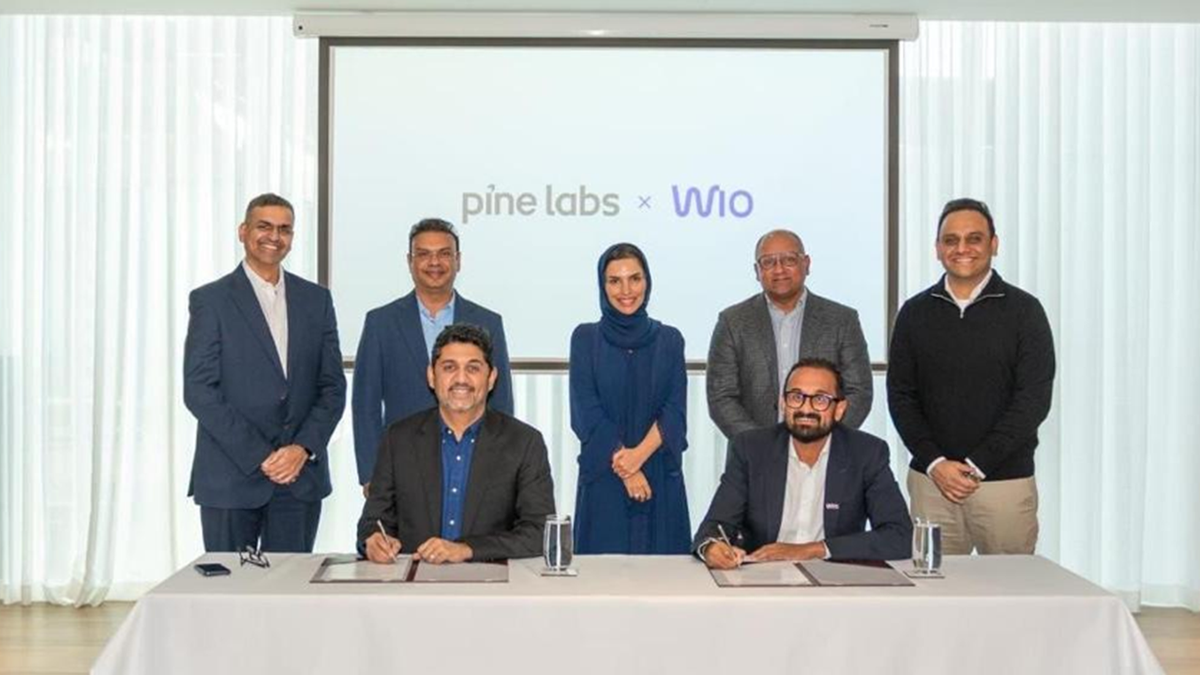
Pine Labs partners UAE’s Wio Bank to build payment acquiring system

EntrackrEntrackr · 9d ago
Pine Labs partners UAE’s Wio Bank to build payment acquiring system
Medial

Pine Labs partners UAE’s Wio Bank to build payment acquiring system Fintech unicorn Pine Labs has partnered with UAE-based digital lender Wio Bank to build a new payment acquiring system for the bank. As part of the deal, Wio Bank will use Pine Labs’ acquiring platform, Credit+, to run its merchant payment operations. The partnership will help Wio Bank onboard merchants faster, offer real-time settlements, and support multiple payment modes across online and offline channels. Credit+ will manage the full merchant lifecycle, including onboarding, payment processing, and settlements, through a cloud-based and API-led setup. This will allow Wio Bank to launch new features quickly and handle large payment volumes securely. Wio Bank is a digital-first bank in the Middle East serving individuals and businesses. It is backed by ADQ, Alpha Dhabi, and First Abu Dhabi Bank. The partnership strengthens its payments offering for merchants in the region. For Pine Labs, the tie-up adds to its presence in the Middle East. The company works with banks and enterprises to modernise payment systems and currently operates across India, Southeast Asia, the Middle East, Africa, Australia, and the US. This development follows Pine Labs' successful acquisition of all three digital payment licences from the Reserve Bank of India (RBI). These licences cover offline payments, online merchant payments, and cross-border transactions, enabling the company to offer a complete range of digital payment services across all merchant interaction points. Pine Labs’ revenue increased to Rs 650 crore in Q2 FY26 from Rs 551 crore in the same quarter last year. Pine Labs reported a net profit of Rs 6 crore in Q2 FY26 versus a loss of Rs 32 crore in Q2 FY25.

airpay secures all three RBI payment-aggregator licences

EntrackrEntrackr · 1m ago
airpay secures all three RBI payment-aggregator licences
Medial

airpay secures all three RBI payment-aggregator licences Mumbai-based airpay Payment Services has received authorisation from the Reserve Bank of India (RBI) to operate across the full payment-aggregator framework, completing approvals for online (PA-O), physical/POS and QR (PA-P), and cross-border (PA-CB) services. With this, airpay now joins a small group of regulated players that can handle domestic and international payments across online and offline merchant touchpoints on a single compliant stack. The recent list includes Razorpay, Easebuzz, PayU and Pine Labs. The company said the approvals will allow it to offer collections, payouts and settlements for Indian enterprises, D2C brands and SMEs selling both within India and overseas. airpay expects the expanded licence set to drive a 30–40% increase in processing volumes over the next 6–12 months. It is also projecting over 20% of its revenue to come from cross-border flows in this period, alongside the onboarding of more than 50,000 merchants. Founded in 2012, airpay operates in UPI acquiring, QR, payment links, PoS and merchant lifecycle management. With all three licences in place, the company is now positioned to support online, offline and cross-border commerce from a single regulated infrastructure as Indian businesses expand beyond domestic markets. This is expected to reduce settlement risk and compliance overhead for exporters, SaaS firms, subscription businesses and D2C brands targeting markets in Europe, the Middle East, and Southeast Asia. Disclaimer: Bareback Media has recently raised funding from a group of investors. Some of the investors may directly or indirectly be involved in a competing business or might be associated with other companies we might write about. This shall, however, not influence our reporting or coverage in any manner whatsoever. You may find a list of our investors here.

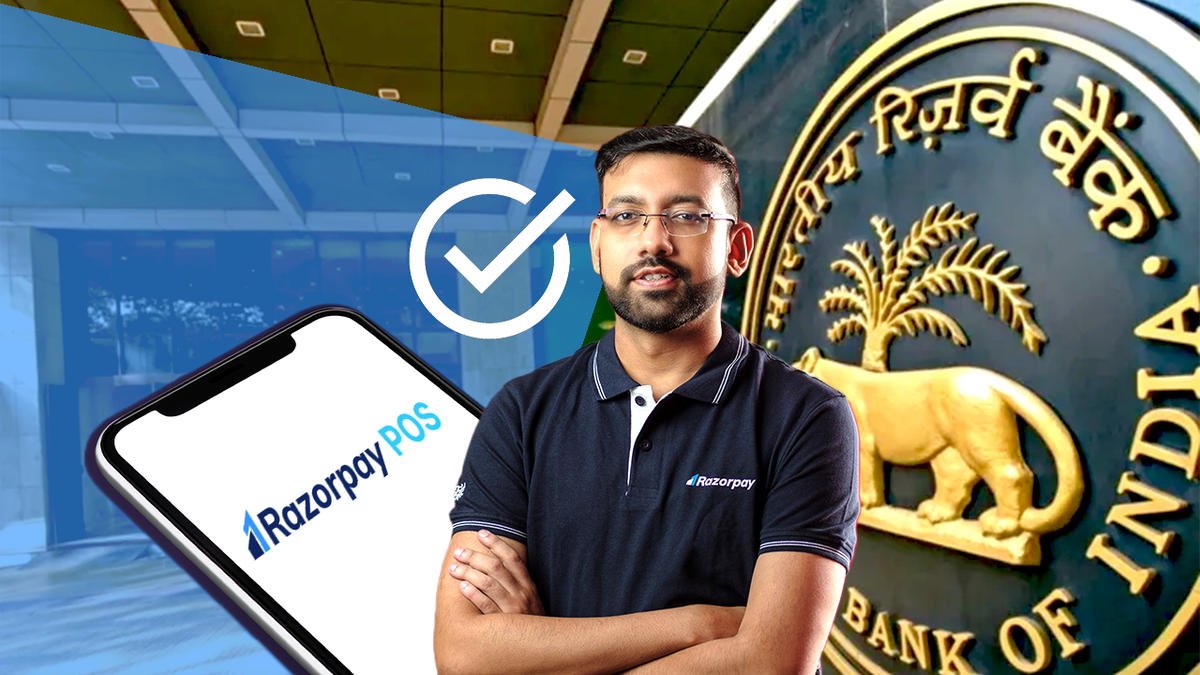
Razorpay POS gets RBI approval for offline payment aggregator licence

EntrackrEntrackr · 13d ago
Razorpay POS gets RBI approval for offline payment aggregator licence
Medial

Razorpay POS gets RBI approval for offline payment aggregator licence Razorpay POS, the offline payments arm of Razorpay, has received the Payment Aggregator Physical (PA-P) licence from the Reserve Bank of India (RBI). With this approval, Razorpay now holds all three key RBI payment licences: online payment aggregator, offline (physical) payment aggregator, and cross-border payment aggregator, placing it among a small group of fintech companies authorised to operate end-to-end across India’s payments ecosystem. In recent months, RBI approved online, offline and cross border payment aggregation for around half a dozen companies. These include Paytm, Razorpay, Easebuzz, PayU, Pine Labs and Airpay. With these clearances, the firms are authorised to offer a full stack of payment aggregator services across ecommerce transactions, in-store merchant payments and cross-border payment flows. The PA-P licence allows Razorpay POS to onboard merchants and process in-store digital payments at scale, covering large retailers, enterprises, and small and medium businesses. The company already operates across India’s offline commerce ecosystem through devices such as mPOS terminals, smart POS machines, soundboxes, and pin-on-mobile solutions. Razorpay entered the offline payments segment in 2022 through the acquisition of Ezetap, which was later rebranded as Razorpay POS. Since then, the company has expanded its physical payments footprint alongside its core online payments business. With the offline licence in place, Razorpay can now offer a fully compliant payment infrastructure across digital, in-store, and cross-border transactions.

Razorpay secures RBI’s cross border license

EntrackrEntrackr · 2m ago
Razorpay secures RBI’s cross border license
Medial

Razorpay secures RBI’s cross border license Razorpay has received the payment aggregator cross border (PA–CB) license from the Reserve Bank of India. This authorisation allows the company to facilitate both inward and outward cross-border payments under full regulatory oversight. With the new license, Razorpay will support exporters, SaaS companies, freelancers, D2C brands, and global companies operating in India. Razorpay’s international payments stack is used by companies such as Airbnb, Agoda, Shopify, Klook, and Hostinger. The cross-border business is growing at 40% year-on-year. Razorpay International Payments enables Indian businesses to accept payments in more than 130 currencies through cards, wallets, and local bank transfers. The platform provides optimised payment flows with a reported 95% success rate for international transactions. For global companies entering India, Razorpay offers a single integration that enables UPI, RuPay, EMIs, netbanking, and over 100 local payment methods. Companies can go live in India without creating a local entity. The platform supports INR-based pricing, OTP-led checkout, and India-based customer support. The company has raised more than $741 million from investors including Lightspeed, Lone Pine Capital, Alkeon Capital, TCV, GIC, Tiger Global, Peak XV Partners, Ribbit Capital, Matrix Partners, Salesforce Ventures, and Y Combinator. With this, Razorpay joins the list of few payment fintech companies in India authorized to offer all three key payment capabilities under a single infrastructure. Last month, Easebuzz, PayU and Pine Labs also received integrated authorisation from the Reserve Bank of India (RBI).

Pine Labs enters the market with 10% listing gain

EntrackrEntrackr · 2m ago
Pine Labs enters the market with 10% listing gain
Medial

Pine Labs enters the market with 10% listing gain Fintech major Pine Labs made a positive debut on the public markets on Friday, listing at a 9.5% premium over its issue price despite lukewarm interest from retail investors during the IPO. The stock opened at Rs 242 per share against the IPO price of Rs 221, giving the Peak XV-backed firm a stable start on the NSE and BSE. The IPO, which closed on November 11, raised around Rs 3,900 crore, comprising a mix of fresh issuance and an offer for sale by existing shareholders. While institutional investors drove the bulk of the demand, retail participation remained modest. According to exchange data, Pine Labs’ IPO was oversubscribed 2.46 times overall. The retail portion saw 1.22x subscription, QIBs (excluding anchors) 4x, and Non-Institutional Investors (NIIs) just 0.3x, while the employee portion was the most subscribed at 7.35 times. Earlier this week, the company also secured three key licences from the RBI, for payment aggregation, payment gateway operations, and cross-border payments, covering both offline and online merchant transactions. These approvals allow Pine Labs to process domestic and international payments, manage settlements, and further expand its merchant network across sectors. In FY25, Pine Labs reported a 28.5% year-on-year revenue growth to Rs 2,274 crore in FY25 from Rs 1,769 crore in FY24, while net losses fell 57% to Rs 145 crore. Notably, the company turned profitable in Q1 FY26, posting a net profit of Rs 4.7 crore on revenue of Rs 616 crore. For now, the company has avoided the post-listing volatility seen in some startup IPOs earlier this year. But with public markets becoming increasingly selective, Pine Labs’ real test begins now, proving that a fintech born in the swipe era can hold its ground in the era of UPI, BNPL, and embedded finance. Pine Labs’ share touched its high of Rs 284 in the morning and as of 10:50 AM is currently trading at Rs 270.28, a 22.45% above its issue price, with the total market cap of Rs 31,051 crore ($3.52 billion).

Download the medial app to read full posts, comements and news.