News on Medial

Related News

Social network app Currently raises $1 Mn led by Aarvi Family Office

EntrackrEntrackr · 2m ago
Social network app Currently raises $1 Mn led by Aarvi Family Office
Medial

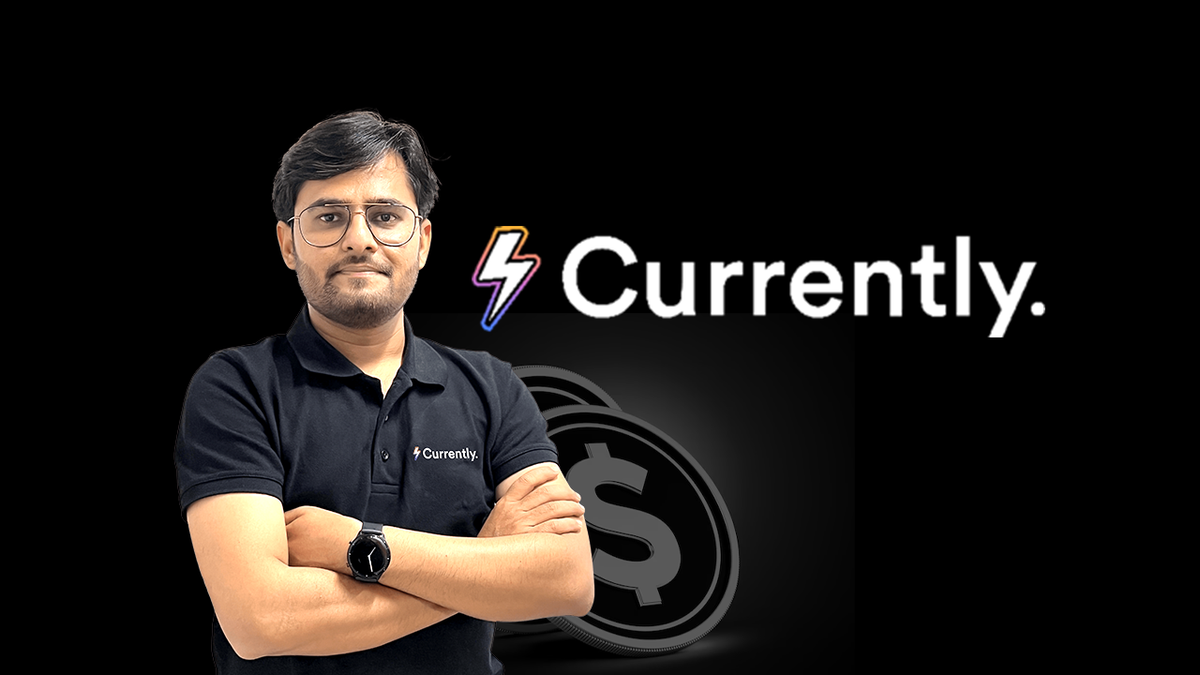
Social network app Currently raises $1 Mn led by Aarvi Family Office Currently is a real-time moment sharing app that helps people discover what others are doing right now, fostering genuine connections, conversations, and local interactions. Social network app Currently has raised $1 million in a funding round led by Aarvi Family Office LLP along with participation from LJ Knowledge Foundation, Dhruv Patel, Pratik Patel, Neerav Dad, Arpit Patel, Priyank Parmar, and other investors and family offices. The fresh funds will be used to introduce new real-time features, upgrade tech, expand engineering and design teams, and grow city-based communities and brand partnerships, Currently said in a press release. Launched in 2023 by Mitesh Shethwala, Currently is a real-time moment sharing app that helps people discover what others are doing right now, fostering genuine connections, conversations, and local interactions. It focuses on authenticity and spontaneity, redefining how people connect and share their lives. With features such as Live Map, Authentic Status Sharing, and Business Check Ins, the platform aims to evolve into India’s first real-time people network, a digital layer that reconnects people in the physical world and celebrates being present. "Social media was supposed to make us social in the real world — but today, it’s more about entertainment and ads. Currently brings back authenticity by showing what people are doing right now, not what algorithms decide. We are not replacing anything — we are rebuilding what social media was meant to be,” said Mitesh Shethwala, founder of Currently.

Why EV maker Ather’s IPO didn’t tick all right boxes

EntrackrEntrackr · 8m ago
Why EV maker Ather’s IPO didn’t tick all right boxes
Medial

Why EV maker Ather’s IPO didn’t tick all right boxes Ather had to scale down its expected valuation from $2 billion to $1.4 billion ahead of the IPO — a move that, to some investors, signaled weaker demand or a lack of confidence. Ather Energy’s Rs 2,626 crore IPO — India’s third-largest public offering of 2025 so far — had all the makings of a headline event: a respected EV brand, strong engineering pedigree, and a fast-growing electric scooter market. Yet, as the subscription window closed, the response appeared muted. Institutional investors subscribed to just 1.7 times the shares allocated for Qualified Institutional Buyers (QIB) category, while Non-Institutional Investors (NIIs) subscribed to only 66% of their quota. Retail investors showed comparatively more interest, with a subscription rate of 1.78 times, thanks possibly to some last minute pushing by brokerages promising the possibility of listing gains. Ather is known for its solid engineering and high-quality scooters. But when it came to the IPO, it struggled to get attention. Many investors felt the company didn’t share a big, bold vision — something Ola did well. Ather had to scale down its expected valuation from $2 billion to $1.4 billion ahead of the IPO — a move that, to some investors, signaled weaker demand or a lack of confidence, especially when compared to the bolder positioning of rivals like Ola Electric. Even when we look at the financials of both EV companies, the contrast is clear. Ahead of its IPO, Ola Electric disclosed in its Red Herring Prospectus (RHP) that it recorded Rs 5,000 crore in revenue for FY24, with a net loss of Rs 1,584 crore — meaning the company spent Rs 1.25 to earn every Rs 1 in revenue. Ather Energy, on the other hand, reported Rs 1,579 crore in revenue with a loss of Rs 580 crore for the first nine months of FY25, translating to a cost of Rs 1.36 to earn every Rs 1. That higher per-unit cost, combined with lower scale, may have made investors cautious, especially when comparing Ather’s path to profitability with Ola’s stronger topline growth. Ather’s slow and steady approach to expansion, which ensured high customer loyalty and trust, has boomeranged when it comes to the IPO. Public markets tend to reward speed, growth, or profitability, and in Ather’s case, it appears lucky to have scraped through with none of the above. That is a huge endorsement of its reputation and promise, and possibly positive word of mouth. That the IPO was practically a compulsion is also a reason why the firm decided to forge ahead, with limited runway available and backers holding off. There is every possibility that investors will have to be more patient than usual to see the firm deliver returns. The founders have almost been timid in making claims linked to prospects, the antithesis of what Bhavish Aggarwal of Ola Electric. One can only hope that this refusal to chest thump will deliver the kind of returns that gladden the heart in time.

No hurry to sell, indefinite horizon on Zomato holding: Sanjeev Bikhchandani

EntrackrEntrackr · 1y ago
No hurry to sell, indefinite horizon on Zomato holding: Sanjeev Bikhchandani
Medial

Info Edge, India’s largest and most storied recruitment portal, has had a stellar run in the last three years with its portfolio company Zomato’s market cap surging almost 2.3X since its stock exchange debut. The firm’s bet on fintech unicorn Policybazaar is also paying off well. The company has made it clear it is in no hurry to book profits on these investments, even as it continues to nurse its own brands beyond Naukri to profitability. The firm, one of the few to survive the dotcom boom and bust cycle of 2000, has been led by founder and chairman Sanjeev Bikhchandani for a large part of this journey. And today, Bikhchandani has earned the right to be looked up to as the statesman for the sector. Entrackr caught up with Bikhchandani in his Gurugram office and he spoke on a range of topics including Naukri, Info Edge’s investments, serial entrepreneurs and corporate governance. Here are the edited excerpts. As a listed firm that carries a heavy overhang from its investment portfolio, does it worry you that it might impact the valuation of the core Naukri business? Not really. Institutional investors are smart. We give them adequate data so that they analyze Naukri thoroughly before making a conclusion about valuation. We don’t run Naukri for valuation every day or month or quarter. We look at how we create value for our shareholders in the long run. And that’s how we run our businesses. So, this hypothesis about our core or even group business doesn’t stand. Info Edge has been an investor in Zomato for over 14 years and despite the latter’s share price rising nearly 14o% from its listing price, Info Edge didn’t sell its shares. What level of return are you anticipating from Zomato? Actually, we don’t calculate Investment Return Rate (IRR). Info Edge invested in Zomato because of our conviction that it could become a great company. And if you are convinced about your conviction then it will happen. So, IRR is the happy incidental outcome of investing early behind companies that you want to help. That’s my belief. We are not in any hurry to sell and have an indefinite horizon. Every VC firm has a fund cycle and pressure to return capital to their limited partners but that’s not the case with Info Edge as you are investing from your own balance sheet. Could you elaborate on this? That pressure does not make this choice. We have a long term horizon and we call it patient capital. To be a successful early stage investor in India, you have to be quite patient because companies take anywhere between 10-15 years to go to IPO from seed stage. So if you have funds for only 6-10 years, you will not realize the full fruits of your investment. If you have a 20 year fund, you tend to perform better. However, such a horizon could be possible only when you’re investing from your own whole balance sheet. Do you believe that Blinkit could become bigger than Zomato? I think both are large but Blinkit is going to be fairly large. If we look at Zomato’s quarter-on-quarter numbers, online food ordering appears to have stagnated in top 10-15 cities. What’s your take on this? Obviously, there is the base effect. But, we don’t see stagnation. Also, you need to compare year-on-year, not quarter-on-quarter. When YoY numbers are compared, there is growth. I think full fiscal year performance is more important than quarter. We used to commonly hear about Naukri’s recruitment business that it was not the online presence, but your sales force or feet on the street that made the difference. Does that still hold true? Online sales have never been a big part of our strategy. When you want to sell more expensive products, you need face-to-face contact. At Naukri, we have clients whom we bill several crore rupees for annual subscription and such accounts need heavy offline touch. While the product will be consumed online, the stuff around it very often will be offline. Over the years, several players have tried to crack the recruitment business in the blue collar segment but most of them died. What are the challenges in the segment? Blue collar segment has broadly three challenges. First, it’s hyperlocal. The job seekers in this segment don’t move to different cities as they look for opportunities in and around their locality. Second, very often there isn’t a detailed text CV which makes the process slow and inefficient. Third, potential workforce in the segment do not search for jobs on the laptop and use vernacular languages. They are mostly on mobile. So you’ve got to adapt to all these things and still somehow get revenue and profit. We have been trying to get inroads in the blue collar segment for over two years now but we have just started monetizing it. Our future position in the segment depends on monetization. Some of the celebrated entrepreneurs are launching a second or third company without their first startup churning profit. How do you see this trend? I think this isn’t a progressive trend. As an entrepreneur, you need to focus on one thing and do really well. Once you’ve cracked that you can add on a second thing in the same company. Over the past couple of years, we have witnessed corporate governance issues with some startups. Even Info Edge saw serious lapses at 4B Networks. What’s your opinion about this? By and large, my belief is that 95-98% of Indian founders are genuine but there will be a few bad examples. Investors make sure that when something wrong happens in their portfolio, it is highlighted and actions are taken to ensure that such incidents do not repeat. Any governance issue isn’t good for anyone including limited partners, investors, founders and the startup ecosystem. What factors contributed to the lack of success with Info Edge’s e-commerce investments 99labels, MyDala, and Happily Unmarried? Limitation of raising foreign direct investment (FDI) and heavy investment into competition were two major reasons for failure of 99labels while MyDala had a product market fit (PMF) issue. Happily Unmarried is now a part of VLCC and we are still a shareholder there.

How profitable InCred stands out among bleeding fintech lenders: Interview with Bhupinder Singh

EntrackrEntrackr · 1y ago
How profitable InCred stands out among bleeding fintech lenders: Interview with Bhupinder Singh
Medial

Lending has turned out to be the most obvious money making channel for fintech startups in India. Right from large to small fintech companies are resorting to distributing loans through own and third party lenders such as banks and NBFCs. Most growth stage fintech startups have been lending aggressively, but they still bear huge losses on a consolidated basis. However, the eight-year-old InCred is an exception as the firm’s operating revenue spiked 48% to Rs 1,267 crore in FY24. At the same time, its profit grew 160% to Rs 316 crore in FY24. InCred claims to have offered credit to 3,50,000 borrowers since its inception in 2016. InCred group operates three companies – InCred Finance, InCred Capital, and InCred Money. To understand InCred’s growth across segments, startup investments including Oyo and collection (recovery) among others, Entrackr spoke to the company’s founder and chief executive Bhupinder Singh. Here are the edited excerpts. How has the size of asset under management (AUM) across personal, education and business loans grown? Our asset under management or AUM grew 49% in FY24 and we closed FY24 with over Rs 9,000 crore in AUM, spread across personal loans which accounts for 44% of our AUM while micro, small and medium enterprises (MSMEs) contributed 35% of the total disbursal. Educational loans formed 21% of the entire loan book including third-parties capital. Can you talk about growth numbers across three segments: personal, business and educational in the last fiscal year? We have had strong growth across all three segments in FY24: Personal loans grew at 57% whereas educational loans spiked at 86%. Business (MSMEs) borrowing increased 32% during the last fiscal. Which factors led to the upsurge in educational loans? Strong preference to study abroad for superior exposure and growth prospects, along with growing awareness in terms of universities and courses through social media and internet are some of the key driving factors, which have accentuated further over the last few years. InCred has started equity investment across startups. Why has it entered into what’s widely dubbed as risky equity investment? We invest in startups through InCred Capital where we focus on identifying attractive investment opportunities in private companies. However, we only put money in startups which are available at reasonable valuations and have long-term structural growth potential. Besides InCred Capital, we also have a private equity fund providing growth capital to startups and other businesses. You said that InCred Capital looks for reasonable valuation while investing into startups. InCred capital recently invested in Oyo at a $2.38 Bn valuation. Do you think this is the right valuation of Oyo? Any investment opportunity we identify for our clients is based on our fundamental thesis of providing an attractive risk-return profile for our wealth clients. We believe that Oyo falls in that category and provides an opportunity for long term value creation. Collection is the hardest part of any form of lending be it traditional or digital. How did InCred solve this and what’s the size of NPA? Agreed. I think it starts right from our strong, proactive focus on risk and analytics, and then collections, which is more reactive. We have over 150 pan-India collections teams across products that track repayments and employ multiple modes, depending upon the product-specific requirement and level of customer delinquency. For early defaulters, we use techniques like tele-calling to educate them about default implications such as credit score deterioration. For late-stage defaulters, focus is more on limiting losses through field visits, vendor engagement among others. We also use mechanisms like setting up escrow accounts for superior collections. InCred efficiency has been consistently tracking at 98%. Our March 2024 NNPA stood at 0.8% and was among the best in the industry. InCred merged with KKR Financial services in 2022. How has the merger panned out in terms of business? Let me start by giving you some context. While technically it was a reverse merger of InCred with KKR India’s credit arm, substance over form, InCred acquired KKR’s corporate loan book. It was a win-win for both InCred and KKR. What KKR got was a profitable exit from its corporate book, which they were looking for, and the opportunity to be part of a successful and long-term lending growth story with InCred in the driver’s seat. For InCred, the deal was purely an equity raising exercise with KKR joining our cap table and our net worth swelling 3X to over Rs 3,200 crore as of December 2023. At the same time, we were able to quickly wind down the corporate loan book and focus on building a granular retail franchise, which is our broad vision for InCred Finance.

Virat Kohli-backed WROGN’s revenue dips 29% in FY24

EntrackrEntrackr · 1y ago
Virat Kohli-backed WROGN’s revenue dips 29% in FY24
Medial

Virat Kohli-backed men’s apparel brand WROGN’s parent company has been struggling to grow, as the company’s revenue dropped by over 29% in the fiscal year ending March 2024. At the same time, the firm’s losses surged by 28.2%, nearing the Rs 57 crore mark during the same period. WROGN’s revenue from operations dwindled 29.2% to Rs 243.75 crore during FY24 as compared to Rs 344.3 crore in FY23, its consolidated financial statements sourced from the Registrar of Companies show. For background, WROGN reported a flat scale in FY23. The firm also generated Rs 21 crore from interest and gain on financial assets which took its overall revenue to Rs 264.8 crore in FY24. Founded in 2014 by brother-sister duo Anjana and Vikram Reddy, WROGN is engaged in the business of trading outdoor products such as apparel, footwear, and accessories among others. Leveraging Kohli’s influence, the brand has rapidly expanded its presence through exclusive brand outlets and strategic partnerships with marketplaces. On the expenses front, cost of materials formed 53.6% of the total expenses. This cost slid 29% and stood at Rs 163.91 crore in FY24. Employee benefits expenses also saw a dip by 7.5% to Rs 32.26 crore during the same period. Significantly, the employee cost also includes ESOP expenses worth Rs 1.96 crore. Commission paid to the selling agents was down by 28% in FY24 at Rs 30.83 crore while other expenses such as advertising promotions and legal & professional fees also shrank significantly. In total, the overall expenditure of the company went down by 24.7% to Rs 305.56 crore during FY24 from Rs 405.6 crore in the previous fiscal year. For the complete expense breakdown, head to TheKredible. WROGN tried to cover up its losses by taking cost-cutting measures but due to the sharp fall in collection, its losses increased by 28.2% to Rs 56.76 crore during the year against Rs 44.26 crore in FY23. Its operating cash outflows, however, improved by over 63% to Rs 5.23 crore during the year. Its outstanding swelled to Rs 636.58 crore as of FY24. As per TheKredible, the firm’s EBITDA margin and ROCE stood at -6.04% and -72.07%, respectively. On a unit level, WROGN spent Rs 1.25 to earn a rupee of operating revenue during FY24. FY23-FY24 FY23 FY24 EBITDA Margin -4.42% -6.04% Expense/₹ of Op Revenue ₹1.18 ₹1.25 ROCE -25.49% -72.07% Aditya Birla’s TMRW recently picked up a 16% stake in WROGN at a $105 million valuation by pouring in Rs 125 crore or $15 million. It’s worth noting that Aditya Birla also acquired a similar brand Bewakoof in December 2022. WROGN has raised around $90 million from the likes of Accel, Flipkart, Kohli, and Sachin Tendulkar since its inception in 2014. In November 2020, Flipkart invested an undisclosed amount in WROGN’s Series F round. The e-commerce major is also an investor in Hrithik Roshan’s HRX which competes with WROGN. According to TheKredible’s D2C report, fashion (apparel, jewelry, footwear, eyewear, and accessories) is the largest category attracting a large set of consumers. India’s fashion industry is booming, with the potential to reach $43.2 billion by 2025. But seeing how anaemic or even negative the numbers have been for most, one can only marvel at the outlier that a Zudio has been over the last two years with its triple-digit growth. Of course, the broader slowdown in the category has been blamed on multiple possible factors, including a craze for investment in the stock markets directly or indirectly. Or perhaps the prioritisation of getting an iPhone over other branded products, considering the rise in iPhone sales in India. Either way, WROGN’s numbers indicate a problem it has acknowledged for some time now, and is making efforts to manage. The challenge it faces is as tough as any pitch Kohli has played on, one suspects.

Seven-year-old unicorn Open struggles to match deeds to reputation

EntrackrEntrackr · 1y ago
Seven-year-old unicorn Open struggles to match deeds to reputation
Medial

Neo-banking platform Open turned unicorn after a $50 million funding led by IIFL along with the participation of Tiger Global in May 2023. Despite the eminent status and significant funding, the scale and bottom line of the seven-year-old firm remained questionable as its enterprise value to revenue multiple stood at 260X until March 2023 (FY23). Open’s revenue from operations saw a modest 25% growth to Rs 30 crore in FY23 from Rs 24 crore in FY22, its consolidated financial statements filed with the Registrar of Companies (RoC) show. For context, Open recorded Rs 40 crore in revenue during FY22. The difference in revenue numbers for FY22 can be attributed to the change in accounting standards and revenue booking methods. Founded in 2017, Open offers banking, payments, and accounting solutions to small and medium businesses. Subscription sales through the company’s software and commission earned from customer transactions were the two main revenue streams for the company. It also made Rs 23 crore from interest on deposits and current investments (non-operating) taking total revenue to Rs 53 crore in FY23. For the neo-bank startup, its employee benefits constituted 50% of the overall expenditure. This cost grew 33% to Rs 149 crore in FY22 from Rs 112 crore in FY22 which also includes Rs 40 crore as ESOP cost (non-cash). The firm’s information technology, advertising, legal, payment gateway, card issuing, and other overheads catalyzed its overall expenditure to Rs 296 crore in FY23 from Rs 217 crore in FY22. See TheKredible for the complete expense breakup. Caveat: We have excluded the cost of change in fair value of compulsorily convertible cumulative participating preference shares for FY22 due to its non-cash nature. The modest scale and increased expenditure led Open’s losses to increase by 37.5% to Rs 242 crore in FY23 as compared to Rs 176 crore in FY22. Its ROCE and EBITDA margin stood at -50% and -394% respectively. FY22-FY23 FY22 FY23 EBITDA Margin -568% -394.3% Expense/₹ of Op Revenue ₹9.04 ₹9.87 ROCE -41% -50% Open’s total current assets stood at 332 crore including the cash and bank balance of Rs 311 crore till March 2023. On a unit level, it spent Rs 9.87 to earn a rupee in FY23. Open has raised over $180 million to date. According to the startup data intelligence platform TheKredible, Beenext is the largest external stakeholder at the moment with 11.72% followed by Tiger Global and Unicorn India Ventures. If readers wonder just what investors saw to pump in the funds into the firm to lift it to Unicorn valuations, then they are not alone, as even we struggle to understand the narrative that sold so well. The challenge of commercial success targeting India’s MSME sector has been well documented, thanks to the failure of multiple startups that were richly valued, only to fall by the wayside. At this stage, it’s safe to say that other than lending, practically nothing has worked, beyond the listing model of Indiamart and the likes. Considering Open raised its last funding as recently as 2023, well after it was established that the MSME sector is a graveyard for fee based efforts to ‘help’ them, one really has to wonder what Open offered to manage such amazing investor buy-in. Either way, we should know soon enough, as the clock ticks away for the firm to shake out its secret sauce.

Uber India made Rs 807 Cr from ride-hailing in FY24

EntrackrEntrackr · 9m ago
Uber India made Rs 807 Cr from ride-hailing in FY24
Medial

Online mobility platform Uber India recorded a 41.1% year-on-year surge in revenue, which surpassed Rs 3,700 crore in the fiscal year ending March 2024. However, despite this growth, the company's losses shrank by 71.4% during the same period. According to the consolidated financial statements of Uber India System Private Limited, its revenue from operations increased to Rs 3,762 crore in FY24 from Rs 2,666 crore in FY23. Moving to revenue recognition, collection from Uber rides (ride-hailing) accounted for 21.45% of the total operating revenue which increased by 18.9% to Rs 807 crore in FY24 from Rs 679 crore in FY23. The remaining income came from Uber BV, generated through engineering support services, back-office, and other support services, billed under a cost-plus model. The company also added Rs 99 crore from interest on current investment and other miscellaneous sources (non-operating) which tallied the overall revenue to Rs 3,860 crore in FY24 from Rs 2,744 crore in FY23. According to its consolidated statements, Uber India spent 67.6% of its overall cost on employee benefits. This cost grew by 29.4% to Rs 2,690 crore in FY24, compared to Rs 2,079 crore in FY23. Its cost of consumables amounted to Rs 657 crore in the previous fiscal year (FY24). Legal/professional fees, advertising, rent, repairs, safety security, and other overheads took the total expenditure up by 26.4% to Rs 3,977 crore in FY24 from Rs 3,146 crore in FY23. Uber India’s over 40% growth and controlled expenditure led its net losses to shrink by 71.4% to Rs 89 crore in FY24, compared to Rs 311 crore in FY23. On a unit level, it spent Rs 1.06 to earn a rupee in FY24. While continuing to play out like a mid-tier software firm with low margins and a division that is a drag (the cab services), Uber India seems the closest it will ever get to profitability, especially if it acquires Blusmart mobility, as some reports will have it. Even without that, for most lay observers, it's a wonder that the firm continues to make losses, when we consider that its best in terms of service quality and ‘partner morale’ or driver satisfaction, is well behind it. Granted, the firm has had to virtually create and make up a business model as it has gone along, but considering the not insignificant role it plays in many cities in India as a service provider, the numbers are underwhelming. Selling software services to its parent has been a good fix to cover up for what has surely been a very rough ride in India so far, but the bigger tragedy is that very few people or customers will sympathise. It is frankly incomprehensible that the firm has to struggle to make enough here, and get earn nothing but criticism most of the time. As it completes a dozen years in India this year, one can only hope that the firm makes a breakthrough financially, morally and efficiency wise.

Download the medial app to read full posts, comements and news.