News on Medial

Related News

Competishun aims to help make IIT-JEE, NEET prep affordable, more accessible

EntrackrEntrackr ยท 1y ago
Competishun aims to help make IIT-JEE, NEET prep affordable, more accessible
Medial

Edtech space in India is already quite cluttered with a number of startups, including several unicorns, trying to carve out their own piece of the digital classroom pie. The Indian edtech market reported a total revenue of $4.3 billion in 2022, marking a CAGR of 16.8% since 2017, according to a market study. Even as some late-stage edtech firms faced challenges post-pandemic, others like PhysicsWallah have shown promise. VCs too remain optimistic about early-stage firms. One such early-stage firm is Competishun, which competes with platforms like Vedantu and Unacademy, but with an exclusive focus on IIT-JEE and NEET prep. We spoke to the founder and CEO of Competishun Mohit Kumar Tyagi, what distinguishes it from the competition and the roadmap ahead. Here are the edited excerpts: How did you come up with the idea of Competishun? The idea for Competishun emerged from a vision to transform IIT-JEE and NEET coaching methodology by offering comprehensive and effective preparation methods to students across India. We recognized the need for accessible, high-quality training at affordable cost that could level the playing field for all students, irrespective of their financial backgrounds. Please explain how the platform works? Competishunโ€™s platform functions by providing structured online and offlinecourses, study materials, and books for JEE (Main + Advanced) and NEET(UG) preparation. We aim to create a comfortable learning environment for students through online education at an affordable cost. Our platform offers customized online batches based on studentsโ€™ needs and performance, with doubt-solving counters and 24/7 support via WhatsApp and phone. Additionally, we provide personalized attention to enrolled students through Telegram doubt sessions and live Zoom sessions, ensuring their academic success. What are the key challenges in the industry that have not been addressed yet? And how do you plan to address them? One significant challenge in the industry is the lack of personalized learning experiences and the underutilization of technology. Competishun addresses this by offering adaptive learning algorithms, personalized study plans, and utilizing cutting-edge technology to enhance the learning experience. We strive to provide cost-effective, quality education to all JEE and NEET aspirants at the comfort of their homes, dispelling the myth that online education cannot yield results. Moreover, we aim to counter unethical practices by competitors in the online space, thereby instilling confidence in parents and students regarding online learning. How has your startup performed since inception? What are your short-term and long-term goals? Since its inception, Competishun has witnessed significant growth in terms of user enrollment, JEE Main and Advanced results, course completion rates, and positive feedback from students and educators. We take pride in having assisted thousands of students in achieving their academic goals. In the short term, our goals include expanding our course offerings, enhancing platform features, and strengthening our market presence. In the long term, we envision establishing hybrid study centers across the nation, thereby providing a blended learning experience to students.

Return Prime aims to make return management seamless for brands

EntrackrEntrackr ยท 1y ago
Return Prime aims to make return management seamless for brands
Medial

Bengaluru-based Return Prime provides a customer return platform which includes a business dashboard for managing returns. The company aims to make it easier for brands, specially smaller ones, to use its services through a plug-and-play model. Beyond basic returns, brands can use the Return Prime platform for automating return logistics, refunds, replacements, and more. We spoke to founder and CEO Shashwat Swaroop to learn more about Return Prime, what distinguishes it from the competition and the roadmap ahead. Here are the edited excerpts: How did you come up with this idea? I have always been extremely passionate about creating something and solving problems, building my brand which helped other people solve their challenges was always something that I intended to do. Once an eCommerce brand came to me with their return management nightmare. They were doing everything manually and it was too cumbersome. It was not only time-consuming but was impacting their customer experience too. Customers were used to a certain speed, standards, and experience, and to ensure their shoppers wouldnโ€™t leave them, they needed a solution to cater to this. But building a whole software program was just out of reach โ€“ both financially and in terms of time! I then began researching, and my study confirmed what I suspected โ€“ there was a massive gap in the market for managing returns. Existing solutions were few and far between, and mostly focused on the US. We saw a chance to empower brands worldwide to make return management extremely seamless, one that ensures their GMV losses are minimized while customer experience is maximized, thatโ€™s what led to the birth of Return Prime. Please help understand how you generate revenues. The pricing models are quite fair and simple. This was one of the most important things for us to simplify. When we started building Return Prime, we were simplifying the complicated experience of returns for both brands and their customers so keeping everything around Return Prime simple was important. The pricing model is just based on the scale of business which is how many returns they do in a given month. One can start with the Free Forever plan if they are a small brand and pay nothing forever. They only have to choose a paid plan when they start to grow. As you grow, you can choose one of our Grow plans which starts at $9.99 a month. What are the key challenges in the industry that have not been addressed yet? And how do you plan to address this? We are working to solve the way businesses see returns. The correct solution is not to focus on reducing the returns but on figuring out how you can turn your returns into a revenue-making opportunity. Returns are simply inevitable so the merit is not in reducing it by another few per cent but in converting the majority of it into additional revenue. We are constantly working on it and on average, our brands see an ROI of 183%+ with Return Prime, which is on the cost they pay for Return Prime every month. This is going up constantly with our focused effort to turn returns into revenue. How has your startup performed since its inception? Please share statistics. We have been growing from day 1, completely bootstrapped. We grew 150% YoY in the last 3 years and this is not just India, across the globe. We serve merchants in 100+ countries today and our market share across these countries continues to increase every year. In the last 3 years, we have processed over 12 million returns for brands and customers globally. What are your short-term and long-term goals in terms of product and business expansion and diversification? From a product expansion point of view, we are focused on increasing the ROI for our brands as we believe in keeping strong fundamentals. While we do this, we will continue to increase our market share across other regions as well along with India. As consumer behaviour evolves, we are also trying to help brands offer Omnichannel returns experiences to their customers making it super easy and delightful for them. This not only helps the customer but also increases the repeat purchase and LTV for brands as this customer will trust them even more. On the other hand, we are also trying to help bigger brands solve more complex operational problems and policies which now with Return Prime is just a matter of click. We will continue to simplify complexities as we grow along with brands. In terms of geographical expansion, we will go deeper into some of the regions and increase our market share while we continue to turn returns into revenue for the rest of the world.

Here is how Skydo addressing challenges in B2B cross-border payments

EntrackrEntrackr ยท 1y ago
Here is how Skydo addressing challenges in B2B cross-border payments
Medial

Bengaluru-based fintech firm Skydo aspires to make cross-border B2B payments much more hassle-free and address common challenges such as steep forex charges. Founded in 2022 by former Ola executives Movin Jain and Srivatsan Sridhar, the company aims to tap into the massive market of cross-border payments, which is dominated by global players like PayPal and Stripe. We spoke to cofounder and CEO Sridhar to learn more about Skydo, how it works, and what is the roadmap ahead. Here are the edited excerpts: How did you come up with the idea of Skydo? My co-founder Movin Jain and I used to work together at Ola. This was about six years back and weโ€™ve been good friends since then. Iโ€™ve been mostly doing business roles throughout my career. First year at McKinsey, then for several years in startups and in between for about six years I ran my family-owned business. Movin has been an engineering and product guy and most recently before we started up he was actually at Phonepe, leading the payments platform. So given I have been a manufacturing exporter myself, somehow you know making life simple for exports, figuring out the problems that exporters have in terms of the complicated foreign exchange and other things that they have to deal with has been on my mind. But I never kind of thought about it consciously until we started brainstorming about which space we have to build in. Given Movinโ€™s recent stint in payments, he was very excited about payments and the value of technology in improving payments. So since we were brainstorming about payments, some of my experiences studying the payments and wanting to solve for them came to our thinking and then we kind of started deeply digging into whether these problems are real, how can we solve them as a small company, what kind of actual issues do exporters face on a ground level, letโ€™s talk to a few people and understand. And as we did the initial research, we realized that this is actually a real problem and itโ€™s worth solving and this is a large enough market for us to solve it in. So this was largely the genesis of Skydo. What are the key challenges in payments and exports, cross-border payments that have not been addressed yet and how do you plan to address this? Up until 20-30 years ago, inter-entity payments were slow and cumbersome, often involving manual processes like cheque writing. International wire transfers were particularly sluggish and document-heavy. However, the likes of PayPal, business and international payments have transitioned to facilitate online transactions globally. Conventional banking systems have also significantly improved their infrastructure, with the inclusion of faster payment systems within domestic countries. This robust infrastructure, coupled with various payment options, enables companies like us with the right tools to address unsolved customer challenges. Moreover, consumers now expect instant payments, regardless of geography. Though things like compliance pose another hurdle, with varying regulations across countries causing confusion and complexity. Simplifying and standardizing compliance procedures can enable seamless international payments and business transactions. While companies like Skydo are lowering costs, there still remains room to tackle margins through technological solutions. While issues like Forex hedging and treasury management exist, addressing these concerns should be the next frontier in the payment landscape. Can you take us through how Skydo has performed since inception. So we started the company exactly two years back in March of 2022. It took us about seven months to launch the product after our first set of partnerships and approvals came. We launched in November 2022 with a small pilot batch and since January of 2023, we have been gradually and systematically scaling the business. Today, we have onboarded close to 2,500 businesses and currently our rate of acquiring new businesses is almost 500 to 600 businesses every month. So, this number is doubled, the customer base is doubled at the end of March from what it was at the end of December 2023. And I think at this pace of growth, it looks like it is going to sustain for quite a bit of time now. From onboarding, then if I look at the total payments processed, we are currently processing about $50 million of payments. This again is growing quite strongly and I think by the end of next year, that is the March of 2025, we hope to be processing over $750 million of payments annually. That is the kind of scale that we are looking at. What are your goals in terms of product and business expansion? So in the short term, obviously we want to really scale and hold a very large market share for Indian small businesses. I think that will keep us busy for the next couple of years at least. Although we will also follow this with multiple product features that will be required to make this happen from creating more countries where we can have local collections, enabling credit card payments, enabling two-way payments both from India to outward and along with the export payments that today exist and so on. So thereโ€™s an entire product roadmap that will support this growth in India. We also have to be looking for multiple licenses throughout the world. We have already applied and are waiting for approval for the payment aggregator license that RBI gives for cross-border companies. But in addition, we will be looking for multiple licensing in other geographies that will allow us to slowly and steadily expand to more corridors beyond India, which is slightly on the longer term plan. Apart from payments, the diversification is primarily into software to start with. Over time, when we have a very large scale, we might diversify into commerce as well as working capital. But that is very long term.

Razorpay acquires majority stake in POP with $30 Mn investment

EntrackrEntrackr ยท 5m ago
Razorpay acquires majority stake in POP with $30 Mn investment
Medial

Razorpay acquires majority stake in POP with $30 Mn investment Rewards-first UPI payments app POP has raised $30 million from Razorpay to grow its payments and commerce platform. With this, Razorpay has acquired a majority stake in the Bengaluru-based startup. While POP did not share further transaction details, it will operate as a separate entity. Earlier in June last year, POP had raised $2.4 million in its seed funding round led by India Quotient and a few prominent angel investors. The fresh proceeds will be used to improve its products, grow its merchant base, and enhance its rewards program. POP started its UPI platform in June 2024. It claims to have crossed 6 lakh daily transactions and 1 million unique monthly transactions within the first year. According to the company, it fulfilled 2 lakh orders and issued over 40,000 RuPay credit cards in collaboration with Yes Bank. POPโ€™s main feature is POPcoins, a multi-brand rewards currency that consumers earn when making payments or shopping on the platform. These POPcoins can be redeemed across POPโ€™s extensive merchant network, offering users flexible and valuable incentives. Razorpayโ€™s investment in POP expands its services into loyalty, engagement, and commerce. POPโ€™s payments and rewards ecosystem lets merchants reward transactions and payments directly. Previously in September 2022, Razorpay acquired PoshVine to add loyalty and rewards to its payments stack. POP will help Razorpay serve merchants by offering payments, loyalty, and engagement services in a single platform. The development follows Razorpayโ€™s recent announcement to shift its domicile back to India from the US. While the company has no immediate plans for a public listing, it has completed key regulatory steps, including its transition into a public limited company and securing approval for the merger of Razorpay Inc. with Razorpay India. Razorpay stands out as one of the few profitable unicorns in the fintech space, having reported revenue of Rs 2,068 crore and a profit of Rs 35 crore in FY24. The company is yet to announce its FY25 results.

Hypergro.ai leverages AI for marketing efficiency and targeting

EntrackrEntrackr ยท 1y ago
Hypergro.ai leverages AI for marketing efficiency and targeting
Medial

Hypergro.ai is a new-age generative AI startup that focuses on solving core marketing problems for brands, such as identifying and understanding target audiences, providing actionable insights on consumer behavior, preferences, patterns, and more. The Bengaluru-based company has also raised funding from investors such as Silver Needle Ventures, HME Ventures, and Dholakia Ventures, among others. We spoke to the companyโ€™s Co-founder and CBO, Neha Soman, to learn more about Hypergro.ai, what distinguishes it from the competition, and the roadmap ahead. Here are the edited excerpts: How did you come up with this idea? Hypergro.ai was born from a vision to redefine marketing in the AI era. Drawing from our extensive experience as content creators as well as product and tech within major Indian social media firms like ShareChat and Glance, it has given us deep insights into social media trends and algorithmic intricacies. These experiences showed us the enormous potential of AI in crafting more nuanced and effective marketing strategies that align with the evolving digital landscape. How does the platform work? Please help simplify the process. Hypergro.ai acts as a comprehensive solution for all marketing needs. By utilizing AI, the platform identifies the perfect customer profiles, crafts tailored messages, creates personalized content, and ensures precise ad targetingโ€”all automatically and in real-time, enhancing efficiency and reducing costs. Hypergro.ai functions through an automated process designed to optimize marketing efforts efficiently. It starts by identifying detailed customer personas, which involves analyzing data to understand the different potential customers who might be interested in the product. This data-driven approach allows Hypergro.ai to pinpoint specific characteristics such as age, interests, and buying habits, creating a comprehensive profile for each customer group. Once these personas are established, Hypergro.ai assists in developing tailored messages that resonate specifically with each identified group. This personalization ensures that communications are not only relevant but also engaging to each type of customer. Following this, the platform aids in the creation of content suited to these personas. The key to Hypergro.aiโ€™s approach is not just creating content but also ensuring it reaches the right audience. To achieve this, the platform employs sophisticated AI algorithms for precise ad placement. This means deciding on the most effective platforms and times to display these ads, ensuring they are seen by the intended demographic, maximizing both engagement and impact. Lastly, the entire process is automated and continuously optimized in real time. Hypergro.ai learns from the outcomes of each campaign, making intelligent adjustments to both content and ad placements. This dynamic optimization helps improve the effectiveness of marketing campaigns, ensuring better results while saving time and resources. Through this comprehensive, AI-driven approach, Hypergro.ai helps brands reach their marketing goals with greater precision and efficiency. Please help understand how you generate revenues. Our revenue model is based on a subscription framework where brands can choose from a variety of packages tailored to their needs. These packages provide access to our advanced AI tools for content generation, performance analytics, and tailored advertising solutions. This model allows for flexibility and scalability, accommodating the varying needs of small startups to large enterprises What are the key challenges in the industry that have not been addressed yet? The digital marketing industry often struggles with the dual challenges of automating processes while maintaining a personalized touch in customer interactions. Traditional marketing techniques can be indiscriminate and impersonal. Hypergro.ai tackles this by integrating cutting-edge AI to offer hyper-personalized marketing solutions that not only identify but also predict customer preferences and behaviors, setting a new standard for what targeted marketing can achieve. How has your startup performed since inception? Please share statistics. Since our inception, Hypergro.ai has seen exponential growth. Our platform now supports a vibrant community of over 300,000 creators across India, and we have collaborated with more than 100 brands to fine-tune our AI capabilities. This synergy has led to our AI model enhancing its accuracy significantly, leading to measurable improvements in revenue generation for our clientsโ€”demonstrating the tangible benefits of our AI-driven approach. What are your short-term and long term goals in terms of product and business expansion and diversification? Our immediate objective is to refine our AI models to offer even more precise and effective marketing tools, ensuring brands feel their investment is directly contributing to visible and substantial outcomes. Over the long term, we aspire to revolutionize the agency model not just in India but globally, starting with strategic expansions into the US and UAE markets. Our goal is to transform Hypergro.ai into a benchmark for performance marketing worldwide.

Waycool posts Rs 1,251 Cr revenue and Rs 686 Cr loss in FY23

EntrackrEntrackr ยท 1y ago
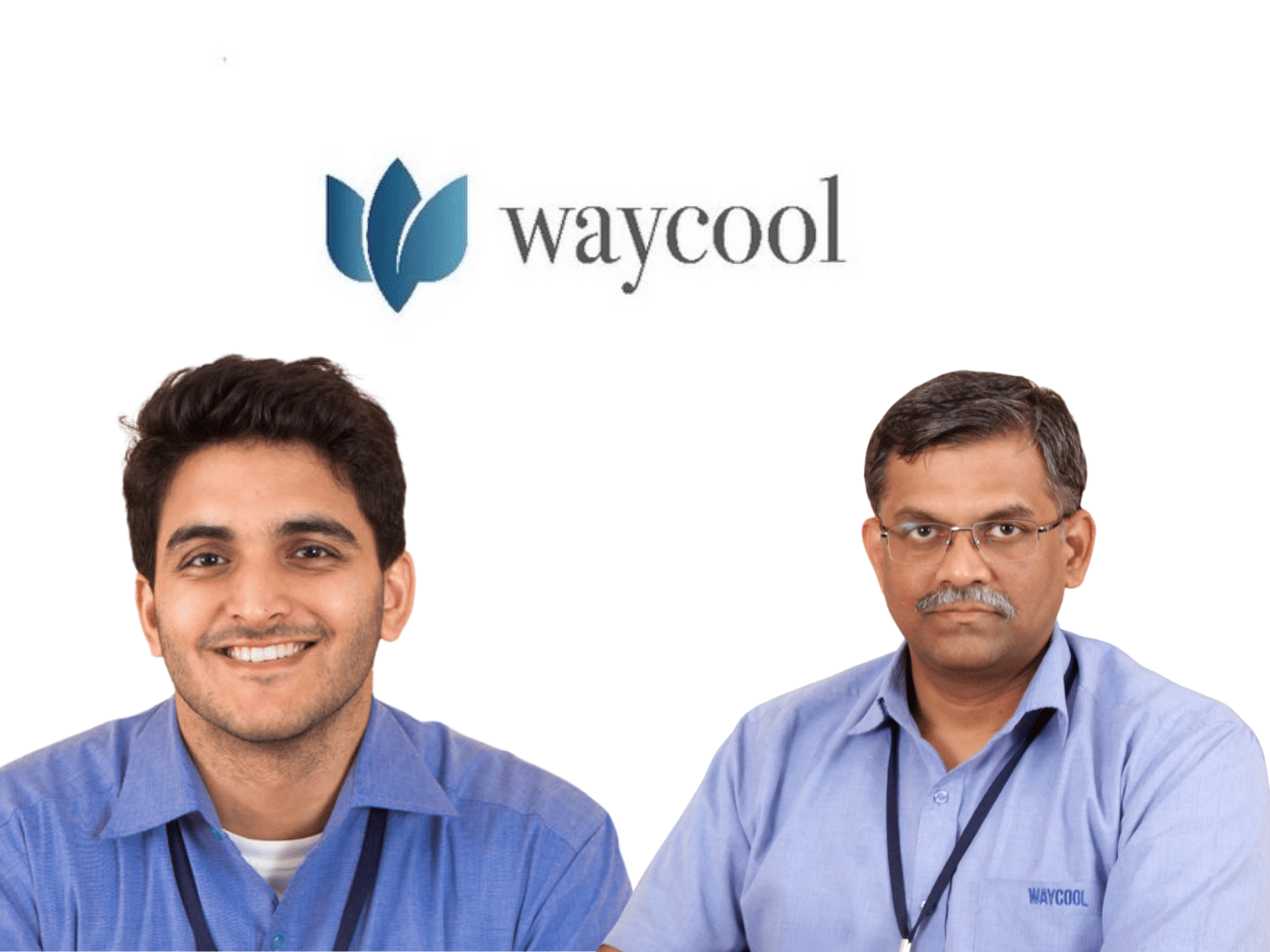
Waycool posts Rs 1,251 Cr revenue and Rs 686 Cr loss in FY23
Medial

B2B food and agritech platform Waycool claims Rs 1,600 crore in revenue with the goal of operational break even in FY24. While the company is yet to release its financial statements for FY24, it recently disclosed its results for the fiscal year ending March 2023 after an 11-month delay. Entrackr has sifted through the firmโ€™s regulatory filings to understand its financial health in FY23. Waycoolโ€™s revenue from operations grew by 62% to Rs 1,251 Crore in FY23 from Rs 772 Crore in FY22, its consolidated financial statements sourced from the Registrar of Companies show. The difference in the revenue figures for FY22 was due to the adoption of IND AS by the company. The firm reported Rs 927 crore revenue in FY22. Waycool is a full-stack supply chain player working with farmers and clients who source agricultural and dairy products from the company. The company has its 7 own consumer brands namely Madhuram, KitchenJi, DeziFresh, AllFresh and others. The collection from the sale of goods formed 98% of the total operating revenue which surged 60% to Rs 1,228 crore in FY23. Out of the total sale of goods, the finished goods ( the sale of its own brands) contributed 10% only while the rest of the sales came from traded goods. Income from commissions and cold storage management were some co-revenue drivers for Waycool. The company also added Rs 11 crore from interest on fixed deposits and non-current investments, tallying the overall income to Rs 1,262 crore in FY23. See TheKredible for the detailed revenue breakup. Since Waycool follows an inventory-led model, the cost of procurement of materials accounted for 61.51% of the total expenditure. In line with scale, this cost grew 58.2% to Rs 1,200 crore in FY23. The firmโ€™s expenses on employee benefits, doubtful debts, advertising, transportation, and other overheads took its overall cost up by 71.3% to Rs 1,951 crore in FY23 from Rs 1,139 crore in FY22. Check TheKredible for the detailed expense breakdown. Note: We have excluded the expense of Rs 1,906 crore and 828 crore from FY23 and FY22 respectively which were incurred against the loss of fair value of the preference shares, the companyโ€™s spokesperson confirmed, after sending queries. Despite the decent scale, the company didnโ€™t manage to control its costs, resulting in its losses surged by 89% to Rs 685 crore in FY23. The company spent Rs 1.56 to earn a rupee in FY23. FY22-FY23 FY22 FY23 EBITDA Margin -149.68% -199.66% Expense/โ‚น of Op Revenue โ‚น1.47 โ‚น1.56 ROCE N/A N/A While operational break-even might seem too ambitious in FY24 with these numbers, it is not impossible, considering Waycool is well past the investment stage now. However, the Chennai-based company has been struggling to find new investment and closed several initiatives in a bid to cut costs and extend the runway. According to sources, things arenโ€™t looking great for Waycool and it would be exciting to watch whether it bounces back or wilts away on the lines of several promising venture-backed agritech startups.

Pine Labs delivers back-to-back profitable quarters

EntrackrEntrackr ยท 6d ago
Pine Labs delivers back-to-back profitable quarters
Medial

Pine Labs announced its financial results for Q2 FY26 after debuting on Indian stock exchanges earlier last month. The firmโ€™s revenue increased by 18% during the second quarter, while the firm remained profitable in the same period. The companyโ€™s revenue from operations increased to Rs 650 crore in Q2 FY26 from Rs 551 crore in the same quarter last year, according to its financial statement sourced from NSE. Other income contributed an additional Rs 23 crore, which drove its total income of Rs 673 crore for the quarter. However, for the six-month period ending September 2025, the firmโ€™s revenue increased 18% to Rs 1,266 crore in H1 FY26 from Rs 1,074 crore in H1 FY25. On the expense side, employee benefit was the largest cost centre, which accounted for 40% of the total expense. This cost increased by 4% to Rs 268 crore in Q2 FY26 from Rs 258 crore in Q2 FY25. Cost of material rose 4% to Rs 81 crore in Q2 FY26 from Rs 78 crore in Q2 FY25. Finance cost, depreciation cost were other overheads which led to the total expense increasing by 8% to Rs 662 crore in Q2 FY26. Pine Labs sustained its profitability on the back of steady growth and disciplined cost control, reporting a net profit of Rs 6 crore in Q2 FY26 versus a loss of Rs 32 crore in Q2 FY25. For the half-year period, the company posted a profit of Rs 11 crore in H1 FY26, a marked improvement from the Rs 60 crore loss recorded in H1 FY25. The company also secured three key licences from the RBI, for payment aggregation, payment gateway operations, and cross-border payments, covering both offline and online merchant transactions. These approvals allow Pine Labs to process domestic and international payments, manage settlements, and further expand its merchant network across sectors. The IPO, which closed on November 11, raised around Rs 3,900 crore, comprising a mix of fresh issuance and an offer for sale by existing shareholders. While institutional investors drove the bulk of the demand, retail participation remained modest. Pine Labs made a positive debut on the public markets, listing at a 9.5% premium over its issue price. The stock opened at Rs 242 per share against the IPO price of Rs 221, giving the Peak XV-backed firm a stable start on the NSE and BSE. At the end of todayโ€™s trading period, the companyโ€™s share traded at Rs 247, giving it a market capitalization of Rs 28,360 crore (approx $3 billion).

Download the medial app to read full posts, comements and news.