News on Medial

Foxtale’s revenue nears Rs 200 Cr in FY25; losses jump 38%

EntrackrEntrackr · 1m ago
Foxtale’s revenue nears Rs 200 Cr in FY25; losses jump 38%
Medial

Foxtale, a direct-to-consumer skincare and beauty brand, continued its strong growth momentum in FY25 as it scaled up aggressively. However, the Mumbai-based company remained in the red due to a sharp rise in expenses. Foxtale’s revenue from operations grew 2.4x to Rs 199 crore in FY25 from Rs 83 crore in FY24, according to its financial statements filed with the Registrar of Companies (RoC). Founded in 2021 by Romita Mazumdar, Foxtale is an affordable skincare brand focused on products designed for Indian skin. Its products target issues such as acne, aging, and hyperpigmentation. The sale of skin and beauty products was Foxtale's sole source of revenue in the fiscal year. Including other income of Rs 7 crore, the company’s total income stood at Rs 206 crore during FY25. On the spending side, advertising cost accounted for 38% of the total expense. To the tune of scale, this cost more than doubled to Rs 106 crore in FY25 from Rs 50 crore in FY24. Cost of material also doubled to Rs 74 crore in FY25 from Rs 34 crore in FY24. Employee benefit expense increased by 55% to Rs 31 crore in the same period. Overall, Foxtale’s total expenses more than doubled to Rs 279 crore in FY25 from Rs 139 crore in FY24. The company’s net loss increased by 38% to Rs 73 crore in FY25 from Rs 55 crore in FY24. Its ROCE and EBITDA margin improved to -26.87% and -39.20% respectively. On a unit basis, Foxtale spent Rs 1.40 to earn a rupee of operating revenue in FY25, improving from Rs 1.67 in the previous fiscal year. Its cash and bank balance increased to Rs 166 crore in FY25 from Rs 43 crore in FY24, while current assets grew to Rs 316 crore. According to TheKredible, Foxtale has raised a total of $52 million of funding till date, having Matrix Partners and Kae Capital as its lead investors. The company’s Founder and CEO, Romita Mazumdar owns 34% of the company. Foxtale recently said that about 50% of purchases through its D2C website are from repeat customers. It also claimed that it is on track to end the year with an Annual Recurring Revenue (ARR) of over Rs 700 crore in GMV and expects to achieve profitability next year.

Related News

Snitch nears Rs 500 Cr revenue in FY25, stays close to breakeven

EntrackrEntrackr · 5d ago
Snitch nears Rs 500 Cr revenue in FY25, stays close to breakeven
Medial

Snitch nears Rs 500 Cr revenue in FY25, stays close to breakeven After clocking a sharp 2.3X growth in FY24, D2C menswear fashion brand Snitch sustained its momentum in FY25, doubled its scale, crossed the Rs 500 crore income mark and stayed close to breakeven. Snitch’s revenue from operations surged to Rs 498 crore in FY25, compared to Rs 241 crore in FY24, according to its annual financial statements sourced from the Registrar of Companies (RoC). Founded in 2020 by Siddharth Dungarwal, Snitch sells trendy and affordable men’s apparel and accessories through its website and app. Income from apparel and accessories remains the company’s sole revenue stream, although it has recently entered the quick commerce segment. On the expense side, procurement costs remained the largest cost centre, accounting for nearly 45% of total expenditure. With scale, procurement expenses more than doubled to Rs 230 crore in FY25. Employee benefit expenses stood at Rs 65 crore, while advertising and marketing costs rose to Rs 83 crore during the year. Rent, telephone charges, marketplace fees, and other overheads further pushed overall expenses to Rs 508 crore in FY25, up from Rs 236 crore in FY24. Despite the two-fold jump in scale, Snitch managed to keep losses under control, staying close to breakeven in FY25. This comes after the company had reported a profit of Rs 4 crore in FY24. Its ROCE and EBITDA margins stood at -5.8% and -1%, respectively, in FY25. On a unit economics basis, the company spent Rs 1.02 to earn every rupee of revenue during the year. As of FY25, Snitch’s total current assets were recorded at Rs 226 crore. According to startup data intelligence platform TheKredible, Snitch has raised over $53 million to date, including a $40 million Series B round led by 360 ONE Asset in June last year. Snitch operates in an increasingly competitive D2C fashion market, competing with players such as The Souled Store, which reported a 36% growth in revenue to Rs 492 crore in FY25. It also goes up against Rare Rabbit, which recently raised $6 million from A91 Partners and is targeting Rs 1,000 crore in revenue, and Wrogn, which secured $9 million in funding in October last year from Aditya Birla Digital Fashion.

Healthkart’s revenue nears Rs 1,400 Cr in FY25; profit triples

EntrackrEntrackr · 2m ago
Healthkart’s revenue nears Rs 1,400 Cr in FY25; profit triples
Medial

Healthkart’s revenue nears Rs 1,400 Cr in FY25; profit triples HealthKart, a nutrition and supplement e-commerce platform, recorded a 3X year-on-year jump in profit after turning profitable in FY24. The Gurugram-based company’s sharp profit growth was steered by strong sales momentum and a controlled cost structure. Healthkart’s operating revenue grew 29% to Rs 1,313 crore in FY25 from Rs 1,021 crore in FY24, according to its consolidated financial statement sourced from the Registrar of Companies (RoC). HealthKart owns and manufactures eight nutritional brands including popular supplement brands like MuscleBlaze, The Protein Zone, TrueBasics, HKVitals, bGreen, Nouriza, and Gritzo. Sales of products formed 97% of total revenue which rose by 29% to Rs 1,277 crore in FY25. Collections from services also increased by 16% to Rs 36 crore. Notably, non-operating revenue increased to Rs 55 crore in the last fiscal year from Rs 48 crore in FY24. The cost of materials accounted for the largest share of the company’s expenditure at 49%. To the tune of scale, this cost rose 26% to Rs 623 crore in FY25 from Rs 495 crore in FY25. Advertising spend saw a sharper rise of 39% to Rs 263 crore, while commission expenses increased 22% to Rs 82 crore. In contrast, employee benefit costs declined 5% to Rs 115 crore. Overall, Healthkart managed to keep its cost growth below revenue expansion. Its total expenses rose 23% to Rs 1,273 crore in FY25 from Rs 1,032 crore in FY24. The company’s profit surged over 3X to Rs 120 crore in FY25, while its ROCE and EBITDA margin improved to 5.45% and 6.02%, respectively. On a unit basis, Healthkart spent Re 0.97 to earn a rupee of operating revenue in FY25, compared to Rs 1.01 in FY24. As of FY25, its current assets stood at Rs 971 crore including Rs 73 crore in cash and bank balances. According to startup data intelligence platform TheKredible, Healthkart has raised a total of $382 million of funding till date, having Peak XV Partners, Temasek and Sofina as its lead investors. The company’s founder and CEO, Sameer Maheshwari owns 12% of the company.

Healthians posts Rs 263 Cr revenue in FY25; nears breakeven

EntrackrEntrackr · 2m ago
Healthians posts Rs 263 Cr revenue in FY25; nears breakeven
Medial

Healthians posts Rs 263 Cr revenue in FY25; nears breakeven Healthians didn't manage notable growth in the fiscal year ending March 2025. However, the WestBridge-backed company narrowed its losses by 89% year on year and neared break-even during the same period. The firm’s operating revenue increased 8% year-on-year to Rs 263 crore in FY25, up from Rs 243 crore in FY24, as per its consolidated financial statements filed with the Registrar of Companies (RoC). Including non-operating income of Rs 7 crore, the company’s total income grew 7% to Rs 270 crore during the year. Cost optimisation played a key role in supporting the company’s financial recovery. Total expenses declined 8% to Rs 275 crore in FY25, compared to Rs 298 crore last year. Among the major cost heads, employee benefits, the largest expense category, dropped 13% year-on-year to Rs 104 crore in FY25 from Rs 120 crore in FY24. Cost of materials contracted 7% to Rs 54 crore. Advertising costs rose 10% to Rs 43 crore. Meanwhile, depreciation and finance costs remained stable at Rs 29 crore and Rs 15 crore, respectively. The improvement in revenue and control of key expenses helped Healthians bring down its losses sharply by 89% to Rs 5 crore in FY25 from Rs 45 crore in FY24. The firm posted positive EBITDA of Rs 32 crore in FY25 with EBITDA margin of 12.17%. Its ROCE stood at 2.73% in the same period. On a unit basis, the company spent Rs 1.05 to earn a rupee of operating revenue in FY25. The firm’s current assets increased slightly to Rs 170 crore including cash and bank balances worth Rs 49 crore in the fiscal. According to startup data intelligence platform TheKredible, Healthians has raised a total of $75 million of funding till date, having WestBridge, BEENEXT, DG Ventures and Youwecan as its lead investors. The company’s founder and CEO, Deepak Sahni owns 6.5% of the company.

Gameskraft crosses Rs 4,000 Cr revenue in FY25; PAT nears Rs 1,000 Cr

EntrackrEntrackr · 4m ago
Gameskraft crosses Rs 4,000 Cr revenue in FY25; PAT nears Rs 1,000 Cr
Medial

Gameskraft crosses Rs 4,000 Cr revenue in FY25; PAT nears Rs 1,000 Cr Gameskraft’s FY25 numbers reflect strong performance before the RMG ban. The firm reported double-digit revenue growth and maintained profitability during the fiscal year. The Indian government’s recent ban on real-money gaming formats has disrupted the sector overnight, but Gameskraft’s FY25 numbers reflect strong performance before the clampdown. The firm reported double-digit revenue growth and maintained profitability during the fiscal year. Gameskraft’s revenue from operations grew 12% to Rs 3,896 crore in FY25 from Rs 3,475 crore in FY24, according to its consolidated financial statements sourced from the Registrar of Companies (RoC). Gameskraft operated popular gaming apps such as Rummy Culture, Playship, Pocket 52, RummyPrime, Ludo Culture, and Rummy Time. Its revenue (gross gaming revenue) came from platform fee or commission charged as a percentage of the buy-in fees users invest in games, which contributed Rs 3,882 crore (99.6% of operating revenue), registering a 12.2% growth. Its real estate business added Rs 11 crore, while other income sources contributed Rs 3 crore in FY25. The Bengaluru-based company made an additional Rs 113 crore from non-operating sources which pushed its total revenue to Rs 4,009 crore in FY25. On the cost side, promotional spending emerged as the single largest expense and accounted for 75% of total burn. To the tune of scale, this cost surged 58% to Rs 2,072 crore in FY25 from Rs 1,315 crore in FY24. Employee benefits, on the other hand, saw a decline of 11% to Rs 410 crore, while legal and professional fees fell 22.8% to Rs 112 crore in FY25. Overall, the company’s total expenses shot up 24% to Rs 2,766 crore in FY25 as against Rs 2,232 crore in FY24. See TheKredible for the detailed cost breakdown during the last fiscal year. Despite the jump in ad spend, Gameskraft managed to sustain profitability on the back of its strong topline and controlled costs in other areas. Its net profit stood at Rs 976 crore in FY25, slightly higher than the Rs 947 crore posted in FY24. It's worth noting that we have excluded exceptional items worth Rs 270.5 crore in the calculation of net profit of the company. Gameskraft's ROCE and EBITDA margin stood at 58.40% and 31.63%, respectively. On a unit basis, Gameskraft spent Rs 0.71 to earn a rupee of operating revenue in FY25. The company recorded current assets worth Rs 2,232 crore in FY25 which includes Rs 253 crore in cash and bank balances and Rs 1,319 crore invested in mutual funds. While Gameskraft’s FY25 numbers were unaffected, the Indian government’s new gaming law effective August 2025 has forced the company to halt its real-money operations, including shutting down “Add Cash” features and discontinuing its flagship rummy platform RummyCulture, alongside pausing its poker venture Pocket52 earlier in the year. The move, mandated by the Promotion and Regulation of Online Gaming Act, has also led Gameskraft to publicly state it will not pursue a legal challenge, instead opting for full compliance. Given that real-money gaming contributed nearly all of Gameskraft’s FY25 revenue, the ban is expected to significantly impact its business model, revenue streams, and growth trajectory going forward.

Pee Safe reports Rs 82 Cr revenue in FY25, nears breakeven

EntrackrEntrackr · 1m ago
Pee Safe reports Rs 82 Cr revenue in FY25, nears breakeven
Medial

Pee Safe improved its financial performance in FY25 as the company continued to scale while tightening its cost structure. The Gurugram-based firm reduced its losses by nearly 70% during the fiscal year ending March 2025. Pee Safe’s revenue from operations grew 46% to Rs 82 crore in FY25 from Rs 56 crore in FY24, as per its financial statements filed with the Registrar of Companies (RoC). Launched in 2013 by Vikas Bagaria and Srijana Bagaria, Pee Safe generates revenue primarily from sales of sanitary, personal hygiene, and intimate care products across online marketplaces, offline retail, and its direct-to-consumer channels. Revenue from these products was the sole source of revenue for the company. Cost of materials remained the largest cost component for the company, forming around 31% of total expenditure. This cost rose 29% to Rs 27 crore in FY25. Advertising and promotional spending, the second largest cost head, increased 16% to Rs 26 crore. Employee benefit expenses went up 18% to Rs 13 crore, while commission and freight costs stood at Rs 5 crore each. Overall, Pee Safe’s total expense increased 24% to Rs 86.5 crore in FY25 from Rs 70 crore in FY24. With the company’s revenue growth outpacing expense growth, Pee Safe managed to curb its losses by 69% to Rs 4 crore in FY25 from Rs 13 crore in FY24. Its ROCE and EBITDA margin stood at -46.25% and -4.15% respectively. On a unit level, the company spent Rs 1.05 to earn a rupee of operating revenue in FY25, improving from Rs 1.25 in FY24. Pee Safe’s current assets stood at Rs 24 crore, while cash and bank balances were reported at Rs 2 crore during FY25. According to TheKredible, Pee Safe has raised $13.55 million in funding to date, with Alkemi Partners as its lead investor. Its founder & CEO, Vikas Bagaria, owns 11.20% of the company. Either way, the firm is not just close to breakeven, but close to key milestones like the Rs 100 crore mark, profitability and possibly much more, if it can stay focused and deliver on its core promise.

Flipkart Internet reports Rs 20,493 Cr revenue in FY25; losses down 37%

EntrackrEntrackr · 4m ago
Flipkart Internet reports Rs 20,493 Cr revenue in FY25; losses down 37%
Medial

Flipkart Internet reports Rs 20,493 Cr revenue in FY25; losses down 37% Flipkart Internet, the B2B arm of Walmart-owned Flipkart, reported a 14% year-on-year rise in revenue, crossing the Rs 20,000 crore mark in the fiscal year ending March 2025. The Bengaluru-based firm also reduced its losses by 37%, bringing them below Rs 1,500 crore during the same period. Flipkart Internet’s revenue from operations increased to Rs 20,493 crore in FY25, from Rs 17,907 crore in FY24, as per its consolidated financial statements filed with the Registrar of Companies (RoC). Flipkart’s revenue is driven by marketplace, logistics, and advertising services. Income from marketplace services more than doubled to Rs 7,751 crore in FY25 from Rs 3,734 crore in FY24, contributing 38% to operating revenue. Advertising income surged 27% to Rs 6,317 crore, making up 31% of the topline. However, revenue from logistics services declined by 38% to Rs 4,224 crore, reducing its share to 21%. The firm made an additional Rs 314 crore from non-operating sources, which pushed its total revenue to Rs 20,807 crore in the last fiscal year (FY25). On the cost side, the largest cost head remained logistics service charges, which increased 9% to Rs 7,144 crore, accounting for 32% of total expenses. Employee benefit expenses declined 8% to Rs 4,748 crore, while marketing costs rose sharply by 37% to Rs 4,100 crore, making up 18% of overall costs. Collection charges stood at Rs 2,693 crore (12.1% of expenses) and legal/professional fees at Rs 1,394 crore. Overall, Flipkart Internet’s total expenses grew 8% to Rs 22,311 crore in FY25 from Rs 20,627 crore in FY24. Flipkart Internet managed to cut its losses by 37% to Rs 1,494 crore in FY25, from Rs 2,359 crore in FY24. Its EBITDA losses narrowed to Rs 1,078 crore in FY25 from Rs 1,869 crore in FY24, with the EBITDA margin improving from -10.25% to -5.18%. On a unit level, Flipkart spent Rs 1.09 to earn a rupee in FY25, better than Rs 1.15 in FY24. The company’s current assets stood at Rs 11,952 crore, while cash and bank balances rose to Rs 187 crore.

Cashify’s FY25 income nears Rs 1,100 Cr, losses shrink 80%

EntrackrEntrackr · 4m ago
Cashify’s FY25 income nears Rs 1,100 Cr, losses shrink 80%
Medial

Cashify’s FY25 income nears Rs 1,100 Cr, losses shrink 80% Cashify has demonstrated stellar financial performance in the fiscal year ending March 2025. While it reported a 17% rise in revenue, surpassing the Rs 1,000 crore threshold, the Gurugram-based firm also narrowed losses by 80% during FY25. Cashify’s operational revenue reached Rs 1,096 crore in FY25 from Rs 935.07 crore in FY24, the company’s consolidated annual financial statements sourced from the Registrar of Companies (RoC) show. Cashify allows users to buy and sell used electronics, focusing mainly on phones and laptops. The company partners with original equipment manufacturers such as Xiaomi, OnePlus, and Samsung to run exchange programs. The firm also works with e-commerce giants Amazon and Flipkart to streamline the trade of refurbished devices for customers. Sales of pre-owned devices contributed Rs 999 crore which grew 17% year-on-year during the last fiscal year. Revenue from services such as repairs and commissions grew 22% to Rs 97 crore. Other income, including interest on deposits, added Rs 26 crore to total income, which stood at Rs 1,12 crore for FY25. Cashify’s expenses increased by 12% to Rs 1,133 crore in FY25 against Rs 1,008 crore in FY24. The largest expense was the cost of material which accounted for 82% of the total cost, this expense rose by 15% to Rs 924 crore. Employee benefits cost remained almost unchanged at Rs 122 crore. Other overheads including selling, distribution, advertising, and miscellaneous expenses added another Rs 44 crore to the total expenditure. With revenue outpacing expenses, Cashify managed to narrow its losses by a whopping 80%, to Rs 10.5 crore in FY25 from Rs 53 crore in FY24. The company’s EBITDA margin was negative at -2.14%, and return on capital employed stood at -10.28% in the last fiscal year. As of March 2025, Cashify’s cash and cash equivalents stood at Rs 68 crore, which decreased by 25% from last year’s Rs 91 crore. Its current assets stood at Rs 424 crore in FY25, as compared to Rs 383 crore in FY24. While the firm ended the last fiscal year with a loss, co-founder Mandeep Manocha recently said that it expects to achieve full-year profitability by the end of the ongoing fiscal year (FY26). Cashify has raised $130 million across multiple funding rounds. According to TheKredible, NewQuest Capital is the largest external shareholder with a 19.5% stake, followed by Olympus and MIH Ecommerce Holdings. It competes with several players in the market including Greendust, InstaCash, and Yaantra.

Tata 1mg revenue nears Rs 2,400 Cr in FY25, trims losses

EntrackrEntrackr · 6m ago
Tata 1mg revenue nears Rs 2,400 Cr in FY25, trims losses
Medial

Tata 1mg, the digital healthcare platform backed by Tata Digital, continued its growth trajectory in the fiscal year ending March 2025 while straining its losses. Tata 1mg’s consolidated revenue rose 22% to Rs 2,392 crore in FY25 from Rs 1,968 crore in FY24, according to Tata Sons’ Annual Report for the fiscal year. Tata 1mg is a health tech startup for online orders of allopathic, ayurvedic, homeopathic medicines, vitamins, nutrition supplements, and other health products, delivered to the home. 1mg’s revenue was split across two entities: Tata 1mg Technologies, which clocked Rs 2,016.5 crore, and Tata 1mg Healthcare Solutions, which contributed Rs 375.5 crore in FY25. The company's total cost rose by 17% to Rs 2682 crore in FY25, up from Rs 2303 crore in FY24. The Gurugram-based company posted a consolidated loss of Rs 276 crore in FY25, 12% lower than the Rs 313 crore loss reported in FY24. On a unit basis, the company spent Rs 1.12 to earn a rupee of operating revenue in FY25. On the asset side, Tata 1mg reported total assets of Rs 2,025 crore at the end of FY25 while its total liabilities reached Rs 1,190 crore. In the e-health space, Tata 1mg competes with Reliance-backed Netmeds, PharmEasy, and Apollo 24/7. Tata Digital acquired a 55% stake in 1mg in June 2021 but has since gained around 8.5% additional stake in the e-medicine platform. According to TheKredible, Tata Digital currently holds a 63.5% stake in 1mg, which was last valued at 1.25 billion. Tata Digital reported a standalone revenue of Rs 546.9 crore and a loss of Rs 827.5 crore in FY25, indicating continued investment in its digital commerce bets including 1mg and other verticals such as BigBasket, Cult.fit, and the recently launched Tata Neu.

Swiggy posts Rs 6,148 Cr revenue in Q3 FY26, losses jump 32%

EntrackrEntrackr · 6d ago
Swiggy posts Rs 6,148 Cr revenue in Q3 FY26, losses jump 32%
Medial

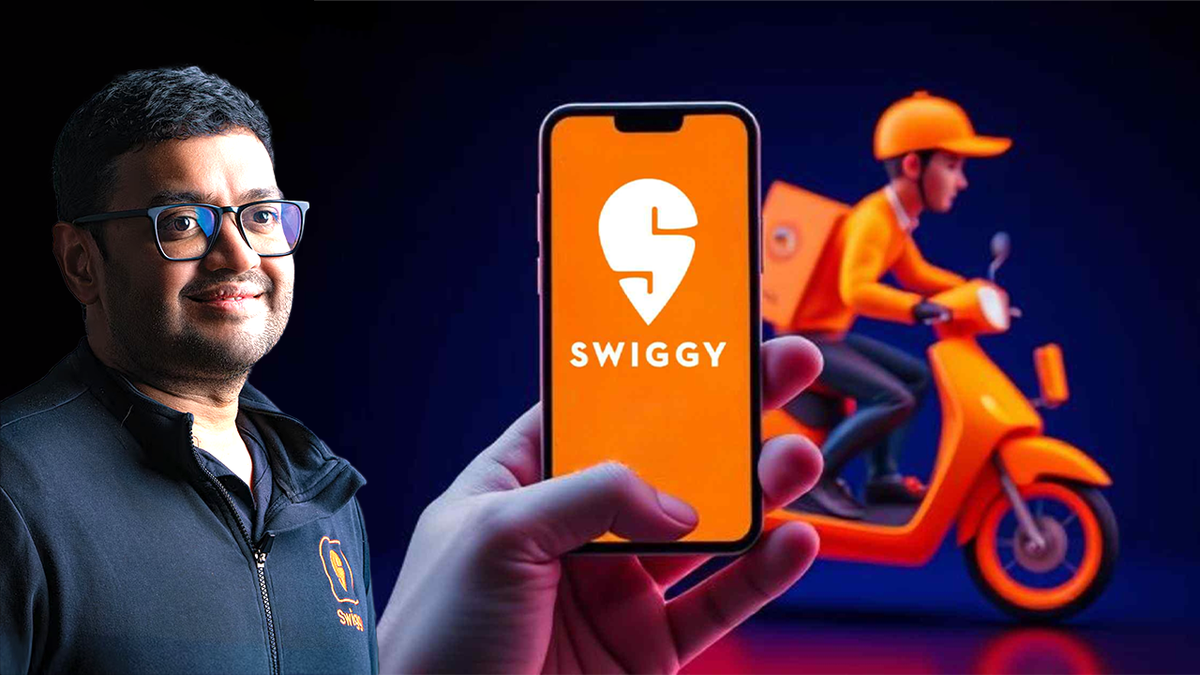
Swiggy posts Rs 6,148 Cr revenue in Q3 FY26, losses jump 32% Foodtech and quick commerce major Swiggy has reported a 54% year-on-year growth in its operating revenue, which spiked to Rs 6,148 crore during Q3 FY26 as compared to Rs 3,993 crore in Q3 FY25. However, the Bengaluru-based company’s losses increased in the same period. Scootsy Logistics contributed a major 48% of Swiggy’s overall operating revenue. Income from this entity increased by 76% YoY to Rs 2,981 crore in Q3 FY26 from Rs 1,693 crore in Q3 FY25. Swiggy’s food delivery business continues to be one of the major contributors, accounting for 33% of the total collection in Q3 FY26. Revenues from this vertical grew 25% to Rs 2,039 crore from Rs 1,635 crore in Q3 FY25. The company’s quick commerce segment also saw remarkable growth, with revenue surging by 76% to Rs 1,016 crore in Q3 FY26 from Rs 577 crore in Q3 FY25. Swiggy’s Dine Out, Genie, Swiggy Mini and other non-operating income took its total revenue to Rs 6,244 crore in Q3 FY26. On the cost side, the procurement of FMCG products for supply chain distribution formed 38% of its overall cost, which increased by 76% to Rs 2,746 crore in Q3 FY26. Meanwhile, the delivery charges saw 36% growth to Rs 1,533 crore in Q3 FY26. Swiggy spent Rs 673 crore and Rs 1,108 crore on employee benefits and advertising, respectively. Overall, Swiggy’s total expenses for the quarter increased 49% to Rs 7,298 crore from Rs 4,898 crore in Q3 FY25. The company’s losses increased by 33% to Rs 1,065 crore in Q3 FY26 from Rs 803 crore in Q3 FY25. For the nine-month period, the company’s loss stood at Rs 3,354 crore. As of December 31, 2025, Swiggy had cash and cash equivalents of Rs 13,512 crore, which included Rs 9,931 crore from net QIP proceeds. The company also received around Rs 2,400 crore from the sale of its stake in Rapido, taking its proforma cash balance to about Rs 15,900 crore. Swiggy shares were trading at Rs 324 at the end of Thursday with a total market capitalization of Rs 89,392 crore.

Zepto revenue soars 2.5x to Rs 11,110 Cr in FY25

EntrackrEntrackr · 6m ago
Zepto revenue soars 2.5x to Rs 11,110 Cr in FY25
Medial

Zepto revenue soars 2.5x to Rs 11,110 Cr in FY25 Quick commerce unicorn Zepto clocked Rs 11,110 crore (nearly $1.3 billion) in turnover in FY25, a sharp 150% jump from Rs 4,454 crore in FY24, according to regulatory filings reviewed by Entrackr. Zepto’s FY25 performance comes on the back of aggressive execution and disciplined expansion. According to earlier Aadit Palicha’s post, the company was at $3 billion in annualized gross order value (GOV) and halved its losses over the last year. In FY24, Zepto incurred losses of Rs 1,248 crore on revenue of Rs 4,454 crore. That means the startup spent Rs 1.29 to earn every Rs 1 of revenue in FY24, a figure it has reportedly improved in FY25 with better unit economics, higher fill rates, and stronger contribution margins. We are not comparing Zepto's FY25 numbers with Instamart and Blinkit due to differences in their business models and accounting practices. However, the NOV (net order value) of Blinkit stood at Rs 22,731 crore in FY25, while Swiggy’s quick commerce biz Instamart GOV was recorded at Rs 14,600 crore in the same period. Zepto's founder Aadit Palicha did not comment on the story. As per a recent report, Zepto is in talks to raise $500 million at a potential $7 billion valuation, a significant jump from its previous valuation of $5 billion when it raised $350 million in November 2024. The fresh round is expected to bolster Zepto’s runway ahead of a potential IPO in 2026, as the company pushes toward EBITDA break-even in the next 12–15 months.

Download the medial app to read full posts, comements and news.