News on Medial

Related News

Go Digit’s revenue declines 17% in Q1 FY26, profit soars 46%

EntrackrEntrackr · 5m ago
Go Digit’s revenue declines 17% in Q1 FY26, profit soars 46%
Medial

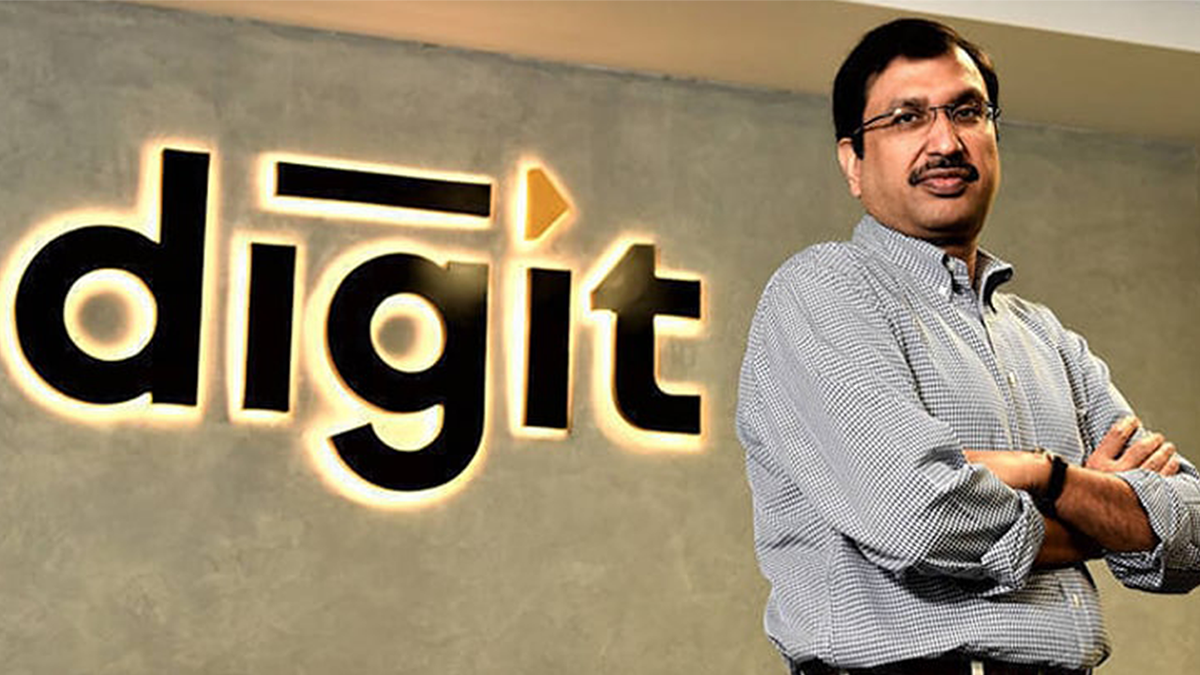
Go Digit General Insurance Limited reported its operating revenue which decreased by 17% to Rs 1,865 crore in Q1 FY26 from Rs 2,247 crore in Q1 FY24. During the period, the firm’s gross premium witnessed a 12% hike. New Update: Go Digit General Insurance Limited reported adverse financial performance, with its operating revenue (net premium) decreasing by 17% to Rs 1,865 crore in Q1 FY26 from Rs 2,247 crore in Q1 FY24. During the period, the firm’s gross premium witnessed a 12% hike. Net premiums written also saw a dip of 4% this quarter, reaching Rs 1,951 crore in Q1 FY26 compared to Rs 2,027 crore in the same quarter last year, according to its quarterly results reported on the NSE. Additionally, income from investments grew significantly, reaching Rs 314 crore in Q1 FY26, compared to Rs 253 crore in the first quarter of FY26, driven by a stronger investment portfolio performance. Total income for Q1 FY26 stood at Rs 2,179 crore, up from Rs 2,077 crore in the corresponding quarter of the previous year, showcasing overall financial growth for the company during this period. Go Digit experienced rising expenses in Q1 FY26, including commissions and brokerage costs, which amounted to Rs 572 crore, up from Rs 514 crore in Q1 FY25. Employee benefits also saw an increase, with expenses totaling Rs 90 crore in Q1 FY26. These increases contributed to the overall rise in the firm's expenses during the quarter to Rs 2,058 crore. In terms of claims, the company paid out Rs 903 crore in claims during Q1 FY26 against Rs 718 crore in Q1 FY25. There was also a change in outstanding claims, with an increase to Rs 409 crore in Q1 FY26 compared to Rs 567 crore in Q1 FY25. Despite the higher income, the underwriting loss for Q1 FY26 was Rs 194 crore, a 15% increase from Rs 170 crore in the previous year. At the end, GoDigit’s profit surged 46% to Rs 121 crore during the quarter ending June 2025 as compared to the same quarter in FY24. At the end of the day, Go Digit’s share price was trading at Rs 349 per share, giving the company a total market capitalization of Rs 32,254 crore.

PhonePe captures 50% UPI market share by value in August

EntrackrEntrackr · 1y ago
PhonePe captures 50% UPI market share by value in August
Medial

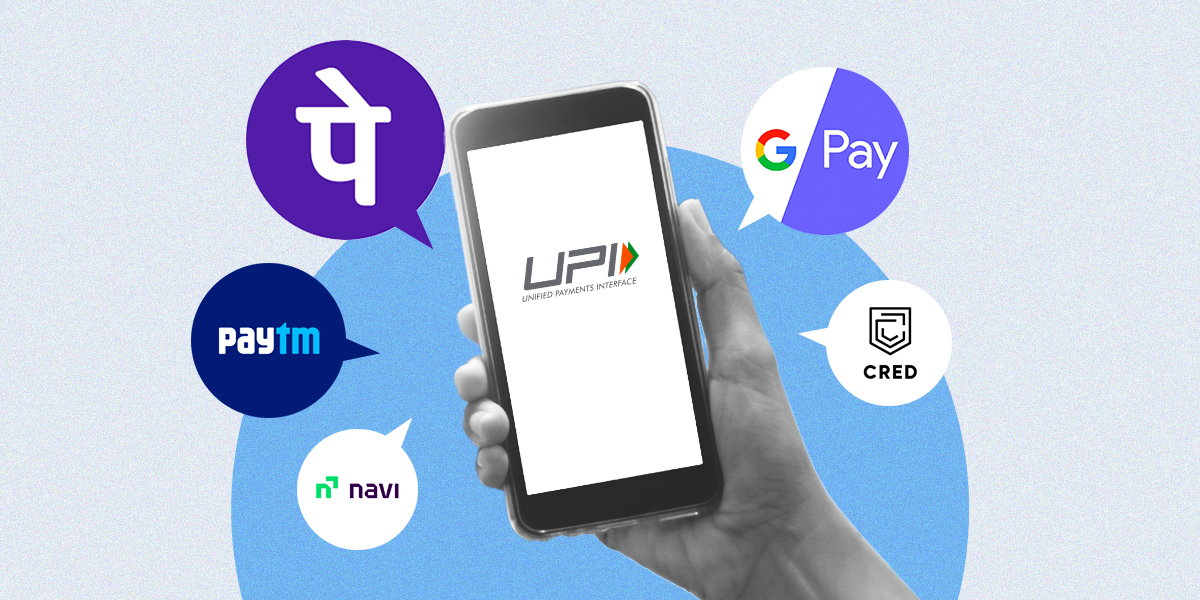
PhonePe has captured over 50% of the market share in UPI transaction volume as of August, according to data from the National Payments Corporation of India (NPCI). The Walmart-controlled payments firm continues to maintain a strong lead over competitors like Google Pay and Paytm. UPI registered 14.96 billion transactions worth Rs 20,60,735.57 crore in August. Out of this, PhonePe alone recorded 7.23 billion transactions amounting to Rs 10,33,264.34 crore, translating to a 48.36% market share by volume and a 50.14% market share by value. In August, Google Pay recorded 5.59 billion transactions totaling Rs 7,42,223.07 crore, while Paytm processed transactions worth Rs 1,13,672.16 crore. Google Pay held a market share of 37.3% by volume and 36% by value, whereas Paytm captured a market share of 7.21% by volume and 5.51% by value. In July, PhonePe, Google Pay, and Paytm held market shares of 48.3%, 37%, and 7.82% by transaction volume, respectively. While PhonePe and Google Pay saw increases in their transaction numbers, Paytm’s growth slowed down during the last month. Emerging players such as CRED, Navi, and Fampay are capturing market share from the leading firms. For example, CRED processed 147 million transactions, while Navi and Fampay handled 88 million and 57 million transactions, respectively. UPI is nearing 500 million transactions per day, and NPCI Chief Dilip Asbe already predicted that the platform will reach 1 billion transactions daily by 2026-27. Meanwhile, NPCI has raised the upper limit for UPI transactions to Rs 5 lakh for specific types of payments, including tax payments, payments to hospitals and educational institutions, as well as investments in IPOs and RBI retail direct schemes. The high market concentration with the top three players does not augur well for any significant change in the market when it comes to any significant monetization, one would imagine. Especially when two of the top three happen to be foreign owned. That is not what the smaller players, and many other fintechs looking for a more viable use case in the UPI payments ecosystem want. Not to mention the credit card segment which continues to cede ground to UPI. For the fiscal year ending in March 2024 (FY24), NPCI’s revenue from operations spiked to Rs 2,876 crore from Rs 2,065 crore in FY23 while its profit surged to Rs 1,134 crore from Rs 828 crore during the same period.

uEngage aspires to be Shopify for restaurants in India

EntrackrEntrackr · 1y ago
uEngage aspires to be Shopify for restaurants in India
Medial

If you’re a new restaurant owner, you will probably get your joint listed on Zomato and Swiggy at the earliest. The listing helps with instant discoverability in the operational area and access to the delivery fleet among other benefits. The catch, however, is the steep commission charges restaurant owners have to pay these food aggregator platforms. This is one of the reasons why you see different pricing on Zomato and restaurants’ own menu cards. Chandigarh-based uEngage is looking to fix this exact problem for restaurant owners in the country. The startup offers a wide range of services such as Edge (which lets you start your own ordering app), Flash (which helps manage deliveries and riders), and Prism (which helps automate marketing). The startup is also active on ONDC, enabling businesses to join the open network for digital commerce. We spoke to uEngage CEO and founder Sameer Sharma to learn more about his platform, what it is trying to accomplish, and future roadmap. Here are the edited excerpts: What are the key problems that uEngage is trying to address? When Zomato, Swiggy, and other aggregators entered the picture, we couldn’t understand why they kept increasing commissions and pressuring merchants. Initially, it was 14%, which seemed high. Now, it’s beyond 22% for a major list of merchants, with some newer brands facing rates up to 32-35%. But that’s just the beginning. Beyond base commissions, there are additional costs like payment gateway charges, marketing click payments, often without clear, and cancellation charges without go ahead from the merchant. Recently, I met a leading Zomato-listed restaurant in Chandigarh. Despite generating sales worth Rs 30 lakh, they received only Rs 14.91 lakh, over 50% of their revenue. This has been happening for a while, and this is why we started uEngage. While aggregators offer great technology, demand generation, and modern logistics, there are downsides. Merchants lose control over brand positioning, customer relationship and face significant financial constraints. While aggregators aren’t necessarily evil, there’s much at stake for restaurants in the given circumstances. Please touch upon how the platform works, and how your growth has been so far? uEngage is Like Shopify for restaurants. Being a food-specific platform, we have been able to go deeper and offer extensive plug n play solutions to our restaurant partners. Initially launched as digital ordering platform for restaurants, uEngage has extended the platform into 3 different products covering: Direct Ordering (Mobile Apps, SEO First Websites, WhatsApp Ordering and KIOSk Ordering) – uEngage EDGE Customer Marketing and Omni Channel Loyalty – uEngage PRISM Last Mile Delivery and Tracking (Self Delivery and 3PL) – uEngage Flash At one end we have integrated industry leading POS and Billing Players like Petpooja , POSIST, Urban Piper, TM Bill, etc. to make life simpler for outlet staff, on the other end, we work closely with leading logistics players such as Dunzo, Zomato Xtreme (Zomato’s B2B service), Shadowfax, Loadshare, and Rapido. Together, they form a comprehensive Direct Ordering stack, including commerce, marketing, and logistics components. This ecosystem enables us to provide a holistic solution to our clients. As far as our financial growth goes, last year, our revenue stood at Rs 5.7 crore. This year, we anticipate closing it around Rs 13 crore to Rs 14 crore. This year, we’re projecting a GMV of around Rs 310 crore rupees for our brands. Orders from partner platforms to our revenue; they belong to the respective brands. However, they contribute to the GMV we generate for them. Our focus as a bootstrap company remains on profitability, and we’ve been profitable for more than two years now. Regarding our partnerships, we currently work with close to 4,000 outlets for our Direct Ordering Business and overall 15000+ Outlets for all our offerings including ONDC. What are your plans for the ONDC network? The ONDC is still at a nascent stage but a significant contributor to our revenue. Currently, we have around 15,000 outlets. Our target is to reach 50,000 outlets within the next three to four quarters.

Zerodha invests $5 Mn in Tijori

EntrackrEntrackr · 1m ago
Zerodha invests $5 Mn in Tijori
Medial

Zerodha invests $5 Mn in Tijori Zerodha has invested $5 million in stock analytics startup Tijori Finance as the brokerage looks to expand its presence in the enterprise segment. Zerodha has pumped $5 million into stock analytics platform Tijori Finance as the Bengaluru-based startup gears up to sharpen its enterprise play and widen its footprint among institutional investors. The deal also deepens Zerodha’s existing partnership with Tijori, which already powers stock analysis for the brokerage’s flagship trading app Kite. According to Tijori founder Siddharth Hegde, the fresh capital will be channeled toward building new tools, scaling server infrastructure and expanding its team. “We have 15,000 paid subscribers at the moment, and this partnership with Zerodha will help strengthen the number in the coming months,” Hegde told Entrackr. While Tijori has largely been a retail-facing platform since its launch in 2016, offering stock research to individual investors for about Rs 500 per month, the company is now accelerating efforts to tap enterprises such as mutual funds, insurers, and asset managers. Subscription pricing for enterprise clients goes up to Rs 5,000. Hegde said that nearly 70% of Tijori’s upcoming product roadmap is now aimed squarely at institutional users, with the remaining 30% reserved for retail investors. A major part of this push is its upcoming AI-driven tool Call Monitor, designed specifically for enterprise customers. The feature automatically generates summaries of quarterly earnings calls within minutes, compressing what is typically a 24–48 hour delay, and flags inconsistencies or contradictions in management commentary and regulatory filings, giving investors an early edge. For retail users, Tijori’s AI-powered Alerts tool delivers real-time updates on WhatsApp, offering instant notifications on corporate filings, results, and other market-moving developments. The company is also deepening its data stack as it eyes a larger enterprise footprint. Tijori said it is aggregating regulatory filings, investor presentations, supply chain data, raw material trends and historic financials to build a more comprehensive intelligence layer for both retail and institutional customers. With Zerodha’s strategic backing and a sharpened enterprise focus, Tijori is positioning itself as a key data intelligence player in India’s fast-evolving public markets ecosystem.

Download the medial app to read full posts, comements and news.