News on Medial

BellaVita’s revenue jumps 2.5X to Rs 456 Cr in FY25, turns profitable

EntrackrEntrackr · 3d ago
BellaVita’s revenue jumps 2.5X to Rs 456 Cr in FY25, turns profitable
Medial

BellaVita, a Gurugram-based beauty and personal care brand, reported a profit of Rs 25 crore in the fiscal year ended March 2025, a sharp turnaround from a loss in FY24. The improvement came amid strong revenue growth and better cost efficiency. BellaVita’s operating revenue surged 2.5x to Rs 456 crore in FY25 from Rs 184 crore in FY24, as per its financial statements sourced from the Registrar of Companies (RoC). The company derives its revenue primarily from sales of fragrances, skincare, and personal care products across online marketplaces and its own channels. Revenue from the sale of these products was the sole source of revenue for the company. For the perfume-dominated brand, the cost of materials remained the largest cost component, accounting for 39% of the total expenditure. This cost surged 2.7x to Rs 171 crore in FY25 from Rs 64 crore in FY24. Advertising expenses formed 21% of the cost and rose by 37% to Rs 90 crore. Commission expenses surged to Rs 64 crore, while shipping costs stood at Rs 42 crore. Employee benefits accounted for Rs 42 crore and other overheads added Rs 28.5 crore to the expense sheet during the fiscal. Overall, BellaVita’s total expenses grew 92% to Rs 437.5 crore during FY25 from Rs 228 crore in FY24. With the company’s revenue outpacing expense growth, it turned profitable and posted a profit of Rs 25 crore, against a loss of Rs 40 crore in FY24. Its EBITDA margin stood at 4.61% in the same period. On a unit level, BellaVita spent Rs 0.96 to earn a rupee of operating revenue in FY25, improving from Rs 1.24 a year earlier. On the balance sheet front, BellaVita’s current assets increased to Rs 119 crore while the company closed FY25 with cash and bank balances of Rs 4 crore, up from Rs 1 crore in the previous fiscal. According to TheKredible, BellaVita has raised a total of $58 million of funding to date, with Sanjeev Kumar Taparia and Ashutosh Taparia as its lead investors. The profits will be a welcome milestone for the firm that has shown the kind of intent and effort that marks out driven startups. Maintaining the momentum in FY26 will place it in a hallowed company in a category where the topline has been ‘bought’ with expensive advertising in most cases. BellaVita has certainly built a brand that has some pull of its own and could yet be the personal care brand to watch in the coming years.

Related News

Ecozen’s profit nears Rs 100 Cr in FY25; revenue jumps 2.5X

EntrackrEntrackr · 1d ago
Ecozen’s profit nears Rs 100 Cr in FY25;  revenue jumps 2.5X
Medial

Ecozen, a climate-tech firm focused on solar-powered cold chain and irrigation solutions, delivered a strong financial performance in FY25, recording 2.5x year-on-year growth. Moreover, the company’s profits surged nearly fivefold during the same period. Ecozen’s revenue from operations rose 2.5X to Rs 1,150 crore in FY25 from Rs 458 crore in FY24, according to its consolidated annual financial statements filed with the Registrar of Companies (RoC). Ecozen provides climate smart solutions built on core technology stacks such as motor controls, IoT, and energy storage, leveraging solar power. The company’s key products include Ecotron (solar pump controller), Ecofrost (solar cold storage), solar AC, solar panels. The sale of solar and related products accounted for 77% of its collections, which rose 2.3x to Rs 889 crore in FY25. The rest of the income came from the installation of a solar pumping system and other services; this revenue rose by 23% to Rs 261 crore during FY25. On the expense front, the cost of materials remained the largest cost element, forming 64% of the total spend. This cost surged 2X to Rs 662.5 crore in FY25 from. Contract costs ballooned over 3X to Rs 169 crore, while employee benefit expenses grew 58% to Rs 49 crore during the year. After sales service expense, warranty claim expense, and other overheads climbed to Rs 118 crore during FY25. Overall, total expense spiked 2.4x to Rs 1,038 crore in FY25 from Rs 439.5 crore in FY24. With the 2.5X growth in FY25, the profits for the Pune-based firm shot up by nearly 5x to Rs 95 crore in FY25 from Rs 20 crore in FY24. During the previous fiscal, its ROCE and EBITDA margin improved to 28.92% and 13.17%, respectively. On a unit level, Ecozen spent Rs 0.90 to earn a rupee in FY25. The company’s current assets were worth Rs 831 crore at the end of FY25, including cash and bank balances of Rs 228 crore, up from Rs 96 crore in FY24. According to TheKredible, Ecozen has raised over $76 million to date through a mix of debt and equity. Nuveen Global and Omnivore are the company’s lead investors. The company is in the process of raising Rs 95 crore (approximately $10.7 million) in debt funding from Momentum Capedge Limited.

Captain Fresh turns profitable in FY25; GMV jumps 2.5X

EntrackrEntrackr · 1m ago
Captain Fresh turns profitable in FY25; GMV jumps 2.5X
Medial

Captain Fresh, a seafood and animal protein supply chain startup, has posted a profit within five years of operations and has become one of the fastest-growing startups in its space. The Bengaluru-based firm has also posted over 2X scale in FY25, backed by strong growth in international markets, particularly the United States. The company’s gross revenue (GMV) surged 2.5X to Rs 3,421 crore in FY25 from Rs 1,395 crore in FY24, according to its consolidated financial statements filed with the Registrar of Companies (RoC). Founded in 2020, Captain Fresh operates as a tech-driven, vertically integrated platform that controls the entire seafood value chain from procurement to distribution without owning capital-intensive assets. Captain Fresh generates a major share of its revenue from export markets. The USA contributed over 71% to the operating revenue, growing more than 5.6X to Rs 2,416 crore in FY25 from Rs 362 crore in FY24. India’s contribution, however, declined by 49% to Rs 340 crore, while new markets like Poland (Rs 239 crore) and France (Rs 181 crore) also made significant contributions. Other key geographies included Italy (Rs 50 crore), the UAE (Rs 48 crore), and Spain (Rs 31 crore). The surge in gross revenue stems largely from its acquisition spree. Captain Fresh picked up CenSea in February 2024 and added Ocean Garden to its portfolio this February. Overall, the company has a total of 10 subsidiaries and a joint venture across the United States, Norway, France, Spain, Indonesia, Poland, and the Netherlands. The company’s largest expense, cost of materials, accounted for over 82% of total expenditure, which increased 2X to Rs 2,846 crore in FY25 from Rs 1,311 crore in FY24. Employee benefit expenses more than doubled to Rs 195 crore, while freight and forwarding charges shot up 2.7X to Rs 102 crore. Finance costs grew sharply to Rs 94 crore in FY25. Legal and professional fees remained largely flat at Rs 44 crore, and other expenses stood at Rs 173 crore. Overall, in the line of scale, Captain Fresh’s total costs doubled to Rs 3,454 crore in FY25 from Rs 1,648 crore a year earlier. With over 2X revenue surge, the company turned profitable and posted a net profit of Rs 42 crore against a loss of Rs 229 crore in FY24 (It's worth noting that Rs 68 crore were credited in terms of deferred tax, which helped the company to be in green). The company’s ROCE and EBITDA margin stood at 4.05% and 2.12% respectively. On a unit level, Captain Fresh spent Re 1.01 to earn a rupee of operating revenue, improving from Rs 1.18 in FY24. The firm’s current assets were valued at Rs 1,858 crore, while capital employed rose to Rs 1,358 crore. The company maintained cash and bank balances of Rs 88 crore at the end of FY25. According to the startup data intelligence platform TheKredible, Captain Fresh has raised over $200 million to date, including a $30 million pre-IPO round in January this year from Prosus, Accel, Tiger Global, and others. Matrix Partners, Accel, Tiger Global, Ankur Capital, and Prosus are some notable investors for Captain Fresh. Captain Fresh is set to raise Rs 1,700 crore (about $200 million) through a fresh issue of shares as part of its upcoming initial public offering (IPO). The Tiger Global-backed company is reportedly eyeing a total issue size of $350-400 million, including an offer for sale (OFS).

Amagi posts Rs 705 Cr revenue in H1 FY26; turns profitable

EntrackrEntrackr · 16h ago
Amagi posts Rs 705 Cr revenue in H1 FY26; turns profitable
Medial

Fintrackr All Stories Amagi posts Rs 705 Cr revenue in H1 FY26; turns profitable Bengaluru-based SaaS firm Amagi's financials show that the company turned profitable in the first half of FY26, aided by strong revenue growth and improving cost efficiency. Amagi’s operating revenue grew 34.5% to Rs 705 crore in H1 FY26 from Rs 524 crore in H1 FY25, according to its financial statements included in the Red herring prospectus (RHP). The company derives the bulk of its revenue from distribution and payout services, which contributed nearly 98% of operating revenue. Income from this segment rose 36% to Rs 690 crore during the period. Revenue from AdPlus remained largely flat at Rs 15 crore. Including other income of Rs 29 crore, Amagi’s total income increased to Rs 734 crore in H1 FY26 from Rs 551 crore in H1 FY25. Employee benefit expenses, the largest cost component, rose 12.5% to Rs 386 crore and accounted for over 53% of total expenditure. Communication costs increased 32.5% to Rs 216 crore, forming nearly 30% of overall expenses. Other overheads such as legal and professional charges declined to Rs 27 crore, while travel and other expenses together added Rs 71 crore during the period. Overall, total expenses increased at a slower pace of 18.2% to Rs 722 crore in H1 FY26 from Rs 611 crore in H1 FY25. With Amagi’s revenue outpacing the expense growth, it turned profitable in the first half of FY26 and posted a profit of Rs 6.5 crore in H1 FY26, as compared to a loss of Rs 66 crore in H1 FY25. As of September 2025, the Bengaluru-based firm reported cash and bank balances of Rs 397 crore, while its current assets stood at Rs 1,177 crore.

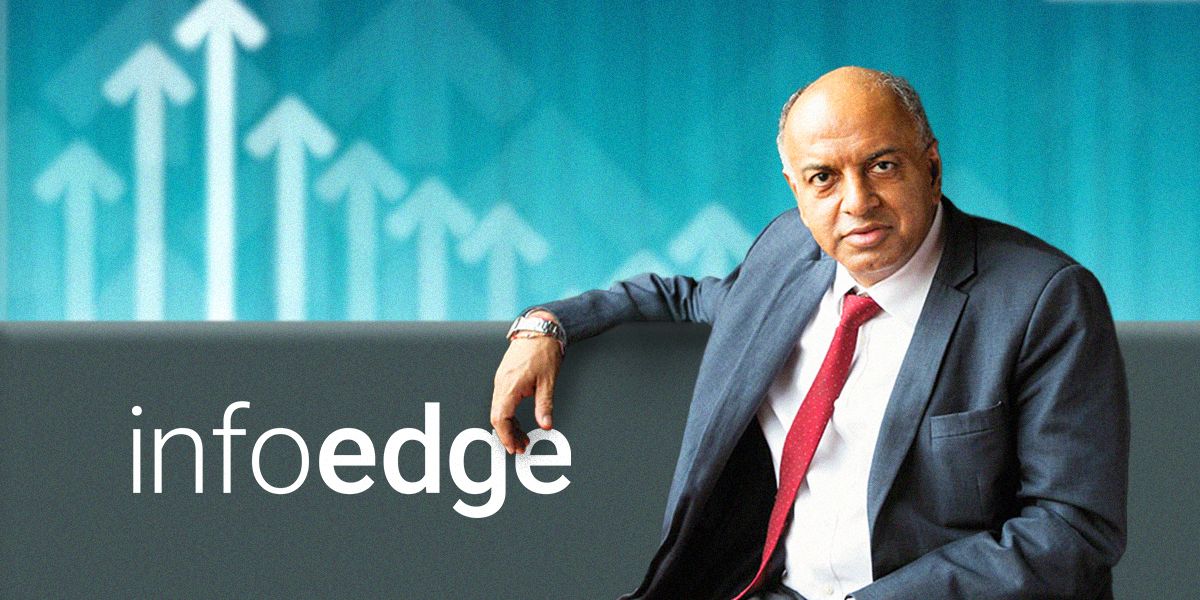
Info Edge posts Rs 722 Cr revenue in Q3 FY25; profit jumps 2.5X

EntrackrEntrackr · 11m ago
Info Edge posts Rs 722 Cr revenue in Q3 FY25; profit jumps 2.5X
Medial

Info Edge posts Rs 722 Cr revenue in Q3 FY25; profit jumps 2.5X Info Edge, the parent company of Naukri and 99acres, released its unaudited financial results for Q3 FY25. According to the company’s update sourced from the National Stock Exchange (NSE), revenue from operations grew by 15.2% to Rs 722 crore in Q3 FY25 from Rs 627 crore in Q3 FY24. The company recorded Rs 2,100 crore in revenue during the first nine months of FY25, with profits reaching Rs 632 crore. Info Edge derives the majority of its revenue—73%—from Naukri.com, which contributed Rs 527 crore in Q3 FY25, marking a 12.3% year-on-year growth compared to Q3 FY24. Meanwhile, revenue from 99 acres reached Rs 104 crore, while the Jeevansathi and Shiksha segments collectively generated Rs 91 crore during the same quarter. The company added another Rs 187 crore from interest on deposits and investments, which pushed its overall revenue to Rs 9,094 crore in Q3 FY25, compared to Rs 660 crore in Q3 FY24. Info Edge spent 62.6% of its overall expenditure on employee benefits, which increased by a modest 9.7% year-on-year to Rs 305 crore in Q3 FY25. Its advertising and internet costs stood at Rs 82 crore and 20 crore, respectively. The company’s overall cost grew 7% YoY to Rs 487 crore in Q3 FY25 from Rs 455 crore in Q3 FY24. The steady growth and surge in other income with controlled expenditure led its profits to increase by 142% to Rs 288 crore in Q3 FY25, compared to Rs 119 crore in Q3 FY24. On a unit level, it spent Rs 0.67 to earn a rupee in Q3 FY25. As of 4:40 PM, Info Edge is trading at Rs 7,910, reflecting a Rs 203.1 increase following today's results. Its total market capitalization value improved to Rs 1,02,501 crore ($12.2 billion).

Delhivery reports Rs 70 Cr profit in Q4 FY25; revenue jumps 6%

EntrackrEntrackr · 7m ago
Delhivery reports Rs 70 Cr profit in Q4 FY25; revenue jumps 6%
Medial

Delhivery reports Rs 70 Cr profit in Q4 FY25; revenue jumps 6% Logistics company Delhivery announced its Q4 FY25 results on Friday, reporting a 6% year-on-year increase in revenue. The Gurugram-based firm also reported a profit of Rs 72 crore during the same period. Delhivery’s revenue from operations grew to Rs 2,191 crore in Q4 FY25, according to its financial statements filed with the National Stock Exchange (NSE). For the full fiscal year (FY25), Delhivery’s operating revenue increased 10% to Rs 8,932 crore in FY25 from Rs 8,141 crore in FY24. Delhivery's primary revenue sources were its logistics services, including warehousing, last-mile logistics, and designing and deploying logistics management systems. The firm also earned Rs 112 crore from non-operating activities, bringing its total revenue to Rs 2,303 crore in Q4 FY25. Meanwhile, for the full fiscal year, total income reached Rs 9,372 crore. For Delhivery, freight handling and servicing costs made up 70% of its total expenditure, rising by 3% to Rs 1,566 crore in Q4 FY25. Employee benefit expenses decreased by 6% to Rs 337 crore. Legal, depreciation, and other overhead costs contributed to a minor decrease in overall expenditure, which reached Rs 2,249 crore during the quarter. For the full financial year ending March 2025, the firm’s total expenses rose to Rs 9,217 crore as against Rs 8,825 crore in FY24. Delhivery's continued growth and controlled expenditure resulted in a profit of Rs 72 crore in Q4 FY25, compared to a loss of Rs 68 crore in Q4 FY24. On a fiscal basis, it turned profitable and reported a net profit of Rs 162 crore in FY25 as compared to a loss of Rs 249 crore in FY24. At the close of today’s trading session, Delhivery’s share price stood at Rs 321 per share, giving the company a market capitalization of Rs 23,957 crore.

12-year-old Scripbox turns profitable with Rs 107 Cr revenue in FY25

EntrackrEntrackr · 1m ago
12-year-old Scripbox turns profitable with Rs 107 Cr revenue in FY25
Medial

12-year-old Scripbox turns profitable with Rs 107 Cr revenue in FY25 Wealth management platform Scripbox achieved profitability in FY25, on the back of steady revenue growth and disciplined cost control, particularly a sharp reduction in ESOP-related expenses during the period. Scripbox’s revenue from operations rose 27% to Rs 107.24 crore in the financial year ending March 2025, up from Rs 84.33 crore in FY24, according to its consolidated financial statements filed with the Registrar of Companies. Founded in 2012, Scripbox operates a diversified revenue model, earning brokerage and commissions from mutual funds, fixed deposits, PMS, AIFs, and sovereign gold bonds. It also generates income from advisory services and lead-generation fees. The company derived 82% of its operating revenue from brokerage and commissions on mutual fund distribution, which stood at Rs 88 crore, while brokerage from PMS contributed Rs 8.66 crore in FY25. It also earned Rs 7.6 crore from investment advisory fees and Rs 1.14 crore from portfolio management service fees. The remaining revenue came from brokerage on fixed deposits, sovereign gold bonds, AIFs, and other products. The company also earned Rs 2.06 crore from interest and gains on financial assets, taking its total revenue to Rs 109.3 crore in FY25. On the cost side, Scripbox’s employee benefits expense had fallen by 32% to Rs 49.55 crore in FY25, compared to Rs 73.07 crore in FY24. The reduction was mainly due to a steep drop in ESOP-related expenses, which fell to Rs 3.48 crore from Rs 25.72 crore in FY24. The company's overall expenditure dwindled by 29% to Rs 95.82 crore in the last fiscal (FY25) from Rs 134 crore in FY24. On the bottom line, Scripbox posted a profit of Rs 12.77 crore in FY25, supported by a sharp reduction in non-cash ESOP expenses. In FY24, the company had reported exceptional gains of Rs 48.8 crore from the surrender or cancellation of ESOPs, which made it appear profitable; excluding this non-cash item, Scripbox would have recorded a loss of Rs 44.7 crore in FY24. The company’s EBITDA margin and ROCE improved, turning positive at 20.47% and 14.5%, respectively. At a unit level, Scripbox spent Rs 0.89 to generate one rupee of operating revenue in FY25. The firm held only Rs 58 lakh in cash and bank balances at the end of FY25, while its current assets stood at Rs 31 crore during the same period. According to startup data intelligence platform TheKredible, Scripbox has raised over $55 million to date and holds a valuation of around Rs 1,150 crore (approximately $137 million). Its investors include Accel, LetsVenture, DMI, and others. Disclaimer: Bareback Media has recently raised funding from a group of investors. Some of the investors may directly or indirectly be involved in a competing business or might be associated with other companies we might write about. This shall, however, not influence our reporting or coverage in any manner whatsoever.

Nykaa posts Rs 33 Cr profit on Rs 2,346 Cr revenue in Q2 FY26

EntrackrEntrackr · 2m ago
Nykaa posts Rs 33 Cr profit on Rs 2,346 Cr revenue in Q2 FY26
Medial

Nykaa posts Rs 33 Cr profit on Rs 2,346 Cr revenue in Q2 FY26 Online beauty and fashion platform Nykaa has continued its strong growth in Q2 FY26, with its revenue from operations rising 25% year-on-year and profits surging 2.5X during the quarter ending September 2025. According to its financial statements sourced from the National Stock Exchange (NSE), Nykaa's revenue from operations grew to Rs 2,346 crore in Q2 FY26, compared to Rs 1,875 crore in Q2 FY25. On a half yearly basis, Nykaa’s operating revenue increased 24% to Rs 4,501 crore in H1 FY26 from Rs 3,621 crore in H1 FY25. The beauty segment accounted for 91% of the total revenue at Rs 2,132 crore, while the fashion segment contributed 8.7% of the operating income in the Q2 FY25. For Nykaa, the cost of materials constituted 56% of its total expenditure, rising to Rs 1,292 crore in Q2 FY26. Additional spending on employee benefits, finance, marketing, technology, and other overheads brought the company’s total costs to Rs 2,297 crore during the quarter. Steady growth in its scale helped Nykaa achieve 2.5X increase in profit to Rs 33 crore in Q2 FY26, compared to Rs 13 crore in Q2 FY25. For the six months ended September 2025, the company’s profit doubled to Rs 57 crore in H1 FY26 from Rs 27 crore in H1 FY25. At the close of today's trading session, Nykaa's stock was priced at Rs 246, giving the company a market capitalization of Rs 70,375 crore ($8 billion).

M League earns Rs 560 Cr from overseas in FY25, turns profitable

EntrackrEntrackr · 3m ago
M League earns Rs 560 Cr from overseas in FY25, turns profitable
Medial

M League earns Rs 560 Cr from overseas in FY25, turns profitable According to its consolidated financial statements filed with Singapore’s ACRA, M League’s revenue from operations surged to Rs 1,423 crore ($166.7 million) in FY25 from Rs 1,092 crore ($127.9 million) in FY24. M League, the parent company of Mobile Premier League (MPL), has recorded one of its strongest financial performances in FY25, clocking over 30% year-on-year growth and turning profitable at the group level. The turnaround, however, comes at a time when the company has had to shut down its real-money gaming (RMG) operations in India. Gaming remained the primary revenue driver, contributing $165.8 million, while the rest came from advertising and other operating activities. India was the largest market, accounting for around 60% of total revenue, followed by Europe and the US. Its German subsidiary, GameDuell Studios, a wholly owned unit, contributed nearly $60 million revenue in FY25. Advertising formed the largest expense, making up 42% of the total and rising 32.8% to $70 million. The company managed to trim employee benefit expenses by 20.5% to Rs 364 crore, while other operating costs, including payment gateway, server hosting, and professional fees, pushed total expenditure to $166.2 million (Rs 1,419 crore) in FY25. M League reported a net profit of $4.2 million (Rs 36.5 crore) in FY25, a sharp turnaround from a loss of $44.8 million (Rs 383 crore) in FY24. Its EBITDA margin turned positive at 2.45% during the last fiscal year. While FY25 marked a milestone year, the company’s outlook in India remains uncertain after the government’s move to outlaw real-money gaming. A company spokesperson told Entrackr that the latest results highlight the benefits of M League’s diversified strategy. “We didn’t put all our eggs into the India RMG basket. We have bought ourselves time and can act from a place of near-EBITDA breakeven at a group level while continuing to invest in growth areas such as GameDuell, Xsquads, and other ventures,” the spokesperson added. GameDuell grew 64% during FY25, while M League had already made early inroads into the US and Brazil by March 2025. International expansion is part of the company’s long-term vision to host a digital Olympics with players from across nations. M League maintained that its global portfolio gives it the flexibility to balance investment and returns. GameDuell has been profitable for years despite its rapid growth, and at the group level, M League has the ability to generate EBITDA whenever it chooses. M League refrained from sharing near-term projections, stating that it is too early to forecast annualized revenue after shutting down its India operations.

Furlenco turns around in FY25: Posts profit after Rs 130 Cr loss, revenue surges 65%

EntrackrEntrackr · 2m ago
Furlenco turns around in FY25: Posts profit after Rs 130 Cr loss, revenue surges 65%
Medial

Furlenco turns around in FY25: Posts profit after Rs 130 Cr loss, revenue surges 65% Furlenco managed 65% year-on-year revenue growth and kept tight control on expenses. As a result, Furlenco posted a Rs 3 crore profit after tax (PAT) in FY25, compared with a Rs 130 crore loss in FY24. After a tepid performance in the last fiscal year, subscription-based furniture rental firm Furlenco has made a notable comeback in FY25. The Bengaluru-based firm managed 65% year-on-year revenue growth and kept tight control on expenses. As a result, Furlenco posted a Rs 3 crore profit after tax (PAT) in FY25, compared with a Rs 130 crore loss in FY24. Furlenco’s revenue from operations grew to Rs 229 crore in FY25 from Rs 139 crore in FY24, according to its consolidated financial statements sourced from the Registrar of Companies (RoC). Furlenco provides furniture and home decor for rent along with relocation services. Income from furniture rental services accounted for 91% of the operating revenue, which grew by 61% to Rs 208 crore in FY25. Income from the sale of products (furniture including sofas and beds), more than doubled to Rs 21 crore during the fiscal year ending March 2025. Including other non-operating activities such as treasury gains of Rs 11 crore, its total income rose to Rs 240 crore in FY25. The company streamlined its cost structure and reduced its total expense by 16% to Rs 237 crore in FY25 from Rs 282 crore in FY24. Employee benefits expenses decreased by 35% year-on-year to Rs 31 crore in FY25, while finance costs dropped 41% to Rs 19 crore in FY25. Cost of material, however, rose 33% to Rs 8 crore in FY25. Depreciation on the company’s furniture rose 29% to Rs 45 crore in FY25 from Rs 35 crore in FY24. With strong revenue growth and lower burn, Furlenco turned profitable and posted a profit of Rs 3 crore in FY25, in contrast to a loss of Rs 130 crore in FY24. Its ROCE and EBITDA margin improved significantly to 5.68% and 24.45%, respectively. On a per-unit basis, the firm spent Rs 1.03 to earn every rupee of operating revenue, compared to Rs 2.03 in FY24. Furlenco’s current assets stood at Rs 106 crore, including cash and bank balances of Rs 32 crore in FY25. According to startup data intelligence platform TheKredible, Furlenco has raised a total of $298 m in funding till date, with Sheela Foam and Lightbox Ventures as its lead investors. The company’s founder and chief executive, Ajith Mohan Karimpana owns 12% of the company. Furlenco certainly seems to have discovered a better playbook for its business, because numbers like these looked unlikely till last year. While the concept has certainly found takers, operating costs had been too high to offer hope of such a turnaround. So credit to the team for having pulled it off.

Download the medial app to read full posts, comements and news.