News on Medial

Related News

Flipkart announces new ESOP liquidity worth $50 Mn

EntrackrEntrackr · 8m ago
Flipkart announces new ESOP liquidity worth $50 Mn
Medial

Flipkart announces new ESOP liquidity worth $50 Mn This announcement follows Flipkart’s record $700 million payout to employees in 2023, one of the largest ESOP buyback events in Indian startup history. Flipkart has announced a fresh ESOP (Employee Stock Option Plan) liquidity opportunity for its employees, according to an internal note from the company’s chief executive officer Kalyan Krishnamurthy. As per the note, eligible employees will be allowed to liquidate up to 5% of their vested ESOPs as of July 5, 2025, at a buyback price of $174.32 per option. Payouts will be made in August 2025 under the Flipkart Stock Option Plan 2012. An ET report estimates the size of the ESOP buyback at $50 million, with 7,000 to 7,500 employees expected to benefit from the liquidity program. Flipkart is currently valued at around $36 billion. Krishnamurthy also added that if key performance goals are met by the end of 2025, another 5% liquidity window could open in early 2026. A Flipkart spokesperson confirmed the development to Entrackr. This announcement follows Flipkart’s record $700 million payout to employees in 2023, one of the largest ESOP buyback events in Indian startup history. Media reports indicate the firm plans to launch its IPO with a valuation of $60-$70 billion. The company’s board has already approved the process to shift its holding structure from Singapore to India. In 2025, a clutch of startups including Darwinbox, Rapido, Univest, Deserve, and Even Healthcare have implemented ESOP buyback, liquidity, and payout programs worth around $67 million. In 2024, more than 20 startups implemented $200 million. According to startup data intelligence platform TheKredible, the ESOP buyback or liquidity amount stood at $802 million in 2023, $440 million in 2021, and $200 million in 2022.

Indian startup employees cash out $1.7 Bn through ESOPs since 2020

EntrackrEntrackr · 1y ago
Indian startup employees cash out $1.7 Bn through ESOPs since 2020
Medial

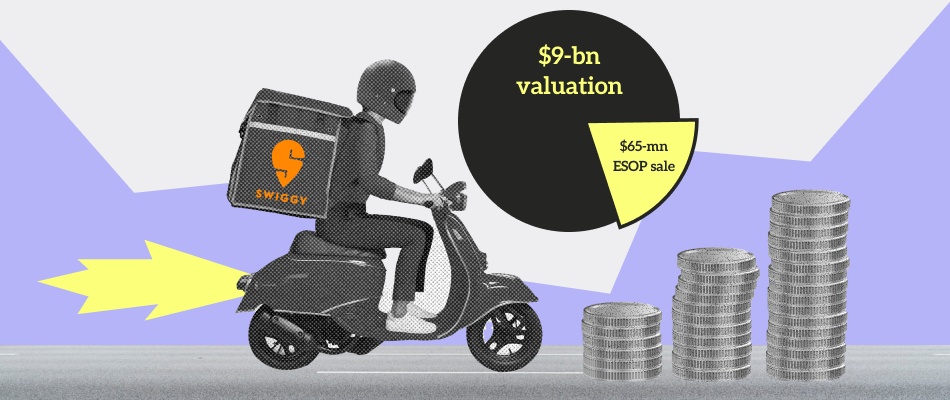
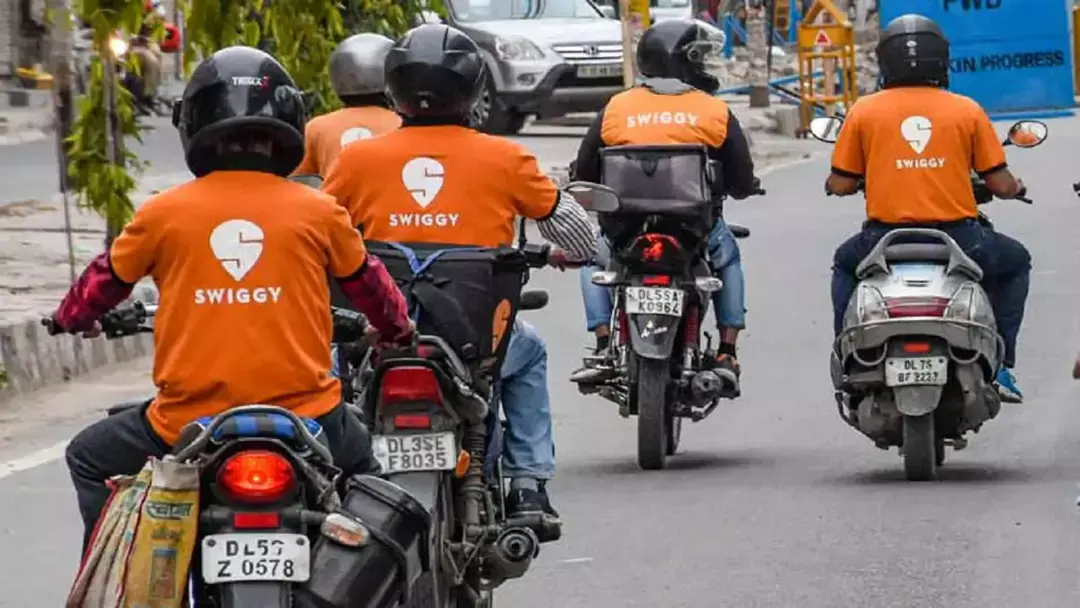
The Indian startup ecosystem has witnessed an exponential rise in employee stock ownership plan (ESOP) buybacks since 2020. According to data compiled by TheKredible, over 100 startups have implemented ESOP buyback, liquidity, and payout programs worth around $1.7 billion in the past five years, starting from January 2020. This trend reflects startups’ commitment to rewarding talent, providing employees with financial benefits, and boosting workplace morale. As reported in our previous edition, 80% of the total buybacks were conducted by 20% of the startups. Year-on-year data highlights the evolution of ESOP buybacks. In 2020, only 11 startups participated, totaling a modest $50 million. However, the trend accelerated rapidly, with 40 startups completing buybacks worth $440 million in 2021. This was followed by 26 startups with $200 million in buybacks in 2022. The upward trend continued in 2023, with 14 startups generating an impressive $802 million through buybacks or liquidity events. As of October 8, 2024, as many as 17 startups have contributed $188 million to this growing total. Among the leading players in ESOP buybacks, Flipkart, Razorpay, Swiggy, Whatfix, and BrowserStack stand out as the top five. Sectors most actively participating include e-commerce, fintech, SaaS, edtech, and logistics. Notably, 28 unicorns have joined this trend, reflecting a commitment to their employees’ financial well-being even among highly successful startups. [2024 vs 2023] The IPO-bound foodtech firm Swiggy led the 2024 ESOP liquidity chart with $65 million. It was closely followed by SaaS company Whatfix, which recently announced $58 million in ESOP liquidity for employees and investors. Urban Company and Meesho ranked next, with $24.4 million and $24 million, marking their largest ESOP buybacks to date. Titan Capital co-founders Kunal Bahl and Rohit Bansal saw strong returns on their investment in Urban Company. Other notable buybacks include Pocket FM, Purplle, and Dehaat, while nearly 50% of startups did not disclose buyback amounts. Check the complete data at TheKredible. In 2023, Flipkart accounted for $700 million in ESOP liquidity as compensation for value lost in the PhonePe spin-off, while the remaining startups totaled $102 million in buybacks. [2022 vs 2021] In 2022, fintech unicorn Razorpay led as the largest wealth creator with a $75 million ESOP liquidation program. Similarly, Swiggy, after reaching decacorn status, announced a $23 million ESOP program. The year 2021 marked a high for buyback events, with companies like Flipkart, Swiggy, PhonePe, Udaan, and others announcing ESOP liquidity totaling over $440 million. However, recent budget proposals may impact ESOPs, as the Union Budget suggests treating share buybacks as dividend income starting October 1, potentially affecting employee retention strategies. [Conclusion] One thing that is quite clear is that ESOPs are a well accepted and integral part of startup compensation and reward plans today. Employees are no longer averse to or unfamiliar with the concept, and enough examples and data is available out there for them to make an informed decision on the fairness, and relevance of their firms ESOP plans, if any. Boosting it further is the recent string of IPOs, besides upcoming ones that will provide the kind of liquidity events few imagined even in 2022. If anything, we believe firms will be scrutinised more closely by markets and the media on the size and application of their ESOP plans going forward. ESOPs can look very disproportionate in retrospect at times, and firms will have to think through generous grants and the rules governing them for senior and board level grants especially.

Whatfix rolls out $58 Mn liquidity event for employees and investors

EntrackrEntrackr · 1y ago
Whatfix rolls out $58 Mn liquidity event for employees and investors
Medial

Whatfix, a digital adoption platform (DAP), has introduced a $58 million liquidity program for its employees and investors. This marks the company’s fourth buyback of employee stock options (ESOPs). The Bengaluru-based company stated that eligible current and former employees now have the chance to sell a portion of their vested units at a premium over the earlier Series D valuation. This announcement comes on the heels of the company’s recent $125 million Series E funding round, led by Warburg Pincus, with contributions from existing investor SoftBank Vision Fund 2. Consequently, the firm’s valuation increased to $900 million from $600 million during Series D fundraise. It has raised over $265 million to date Whatfix introduced its first employee stock ownership plan or ESOP buyback scheme worth $4.3 million in July 2021. The firm did not announce the other two buybacks in the media. Founded by Khadim Batti and Vara Kumar, Whatfix provides in-app guidance and performance support for web applications and software products. Its tools are used by large companies to drive efficiency. The company asserts that it has been awarded five patents by the US Patent Office, with an additional 18 patents in the works. Despite facing macroeconomic challenges over the past two to three years, Whatfix claims to have kept its cash burn low while sustaining growth. The firm has doubled its workforce to over 960 employees, and has opened four new offices in Singapore, Germany, Australia, and India since its Series D funding round. This is the second largest ESOP buyback in 2024. In July, IPO-bound food delivery and quick commerce firm Swiggy announced an ESOPs liquidity programme worth $65 million. In the ongoing calendar year, Urban Company, MyGate, Classplus, Meesho, The Sleep Company, XYXX, Purplle, Dehaaat, Leverage Edu, Pocket FM and Adda247 bought back ESOPs from their employees.

Baron Capital values Swiggy at $14.7 Bn

EntrackrEntrackr · 1y ago
Baron Capital values Swiggy at $14.7 Bn
Medial

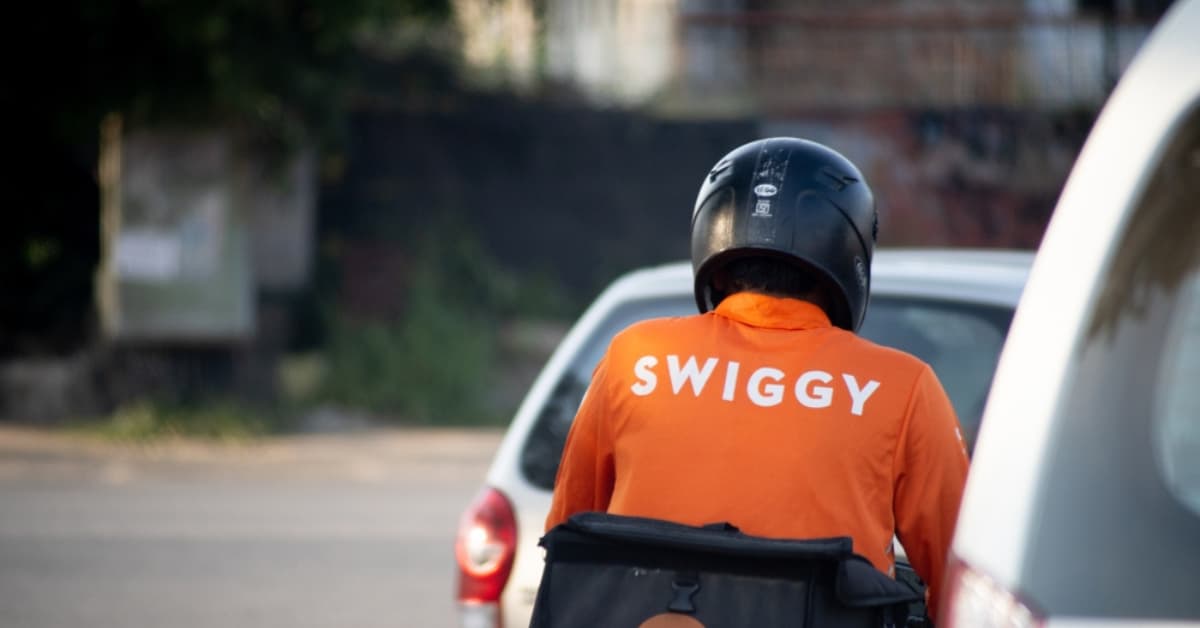
US Investor Baron Capital has valued food-tech company Swiggy at $14.74 billion as of June 2024, according to regulatory filings with the US’ Securities and Exchange Commission (SEC). This is nearly 2.6% down from its last $15.1 billion valuation estimates by Baron Capital in March. The valuation dip in June appears to be a result of rupee depreciation. This comes at a time when Swiggy is gearing up for its initial public offering (IPO). The Bengaluru-based firm received shareholders’ nod to float its $1.25 billion IPO and it reportedly filed papers with SEBI via a confidential route in May. The food tech company will raise up to Rs 3,750 crore ($450 million) via fresh issue of equity shares and an offer for sale of up to an aggregate amount of Rs 6,664 crore ($800 million) in its initial public offering. Swiggy recorded Rs 5,476 crore in revenue from operations and a Rs 1,600 crore loss during the first three quarters of the financial year FY24. Entrackr had exclusively reported financial numbers and a secondary pitch by the company in April. Ahead of the IPO, Swiggy also rolled out its fifth ESOP liquidity programme worth $65 million in July. It claims to have enabled over Rs 1,000 Cr of ESOPs liquidity over the five events which benefited 3,200 employees. Swiggy’s rival Zomato is currently valued at $28.3 billion, as per stock exchange data. The Deepinder Goyal-led firm posted Rs 4,206 crore in revenue with Rs 253 crore in profits in the first quarter of FY24. According to the UBS report, Zomato’s order growth increased by 1.6% MoM in July while Swiggy’s order growth decreased by 4.6%. On a year-on-year basis, Zomato registered 29% growth as compared to 11% growth by Swiggy.

Baron Capital marks up Swiggy’s valuation to $15.1 Bn

EntrackrEntrackr · 1y ago
Baron Capital marks up Swiggy’s valuation to $15.1 Bn
Medial

US-based asset manager Baron Capital has marked up the valuation of Swiggy to $15.1 billion, according to regulatory filings with the US’ Securities and Exchange Commission (SEC). This is a nearly 25% jump in the company’s valuation from $12.1 billion estimated by Baron as of December 2023. Soon after Baron’s mark up, Swiggy’s early backer Invesco also increased its valuation to $12.7 billion in April. The development was first reported by ET. This comes at a time when Swiggy is gearing up for its initial public offering (IPO). The Bengaluru-based firm received shareholders’ nod to float its $1.25 billion IPO and it reportedly filed papers with SEBI via confidential route in May. Before filing IPO papers, Swiggy was pitching a pre-IPO deal to high net-worth individuals (HNIs) to buy its shares at a 20% discount. Entrackr exclusively reported the development. Swiggy recorded Rs 5,476 crore in revenue from operations and Rs 1,600 crore loss during the first three quarters of the financial year FY24. Entrackr had exclusively reported financial numbers and secondary pitch by the company in April. In FY23, its revenue stood at Rs 8,265 crore in FY23 whereas its losses soared to Rs 4,179 crore. Besides Swiggy, Pine Labs, Meesho, FirstCry and Ola Electric also saw markups in their valuation in the last six months. Swiggy’s arch rival Zomato is currently valued at $18.7 billion, as per stock exchange data. The latter recently hit a market cap of $21 billion. Meanwhile, Baron has marked down edtech company Byju’s valuation to only $24 million as of March 2024. Earlier, BlackRock had already slashed the company’s valuation to $1 billion from $22 billion in early 2022.

BrowserStack launches $125 Mn ESOP buyback for employees and early backers

EntrackrEntrackr · 2m ago
BrowserStack launches $125 Mn ESOP buyback for employees and early backers
Medial

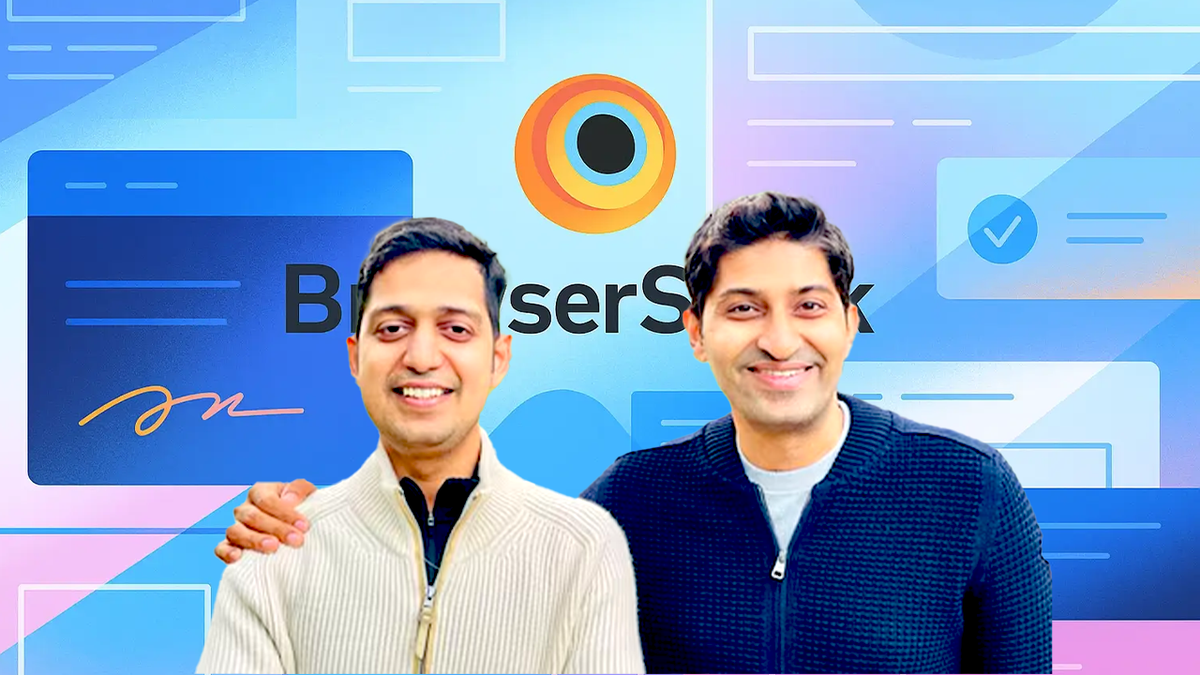
BrowserStack launches $125 Mn ESOP buyback for employees and early backers According to the company, the total capital returned to shareholders across three buyback cycles will reach around $275 million. Mumbai-headquartered software testing platform BrowserStack is launching a $125 million share buyback programme to provide liquidity to its employees and early backers. The buyback will allow stakeholders, including nearly 500 employees, to sell their shares back to the company. An ET report added that about half of the total buyback amount has been earmarked for employees, while the remaining portion will go to early investors such as Accel. In September 2021, BrowserStack had announced its second ESOP buyback worth $50 million, following its first ESOP buyback programme executed in February 2021. The company turned unicorn in June 2021 after raising $200 million in Series B funding at a $4 billion valuation. Founded in 2011, BrowserStack provides cloud-based software testing tools that enable developers and QA teams to test websites and mobile applications across a wide range of devices, operating systems, and browsers. The company serves customers globally from offices in Mumbai, San Francisco, New York, and Dublin. BrowserStack claims to be among the leading software testing platforms, powering over two million tests every day across 17 global data centres. In May last year, the company acquired Requestly, a tool for HTTP interception, API mocking, and debugging, for an undisclosed amount. It also acquired Berlin-based bug detection and reporting platform Bird Eats Bug for $20 million in 2024. Meanwhile, ESOP buyback activity in 2025 remained muted at a little over $75 million. In comparison, total ESOP buybacks, payouts, and liquidity stood at about $190 million in 2024, sharply lower than $802 million in 2023, $440 million in 2021, and $200 million in 2022.

Download the medial app to read full posts, comements and news.