

Back

Rahul Agarwal
Founder | Agentic AI... • 1d
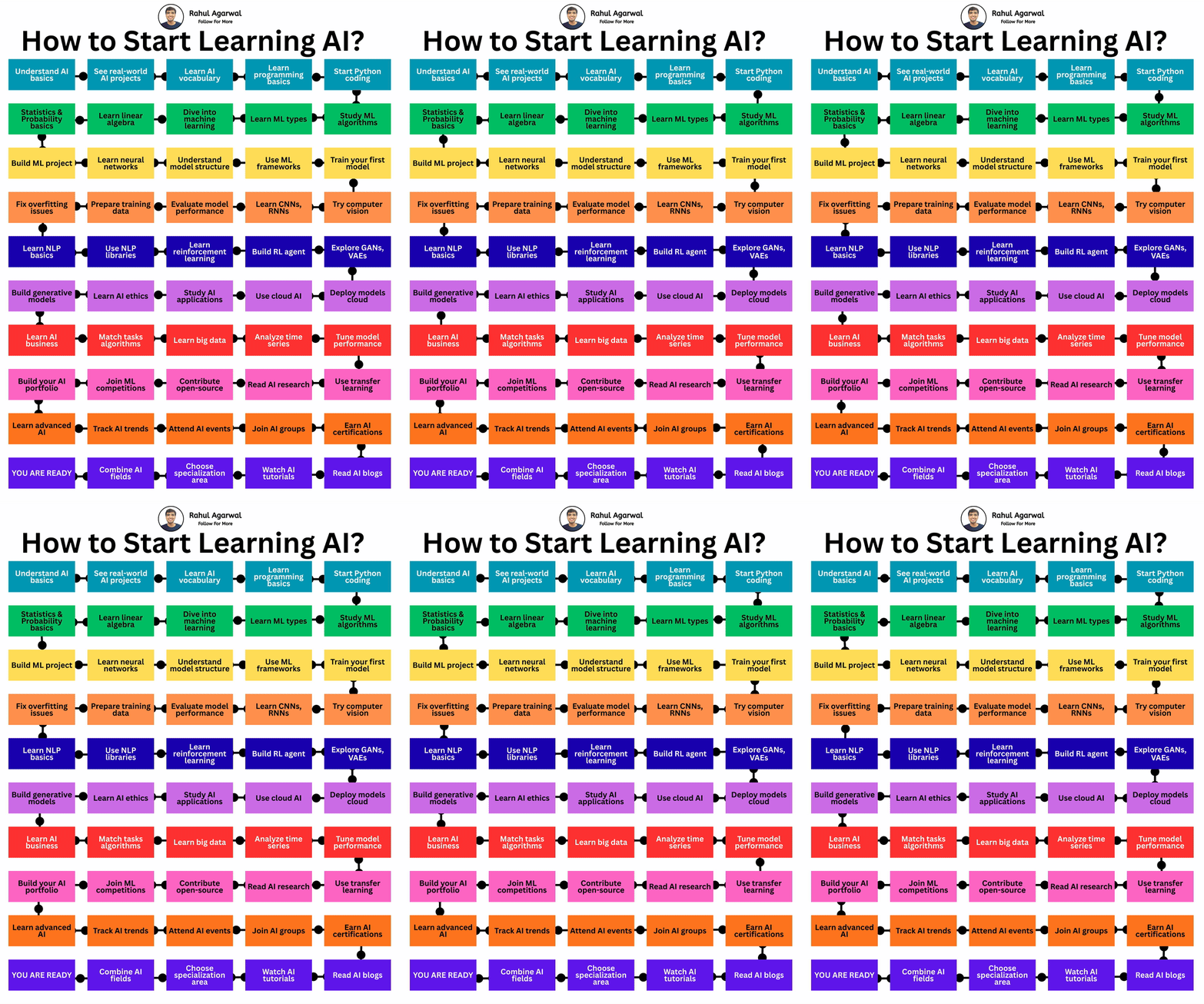
Most people miss these steps while learning AI. I’ve explained the complete AI learning path in detail. 1. Learn what AI, ML, and Deep Learning actually mean. 2. Observe how AI works in apps like Netflix, Google, and ChatGPT. 3. Get comfortable with terms like models, data, training, and inference. 4. Understand logic, loops, functions, and problem-solving. 5. Use Python as your primary language for AI and ML. 6. Understand how data behaves and how predictions work. 7. Master vectors and matrices that power neural networks. 8. Learn how machines learn patterns from data. 9. Understand supervised, unsupervised, and reinforcement learning. 10. Learn core algorithms like regression, trees, and clustering. 11. Apply theory by solving a real-world problem. 12. Understand layers, neurons, and backpropagation. 13. Learn how inputs flow through models to outputs. 14. Build faster using libraries like Scikit-learn, TensorFlow, or PyTorch. 15. Teach a model using data and evaluate results. 16. Ensure your model generalizes, not memorizes. 17. Clean, preprocess, and format data correctly. 18. Measure accuracy, precision, recall, and loss. 19. Work with images, text, and sequential data. 20. Build systems that understand images and videos. 21. Teach machines to understand and generate text. 22. Build faster using tools like spaCy or Transformers. 23. Train agents using rewards and actions. 24. Create AI that learns by trial and error. 25. Learn how AI generates images, text, and data. 26. Create your own content-generating AI systems. 27. Understand bias, fairness, and responsible AI usage. 28. See how AI is used in healthcare, finance, and education. 29. Run and scale models using cloud infrastructure. 30. Make your AI accessible via APIs or apps. 31. Understand how AI products create value. 32. Choose the right model for the right problem. 33. Handle large-scale datasets efficiently. 34. Predict trends like sales, prices, or demand. 35. Optimize speed, cost, and accuracy. 36. Showcase projects to employers or clients. 37. Learn by solving real-world challenges. 38. Gain experience by building with others. 39. Stay updated with cutting-edge ideas. 40. Reuse pre-trained models to save time and compute. 41. Go deeper into your chosen domain. 42. Stay relevant as tools and models evolve. 43. Learn from industry experts and peers. 44. Network with builders and researchers. 45. Validate your skills professionally. 46. Pick your specialization: ML, GenAI, NLP, or AI business. 47. Build unique skill stacks for leverage. 48. Learn continuously through hands-on demos. 49. Stay informed with practical insights. 50. Start building, shipping, and scaling AI systems. Real AI skills come from building things, so focus more on doing and creating rather than consuming. ✅ Repost for people in your network who want to learn AI.
More like this
Recommendations from Medial

Harshabardhana Parida
Machine Learning Ent... • 1y
The Importance of Analyzing Data 📊 Analyzing data is crucial for gaining insights and taking corrective actions. Through Exploratory Data Analysis (EDA), we understand data better and make informed decisions. Machine learning predicts outcomes, aid
See More



Aryan patil
Intern at YourStory ... • 1y
In traditional programming, the focus is on using rules and data to find answers. This is typically represented as rules + data = answers. In contrast, AI/ML takes a different approach: Answers + data = rules. In AI/ML, we train models by providing
See More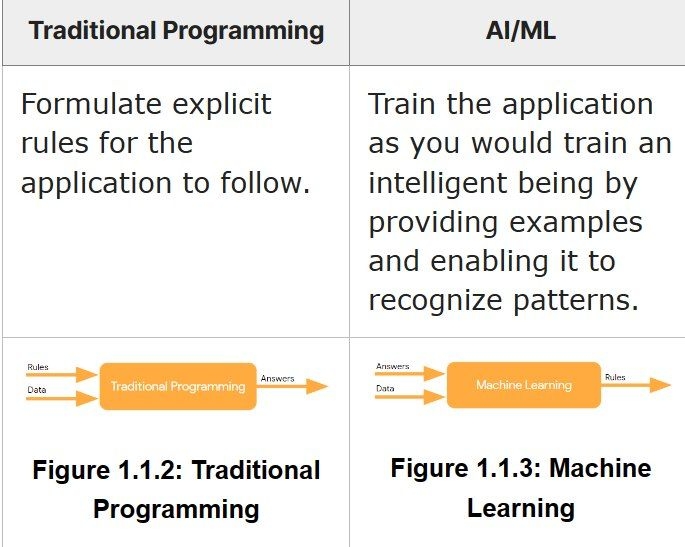



Aroneo
| Technologist | ML ... • 10m
Machine Learning vs. Deep Learning: What’s the Real Difference? 🤖⚡ Machine Learning (ML) and Deep Learning (DL) are both AI-driven, but they’re not the same! While ML relies on algorithms to learn from data, DL uses artificial neural networks to pr
See More
AI Engineer
AI Deep Explorer | f... • 8m
My Favorite AI & ML Books That Shaped My Learning Over the years, I’ve read tons of books in AI, ML, and LLMs — but these are the ones that stuck with me the most. Each book on this list taught me something new about building, scaling, and underst
See More
NivroCorp
Your Partner in Web,... • 3m
Why AI and Machine Learning Are Your Business’s Next Advantage The future is about smart, fast decisions built on data. With AI and ML, you can automate more, understand your customers better, and outpace your competitors. At Nivrocorp, we specializ
See More
























Download the medial app to read full posts, comements and news.