News on Medial

Spice brand Zoff crosses Rs 100 Cr revenue in FY25; slips into losses

EntrackrEntrackr · 2m ago
Spice brand Zoff crosses Rs 100 Cr revenue in FY25; slips into losses
Medial

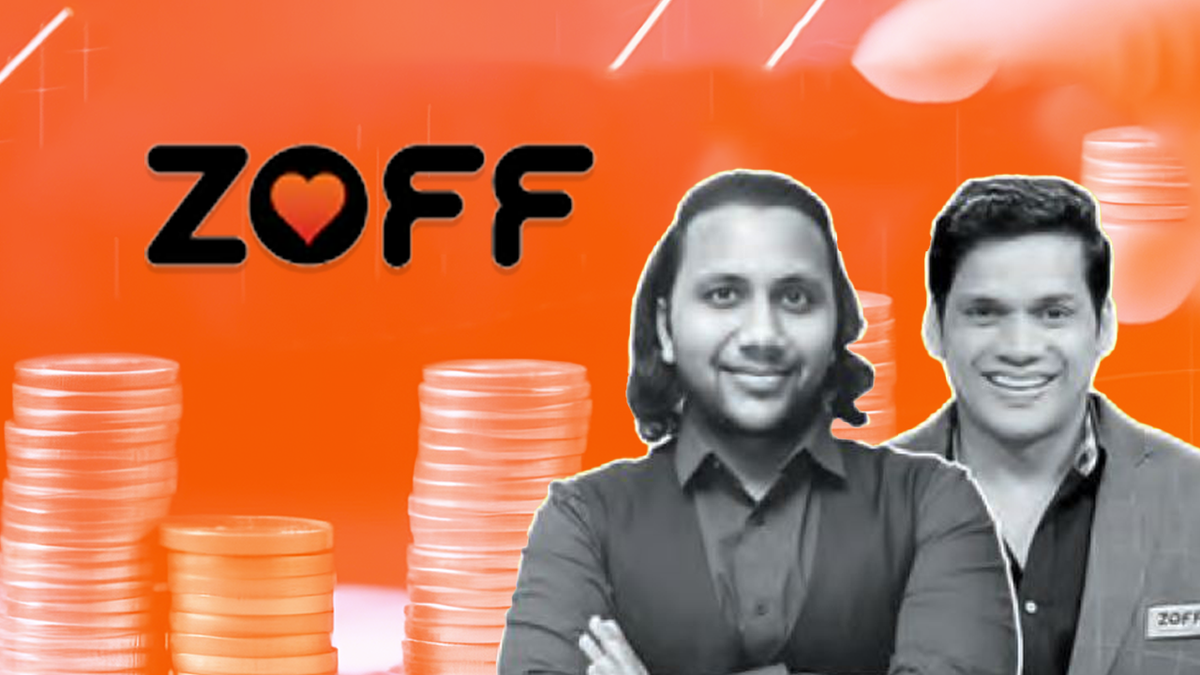
Shark Tank featured spice brand Zoff crossed the Rs 100 crore mark in the last fiscal year ending March 31, 2025. However, the Aman Gupta-backed company slipped into losses in the same period due to higher expenses and write-offs. Zoff’s revenue from operations grew by 11% to Rs 103 crore in FY25 from Rs 93 crore in FY24, according to its financial statements sourced from the Registrar of Companies (RoC). Co-founded in 2018 by Akash and Ashish Agrawal, Zoff specializes in high-quality spices. The brand offers a curated selection of spices, dry fruits, and whole food products. The company’s cost structure expanded at a much faster pace than revenue. Its total expenses increased 32% to Rs 120 crore in FY25 from Rs 91 crore in FY24. Cost of materials remained the largest expense for Zoff, accounting for 61% of the total cost. To the tune of scale, this cost rose 22% to Rs 73 crore in FY25 from Rs 60 crore in FY24. Advertising expenses jumped threefold to Rs 12 crore in FY25 from Rs 4 crore in FY24. Employee benefit expenses increased 25% to Rs 5 crore. The company also reported Rs 4 crore as bad debt write-offs during the year. The company lost its profitability and posted a loss of Rs 17 crore in FY25, as compared to a loss of Rs 20 lakh in FY24. Its ROCE and EBITDA margin stood at -54.17% and -17.96% respectively. On a unit basis, Zoff spent Rs 1.17 to earn a rupee of operating revenue during the year, compared to Rs 0.98 in the previous fiscal. Zoff’s current assets increased to Rs 50 crore from Rs 43.5 crore. The company’s cash and bank balances stood at Rs 0.2 crore at the end of FY25. According to TheKredible, Zoff has raised around $5 million of funding till date, having JM Financial India as its lead investor. The company’s co-founders Akash and Ashish Agarwal together own 52.5% of the company. The company is reportedly planning to raise a new round as it eyes offline expansion. The rise of losses even as it barely registered double-digit growth indicates growth challenges at the firm. The rise of raw material costs as well as advertising in particular are a surprise, considering the publicity bump it received from Shark Tank. Spices remain an intensely competitive category, and spreading itself too thin may not be the best idea for Zoff, and will simply lead to more commoditization of its offerings.

Related News

Spice brand Zoff raises Rs 40 Cr in Series A from JM Financial

EntrackrEntrackr · 1y ago
Spice brand Zoff raises Rs 40 Cr in Series A from JM Financial
Medial

Spice brand Zoff has secured Rs 40 crore ($4.8 million) from JM Financial Private Equity through JM Financial India Growth Fund III. The company had previously secured funding in Shark Tank India from boAt’s co-founder Aman Gupta The proceeds will be used to launch new products and expand the business into new segments such as ready-to-cook, condiments, cooking pastes & seasoning kits and strengthen its offline distribution network through general trade, modern trade channels and other retail outlets, Zoff said in a press release. Co-founded in 2018 by Akash and Ashish Agrawal, Zoff specializes in high-quality spices. The brand offers a curated selection of spices, dry fruits, and whole food products. It focuses on providing high-quality ingredients that elevate consumer culinary creations’ taste and health benefits. According to the Raipur-based company, it has a fully automated manufacturing unit which utilizes cold grinding technology to preserve the flavor and aroma of raw spices. The brand claims that its multi-layered ziplock packaging ensures the spices remain fresh for an extended period. Zoff says that it has created a robust online presence by focusing on quick commerce and empowered spices market in a short period of time, registering a profitable revenue over the years. The company is looking to penetrate deeper into the tier-II and tier-III cities. The company also claims that it competes with other big brands like Everest and MDH.

The Man Company’s revenue declines to Rs 154 Cr in FY25; slips into losses

EntrackrEntrackr · 1m ago
The Man Company’s revenue declines to Rs 154 Cr in FY25; slips into losses
Medial

Emami-owned men’s grooming and personal care brand, The Man Company, saw its scale decline in the fiscal year ending March 2025, slipping into losses. The company’s revenue from operations declined by 16% to Rs 154 crore in FY25 from Rs 183 crore in FY24, according to its financial statements sourced from the Registrar of Companies (RoC). The sale of grooming products accounted for 97% of the revenue, while the rest came from shipping charges. Advertising costs emerged as the largest expense, rising over threefold to Rs 43 crore in FY25 from Rs 14 crore in FY24. Other major costs also increased, with discounts reaching Rs 18 crore, employee benefit expenses at Rs 10.5 crore, and the cost of materials nearly doubling to Rs 29.3 crore in FY25. Depreciation increased to Rs 6.2 crore, while other expenses fell to Rs 70 crore. Overall, The Man Company’s total expenses remained flat at Rs 177 crore in FY25, the same as the previous year. The decline in scale led the company into the red, recording a loss of Rs 22 crore in FY25 compared to a profit of Rs 9 crore in FY24. Its EBITDA margin fell to negative 9.74% from 6.78% the previous year. On a unit basis, the company spent Rs 1.15 to earn a rupee during the fiscal year. The Gurugram-based firm reported cash and bank balances of Rs 0.3 crore, with current assets at Rs 68 crore in FY25. Emami acquired The Man Company (TMC) for about Rs 400 crore, marking Emami's first D2C acquisition. The Man Company's competitors, Beardo and Ustraa, showed varied performances in FY25. Beardo's revenue increased to Rs 214 crore in FY25 from Rs 173 crore in FY24, with PAT rising by 258% to Rs 13 crore. Conversely, Ustraa's revenue declined by 22% to Rs 73 crore, but it narrowed its losses by 72% to Rs 14 crore in FY25. The Man Company's results underscore the challenges of D2C space acquisitions. Acquiring firms looking for high growth often face issues in a relatively unstructured environment. A heavy-handed approach post-acquisition can also stifle the agility that helped startups adapt to market changes. There is little doubt that The Man Company has lost some vitality post-acquisition.

Smytten cuts losses by 41% in FY25; revenue slips to Rs 111 Cr

EntrackrEntrackr · 6m ago
Smytten cuts losses by 41% in FY25; revenue slips to Rs 111 Cr
Medial

Smytten cuts losses by 41% in FY25; revenue slips to Rs 111 Cr Smytten, a product discovery and trial platform, improved its expense discipline and significantly narrowed losses, but the revenue decline highlights its continuing struggle to achieve sustainable growth in FY25. The company’s revenue from operations declined 10.5% to Rs 111 crore in FY25 from Rs 124 crore in FY24, according to its provisional financial statement sourced from the Registrar of Companies (RoC). Smytten derives its income largely from product trials and allied services for D2C and FMCG brands. The firm also generates ancillary revenues through brand promotions and partnerships. The company did not provide a revenue breakup in its provisional financial statements. On the expense front, the cost of materials, the firm’s largest expense, declined 17% to Rs 58 crore in FY25 from Rs 70 crore in FY24. Employee benefit expenses fell 9% to Rs 20 crore, while details of other overheads, including marketing, tech, and operational costs, were not disclosed. Overall, the company managed to reduce its total expenses by 21% to Rs 131 crore in FY25 from Rs 165 crore in FY24. The sharper control on expenses helped Smytten cut its losses by 41% to Rs 23.5 crore, as compared to Rs 40 crore in FY24. Its ROCE and EBITDA margin stood at -76.92% and -16.92%, respectively. On a per-unit basis, the firm spent Rs 1.18 to earn a rupee of revenue in the last fiscal year. As of March 2025, the Bengaluru-based company reported current assets worth Rs 67 crore, including Rs 20 crore in cash and bank balances. According to TheKredible, Smytten has raised a total of $22 million of funding till date, having Roots Ventures and Fireside Ventures as its lead investors. The company’s co-founders Siddhartha Nangia and Swagata Sarangi together own 39.32% of the company.

Petcare startup Supertails crosses Rs 100 Cr revenue in FY25; losses surge 28%

EntrackrEntrackr · 15d ago
Petcare startup Supertails crosses Rs 100 Cr revenue in FY25; losses surge 28%
Medial

Petcare startup Supertails crosses Rs 100 Cr revenue in FY25; losses surge 28% Petcare startup Supertails reported a 68% year-on-year jump in operational revenue, surpassing Rs 100 crore in FY25, while its losses widened 28% to Rs 52.5 crore amid ongoing expansion. Supertails’ revenue from operations surged 68% to Rs 108.3 crore in FY25, compared to Rs 64.6 crore in FY24, according to its financial statements filed with the Registrar of Companies (RoC). Founded in 2021 by Varun Sadana, Aman Tekriwal, and Vineet Khanna, Supertails addresses the evolving needs of pet parents through customised offerings, positioning itself as a full-stack digital platform for pet care and parenting solutions. The Supertails app offers more than 30,000 pet care products, including pet food, treats, accessories, healthcare products, and other essentials. The sale of these products accounted for nearly 95% of its total operating revenue, which stood at Rs 102.5 crore. It also provides veterinary services, including consultations, vaccinations, grooming, and preventive care at home or through its clinics. These services contributed Rs 2.65 crore during the period. The rest of the operating revenue came from franchise fees and through ad monetisation. The company also earned Rs 5 crore from non-operating sources such as gain from investments and interest income, this pushed its total income to Rs 113.3 crore in FY25. On the cost side, the cost of materials was the largest expense, accounting for 50% of the overall expenditure. This cost rose 45% to Rs 83.3 crore in FY25, while employee benefit expenses increased 15% year-on-year to Rs 25.3 crore for Supertails. Supertails spent Rs 22.9 crore on marketing in FY25 to boost its sales, a 37% increase from FY24. Other overheads such as shipping charges, legal and professional fees, warehousing costs, and software charges added Rs 34.3 crore to its expenses. Overall expenses surged 53% to Rs 165.8 crore in FY25 from Rs 108.4 crore in FY24. In the end, although Supertails’ operating revenue growth outpaced its expense growth, its losses still widened 28% to Rs 52.5 crore in FY25 from Rs 41 crore in FY24. Its ROCE and EBITDA margin stood at -52.58% and -48.9% respectively. On a unit basis, the company spent Rs 1.53 to earn every rupee of revenue in FY25, a marginal improvement over FY24. As of March 2025, the Bengaluru-based firm held cash and bank balances of Rs 39 crore, while its total current assets stood at Rs 100 crore. To date, the company has raised around $51 million, including its most recent $30 million round led by Venturi Partners with participation from Nippon India, Titan Capital, Fireside Ventures, RPSG Capital Ventures, and others.

EaseMyTrip posts Rs 118 Cr revenue in Q2 FY26; slips into losses

EntrackrEntrackr · 4m ago
EaseMyTrip posts Rs 118 Cr revenue in Q2 FY26; slips into losses
Medial

EaseMyTrip posts Rs 118 Cr revenue in Q2 FY26; slips into losses Online travel aggregator (OTA) platform EaseMyTrip struggled during the second quarter of the ongoing fiscal year (FY26), with revenue declining over 18% and losing profitability. EaseMyTrip’s operating revenue decreased by 19% to Rs 118 crore in Q2 FY26 from Rs 145 crore in Q2 FY25, as per its financial statements filed with the National Stock Exchange (NSE). Air ticketing contributed 61% of the company’s revenue but fell 22% to Rs 72 crore in Q2 FY26, down from Rs 92.5 crore in Q2 FY25. Hotel packages accounted for 27% of total revenue, generating Rs 32 crore. Including other undisclosed income, its total income for Q2 FY26 stood at Rs 126 crore, compared to Rs 150 crore in Q2 FY25. According to the disclosure, the company’s revenue decreased by 22% to Rs 232 Cr in H1 FY26 from Rs 297 Cr in H1 FY25. EaseMyTrip’s total expenses rose 6% to Rs 120 crore in Q2 FY26 from Rs 113 crore in Q2 FY25. Employee benefit accounted for 26% of the total, increasing 24% to Rs 31 crore in Q2 FY26. Payment gateway charges, service costs, and advertising were other major costs for EaseMyTrip in the last quarter. With the dip in revenue and expense increasing, the company slipped into losses of Rs 36 crore in Q2 FY26 as compared to a profit of Rs 27 crore in Q2 FY25. On a unit basis, the Delhi-based company spent Rs 1.02 to earn a rupee of operating revenue during the last quarter. The company also announced the change of its senior officials in which Mr. Sankalp Kaul was appointed as Chief Technology Officer (CTO) of the Company replacing Mr. Naimish Sinha and Mr. Manmeet Ahluwalia was appointed as Chief Marketing Officer (CMO) of the Company. EaseMyTrip's board has approved the issuance of 55.93 crore fully paid-up equity shares worth Rs 514.06 crore on a preferential basis. The shares will be allotted to seven non-promoter investors including Ashish Begwani, Sunil Jain, Dhankalash Distributors, Divyank Singhal, Levo Beauty, SSL Nirvana Grand Golf Developers, and Javaphile Hospitality.

Burma Burma crosses Rs 100 Cr revenue in FY25; almost breaks even

EntrackrEntrackr · 5m ago
Burma Burma crosses Rs 100 Cr revenue in FY25; almost breaks even
Medial

Burma Burma crosses Rs 100 Cr revenue in FY25; almost breaks even Burma Burma, a vegetarian pan-Asian restaurant chain, narrowed its losses significantly by 78% in the fiscal year ending March 2025, on the back of strong revenue growth and improved operating margins. The company nearly achieved break-even as it recorded 47% year-on-year growth in operating revenue, crossing the Rs 100 crore mark during FY25. Burma Burma’s revenue from operations rose to Rs 106 crore in FY25 from Rs 72 crore in FY24, according to its financial statements filed with the Registrar of Companies (RoC). The company operates a restaurant chain serving Burmese cuisine influenced by Indian, Chinese, and Thai flavors across more than a dozen locations in Delhi NCR, Mumbai, Bengaluru, Hyderabad, Kolkata, and Ahmedabad. Its entire revenue in FY25 came from these restaurants. Employee benefits and cost of material formed 53% of the company’s total cost. Employee benefit expenses rose 29% to Rs 29 crore, while the cost of material increased by 33% to Rs 28 crore in FY25. Rent expenses for the restaurants' outlets jumped 64% to Rs 18 crore, while depreciation increased 43% to Rs 10 crore during the year. Other overheads, including utilities and miscellaneous costs, collectively stood at Rs 23 crore. Total expenses grew 37% to Rs 108 crore in FY25 compared to Rs 79 crore in FY24. The strong growth helped Burma Burma to cut its loss by 78% to Rs 1.3 crore in FY25 from Rs 6 crore in FY24. The company reported a positive EBITDA of Rs 6.6 crore in FY25 with an EBITDA margin of 6.23%. Its return on capital employed (ROCE) improved from -48.6% in FY24 to -6.9% in FY25. The restaurant chain closed the year with Rs 9 crore in cash and bank balances and current assets worth Rs 19 crore. Burma Burma has raised a total of $7 million of funding to date, with Negen Capital and Bbigplas Poly Pvt Ltd as its lead investors. The company’s co-founders Chirag Chhajer and Ankit Gupta together own 88% of the company. The high promoter holding is well reflected in careful spending, with no rush to expand rapidly while keeping losses under control. This cautious approach is linked to cash on hand, and the niche positioning may require more advertising or promotional efforts to support growth.

Download the medial app to read full posts, comements and news.